
Non-Weight & Partial Weight-Bearing Tips
This post may contain affiliate links. If you purchase through links on my site, I may earn a commission at no cost to you. For more information, please see my disclosure policy.
In dealing with a chronic ankle problem since 2012, I’ve had to learn about non-weight and partial weight-bearing tips and practices.
After three surgeries, I don’t think my ankle is going to improve much from its current situation. So I deal with non-weight-bearing and partial weight-bearing frequently.
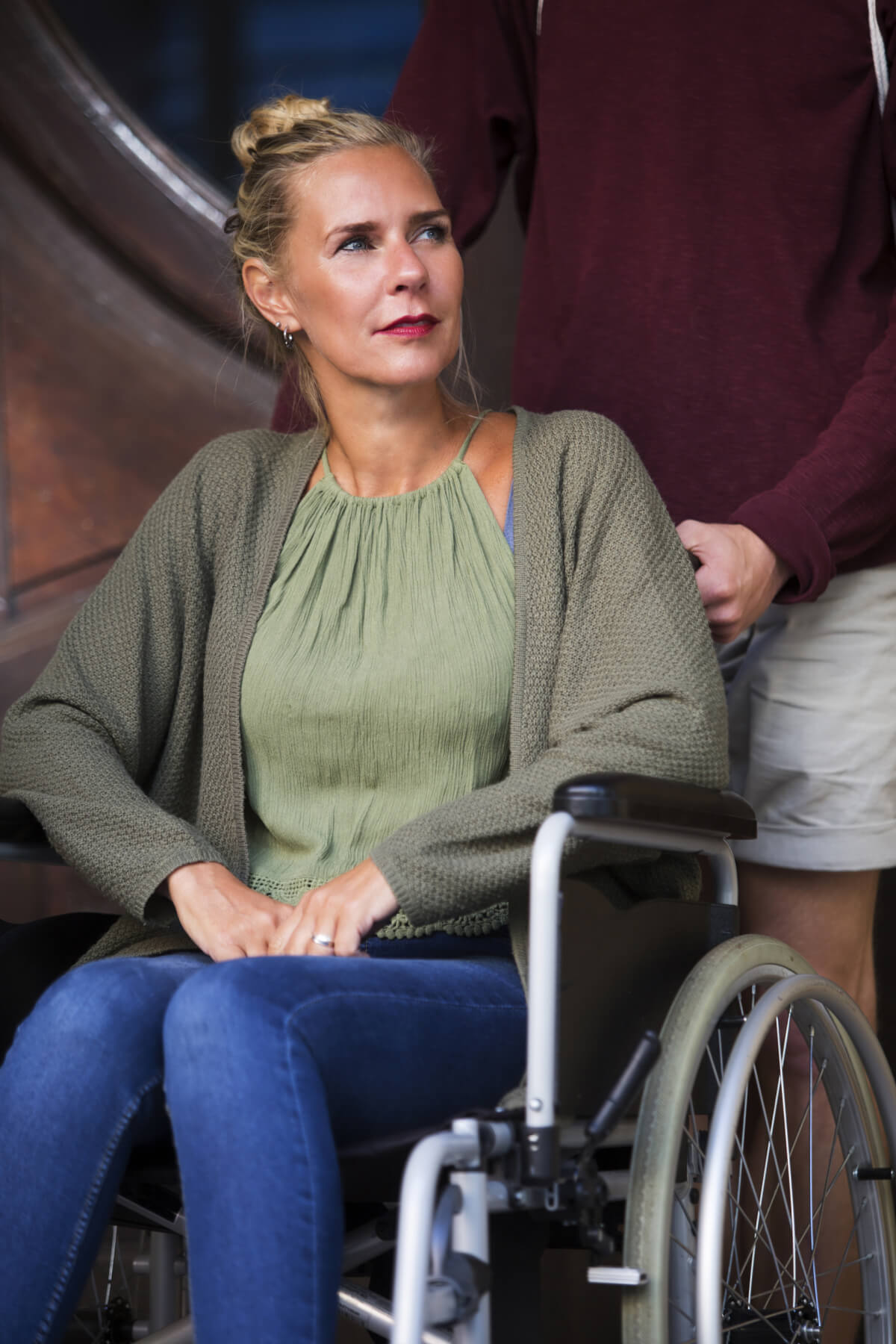
In this post, I am providing information I’ve learned about non-weight-bearing and partial-weight-bearing tips and restrictions. For instance, you might be told not to be weight-bearing after an injury or surgery on your foot, ankle, or leg.
Non-Weight Bearing Status:
Do not place any weight on the surgical/injured leg. This includes resting your feet or toes on the ground. While walking and sitting, ensure that your foot is always kept elevated off the ground.
What Is Partial Weight-Bearing?
With partial weight-bearing, a small amount of weight is permissible on the affected extremity.
The weight gradually increases so that the patient can ambulate, but still requires the use of an ambulatory device, such as a cane, crutches, or walker.
Technically, physical therapists and surgeons refer to partial weight-bearing as up to but not exceeding 50% of your weight.

Non-Weight Bearing (NWB)
- Definition: The injured leg/foot must not touch the ground at all.
- Purpose: Protects healing bones, joints, ligaments, or surgical repairs from stress.
- How it’s done:
- Use crutches, a walker, or a wheelchair to keep all weight off the affected side.
- The injured limb may be gently lifted or allowed to hover, but no pressure should be applied to it.
- Sometimes, a “toe-touch” or “foot-hover” is allowed for balance only, but still without supporting weight.
Partial Weight Bearing (PWB)
- Definition: A limited amount of body weight can be placed on the injured limb, as prescribed by a doctor (often 30–50% of body weight).
- Purpose: Allows gradual return of strength, circulation, and stability without overloading healing tissues.
- How it’s done:
- Use crutches, a walker, or a cane to share the load.
- Place only part of your weight on the affected side — think of “eggshell walking,” where you’re careful not to press too hard.
- Sometimes therapists teach patients to use a bathroom scale to practice what a set weight feels like (e.g., 30 lbs of pressure).
- Progressively increase load as healing advances, until cleared for weight bearing as tolerated (WBAT) or full weight bearing.
Common Weight-Bearing Practices:
- NWB = no contact, no weight. NWB status means the patient is not to put any weight through the affected limb(s). In the case of the lower limb, this includes not resting the foot on the ground while standing or walking.
- PWB = some contact, limited weight. PWB is a broad term and can range from anything greater than non-weight-bearing to anything less than full weight-bearing. A percentage figure should accompany this status to describe the extent of weight bearing further. Most sources define partial weight bearing as being 30% to 50% of a patient’s body weight.
1. Non-Weight Bearing (NWB)
- No weight at all on the affected leg.
- The foot must not touch the ground (except sometimes for balance, without pressure).
- Requires walker, crutches, or wheelchair.
2. Touch-Down / Toe-Touch Weight Bearing (TDWB or TTWB)
- The foot can touch the floor, but not support body weight.
- Think of it like “resting your toes on an egg” — contact is for balance only.
- Helps with stability and natural walking motion while still protecting the injury.
3. Partial Weight Bearing (PWB)
- Some weight is allowed on the injured leg, usually 30–50% of body weight.
- Often practiced using a scale to learn how much pressure feels right.
- Crutches or a walker carry the remaining load.
- A step toward regaining strength and function.
4. Weight Bearing as Tolerated (WBAT)
- You can put as much weight as is comfortable, stopping if it causes pain.
- May still require the use of a cane or crutches for support.
- Encourages a gradual increase in use while respecting pain signals.
5. Full Weight Bearing (FWB)
- 100% of weight on the injured limb, no restrictions.
- Walking aids are no longer needed.
- Marks the end of formal weight-bearing limitations.
For the lower extremity, NWB, TTWB/TDWB, and PWB require the use of an assistive device to maintain compliance during mobility. In the cases of WBAT and FWB, an assistive device may be needed if other impairments (e.g., pain, impaired balance, muscle weakness, abnormal tone) act as barriers to safe ambulation or contribute to significant gait deviations.
Is Driving Considered Weight Bearing?
Yes. It is considered weight-bearing to drive a car. So, you should not drive if you are non-weight-bearing.
Being non-weight-bearing means you cannot put any weight whatsoever on your injured foot. So, constantly moving your foot from the gas to the brake pedal breaks this mandate and could lead to complications with your injury or surgery.
Not being able to drive is difficult if you live alone with a long-term injury or permanent disability. And also don’t live near a bus stop.
Someone here asked me if it is legal to drive while wearing a walking boot.
Is It Legal To Drive With A Walking Boot On?
Most states have no explicit or specific regulations regarding driving with a lower extremity cast, a lower extremity immobilization device, or after foot and/or ankle surgery.
Despite the safety risks, patients currently face no legal barriers to driving while wearing a cast on either foot.

I searched extensively for information regarding state laws on this matter and could find no legal barrier information related to driving with a walking boot.
How To Shower When Non-Weight Bearing:
It is possible to shower by sitting on a plastic stool or chair. If you must shower in a tub, I recommend consulting your doctor about showering techniques.
I shower in a tub on a plastic stool, but I have no restrictions on raising my leg to get into the bathtub.
How To Bathe With A Cast:
When wearing a cast, it’s essential to wrap the limb with either a shower guard or a plastic bag to protect the cast’s integrity.
Cast covers can be purchased and come in a variety of sizes. They offer a waterproof barrier between the leg and the cast.
Can Your Foot Touch The Ground When Non-Weight Bearing?
Most people cannot accurately gauge how much weight they’re putting on a foot, even if they’re grazing the floor with it. Placing any weight on an operated foot or ankle can damage the repair that has been done.
Bones need time to heal. Plates or screws that may have been added during surgery need the bones to heal around them. Adding weight too soon can interrupt this important internal healing process.
Equally important, surgical wounds heal better when they are not subjected to stress from weight. All procedures that involve surgical cutting need a period of no weight so incisions can heal.
Additionally, a period of non-weight-bearing also helps reduce swelling, which is common after foot or ankle surgery.
Keeping swelling down will help tissues heal more quickly, and sometimes elevation helps control pain.
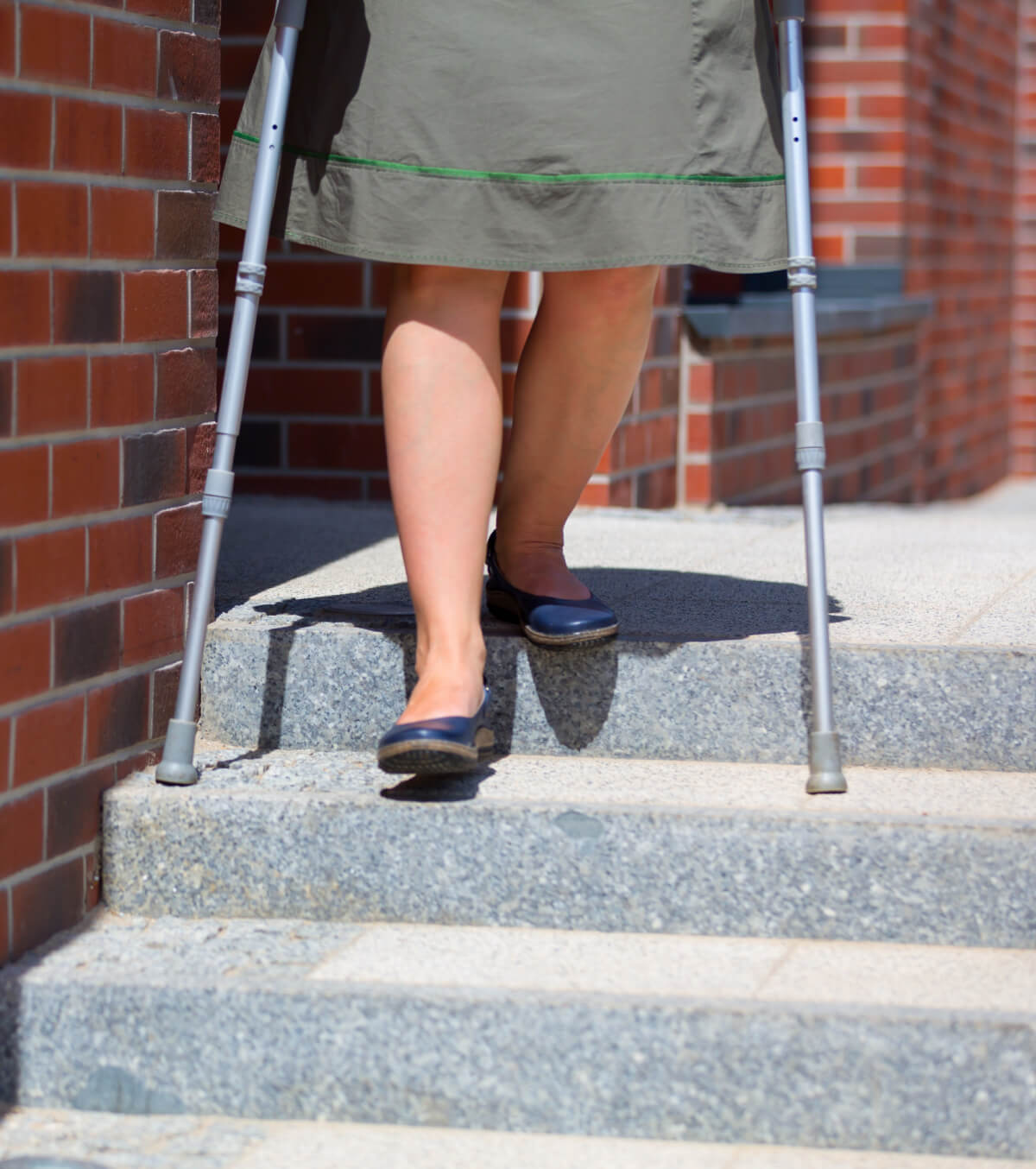
How Will You Get Around?
If your surgeon has said that avoiding any weight on your foot is essential to healing, there are several options to consider.
Crutches:
Many patients use crutches after surgery to keep their affected foot off the ground. Adjustment is important. You should be able to fit two fingers under your arm when standing with crutches.
With your arms hanging down, the crutch handle should be at the crease of your wrist. For some patients, a standard walker may also be helpful.
Knee scooter:
The knee scooter is designed with a knee pad and wheels. You place your knee on the pad and roll forward, using the handlebars to balance and steer. Brakes help keep the scooter stationary when you dismount from it.
Accessories can include a basket for stowing your cell phone or medication, a cup holder, and non-skid wheels. Knee scooters can be rented or purchased and may be covered by insurance.
Seated scooter:
Narrower and lighter than a wheelchair, the seated scooter allows you to roll about from a seated position. And like the knee scooter, you get around using your own power, though some models come in powered versions.
Similarly, accessories such as a basket and cup holder add to convenience. Brakes are typically standard, and seated scooters can be rented or purchased.
Note: This information about non-weight-bearing and partial-weight-bearing tips was compiled through research and my own experience. I am not a medical professional. Always follow your doctor’s advice.



This is all really good information. Even without an actual injury, some things, like a walker, is very helpful in assisting someone who might have balance issues, or simply need a little help while they walk a little slower. I didn’t know about the 2 finger rule for crutches. That’s helpful to know. I imagine if they didn’t fit right, they’d be very uncomfortable to use, and people wouldn’t use them and then risk a worse injury. I’m so sorry to hear you are having a little relapse. I know it’s hard to sit still and relax, but please try. It’s so important. And be grateful for Greg, your cleaning lady, and your wonderful friends, who so sweetly help you out.
While I recovered from a fractured ankle, I was shocked at how limiting it was. Balancing on one leg limited how long I could stand at a sink to wash dishes. I couldn’t vacuum or mop the floor. Even though I could order grocery delivery, I couldn’t stand long enough to cook a meal. The fees for food delivery services kept me from using them, so I was limited to pizza delivery menus and Denny’s. I gained 13 lbs over 3 months. Thankfully, I can walk now, but with a slight limp. And my doctor put me on a diet.
Since you don’t have a bus line nearby then consider using Uber to take you to run errands or shopping. Or paying a neighbor might be a good idea. Just a thought!
Brenda, I experienced a fall and extensive surgery 10 years ago. Three months of non-weight bearing recuperation followed and then several years of physical therapy. ORIF with plates, screws, and rods in my pelvis area meant I had to learn to walk again. Your tips are valid and standard protocol. It is a life-changing experience! Thankful for assistive devices. Karen
Oh me too! Don’t know what I’d do without the walker to help me.