
How To Set Personal Goals
This post may contain affiliate links. If you purchase through links on my site, I may earn a commission at no cost to you. For more information, please see my disclosure policy.
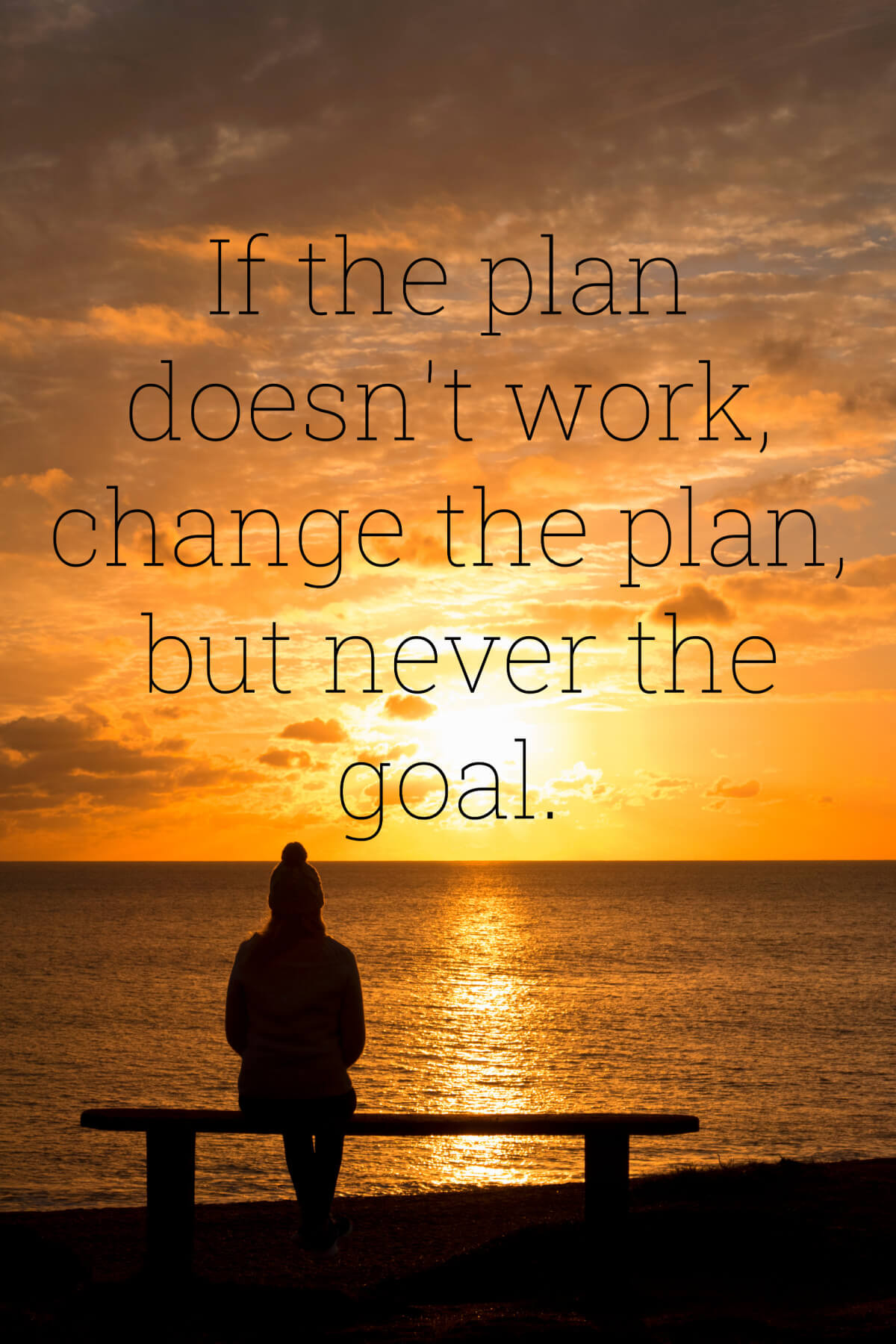
Every January, we tend to reflect on the past year and set personal goals. But exactly how do you start setting personal goals?

I’ve listed ways you can begin goal-setting below:
The Goal Setting Process
- Write down the goals.
- Determine how to measure goal achievement.
- Establish a deadline for achieving the goal.
- Identify obstacles to achieving the goals.
- Identify how to overcome the barriers.
- Review the list.
- Monitor progress and continue to set goals.
What Are S.M.A.R.T. Goals?
S.M.A.R.T. goals are goals written to conform to the following criteria:
- Specific: Target a specific area for improvement.
- Measurable: Quantify or suggest an indicator of progress for quantifiable goals.
- Achievable: Specify who will do it and how.
- Realistic: State what results can realistically be achieved, given available resources.
- Time-related: Specify the target date or general time frame when the result(s) can be achieved.

Set Five Goals & Make Them Happen:
- Decide. Think of something you want to do or work towards.
- Write it down on paper.
- Tell someone. Telling someone we know about our goals also seems to increase the likelihood that we will stick to them.
- Break your goal down.
- Plan your first step.
Seven Personal Goals:
- Plan to learn new skills.
- Be present and learn to be a great listener.
- Let go of the past & the negative feelings associated with it.
- Take care of your health.
- Practice compassion by helping others.
- Learn from your experiences.
- Be grateful for where you are and for what you’ve achieved.
Let’s break those personal goals down.
PLAN TO LEARN NEW SKILLS:
Think of new skills you’ve always wanted to learn, but always put on the back burner. Maybe it’s learning to crochet or learning a new language.
Take it off the back burner and decide the skills you want to learn in 2022—plan to have the skill firmly in mind by the end of January. You must set timelines for goal-setting if you are to finish them.
Don’t plan more than three new skills to work toward so as not to burn out before you begin.

BE PRESENT & LEARN TO BE A GREAT LISTENER:
I tend to interrupt people when they’re talking. It’s a bad habit, and I want to break it. I need to work on that because I know it is important to listen to others.
I plan to wait until they’ve finished speaking before thinking of my response.
LET GO OF THE PAST & THE NEGATIVE FEELINGS ASSOCIATED WITH THE PAST:
I promise myself that I will not dwell on unpleasant things from the past. I’ll let it enter my mind and pass on through without stopping. In this way, I will not allow myself to pick it apart and feel those old, bad feelings again.
I plan to visualize a broom to sweep those negative feelings out the door.
TAKE CARE OF YOUR HEALTH:
This is something I start and then let my best intentions lapse. One change I want to strive for is to make better food choices. I will find a way to exercise without causing undue pain from old injuries.
I plan to discuss this with my doctor to set achievable goals.
PRACTICE COMPASSION:
First, I will practice self-compassion. Learning self-compassion is an important first step. That way, we can recognize what compassion really is. Then put it into practice to help others.
I plan to relax my judgments of others.
LEARN FROM YOUR EXPERIENCES:
If I am thinking of the past, I will not dwell on it, but let it go as soon as the thought has formed in my mind. I will think about how I could have handled a difficult situation better.
Mistakes teach us what doesn’t work and encourage us to create new ways of thinking and doing.
My plan is first to acknowledge the experience, then work to create a different reaction to it.
BE GRATEFUL FOR WHERE YOU ARE:
I will be grateful right where I am. And accept that I am lucky to have what I have. I will recognize that there are so, so many who are far less fortunate.
I plan to look around me and always be grateful for my surroundings.
We’ve all had a tough couple of years due to COVID. We need to learn relaxation techniques and manage stress to focus on our goals.
Putting Your Plan into Action:
1. Recognize your stress signals.
Learn to notice how stress shows up in your body and mind. It could be tension in your shoulders, irritability, racing thoughts, or difficulty sleeping. Awareness is the first step toward managing it before it builds up.
2. Identify the sources.
Pay attention to what consistently triggers your stress. It could be overcommitment, clutter, work pressure, or certain people. Once you see patterns, you can take steps to reduce or change your responses to those triggers.
3. Build calming routines.
Morning walks, journaling, meditation, or deep breathing help train your body to return to a relaxed state more quickly after stress. Regular routines help ground you.
4. Keep your body strong.
Exercise, balanced meals, and enough sleep all help your body handle stress more efficiently. Even gentle movement like stretching or yoga can make a big difference.
5. Manage your time and priorities.
Stress often grows when everything feels urgent. Learn to prioritize what truly matters and let go of what doesn’t. Break big tasks into smaller, manageable steps.
6. Practice self-kindness.
Don’t expect yourself to be perfect. Speak to yourself the way you would to a close friend—encouraging and understanding instead of critical.
7. Stay connected.
Talking with supportive people—friends, family, or a counselor—can lighten the load. Sharing what you’re feeling helps you gain perspective and feel less alone.
Reframing How You Look at Things:
8. Reframe your thoughts.
Try to see challenges as opportunities to learn or grow, rather than threats. Shifting your mindset helps turn stress into motivation rather than overwhelm.
9. Take regular breaks.
Stepping away for a few minutes to breathe, stretch, or get outside interrupts the cycle of tension and helps you reset.
10. Practice consistency.
Stress management is a skill built over time. Small daily actions, done consistently, are far more effective than occasional big efforts.
It’s all about learning to do better, moving on, and putting the past behind you. If you can take steps to change, change will put some of the things you struggle with in the rearview mirror.
Don’t forget to be kind to yourself as you move through these steps to living more positively.




This is a great post, Brenda. I like the quote that a plan without a goal is just a wish.
I do have a few personal goals set, and one in particular, to break an old response habit.
And here’s on that just came to me the other day: I now spend winters in Florida, and our place is across the street from the beach. Days can go by, and I don’t see the ocean. My goal is to walk over to the beach every single day, no matter what the weather. I find the powers of the ocean to be enormously calming and restorative. It’s a place to think clearly, and just to stand in awe of its power and beauty. Even it’s just for a few minutes, seeing the ocean is has always been a form of meditation for me. I need to take advantage of it, while I’m here.
Thank you Brenda. That was a wonderful post.
I have a great many goals in my heart, but rarely out out on paper for fear of it never happening. Yes, I know that it won’t if I don’t make the effort. And might I say I have tried and didn’t reach my goal.
But when I have tried and failed and tried again and maybe had to try again I found I would reach my goal.
Maybe I had to go a different route, or even try something different, or maybe even stretch my imagination, but finally I would reach the goal, because I kept at it. I didn’t give up.
Thanks again. Think I’ll try a goal I gave up on last year.
Have a great week.
I’ve been journaling about the new year…I don’t know if you’d call them goals, but I’m doing a lot of thinking and writing about things in my life I want to work on.
Every year I sign up for Susannah Conway’s free download of journal prompts/a workbook for not only the new year, but reflections about the past year, too. Here’s the link in case anyone is interested:
https://www.susannahconway.com/unravel/
So often the most difficult is where to start re promises, or any life improvements!
Sad,, but I haven’t made any new year’s resolutions for at least 2 decades! It’s okay!!
For sure, not out loud anyway.
Some things will be easier than others. So, maybe just do our best. More realistic.
As we get older, and these years sure go by quickly, we are less inclined to make any sort of promises to resolutions.
Just happens that way. For most of us I think.
Hope everyone is enjoying Sunday evening!
So cold here in Illinois.
Freezing. 🥶
Love this post, I wrote one very similar last week. The last few years have been difficult and sometimes it is just hard to know where to start. As they say, “the journey of a thousand miles begins with a single step!” Have a great day Brenda, you are one day closer to a new home and life.