5 Trees You Can Grow In Containers
This post may contain affiliate links. If you purchase through links on my site, I may earn a commission at no cost to you. For more information, please see my disclosure policy.
Today, I’m talking about 5 trees you can grow in containers. I’ve received many interesting comments about the two trees growing in containers on my patio. One is a Ginkgo Biloba Jade Butterfly tree, and the other is a Japanese Maple.
I purchased the Ginkgo Biloba tree about 4 years ago, and I’ve since repotted it. I’ve also repotted the Japanese Maple, which I’ve had for 2 years.
Both look healthy and are leafing out for spring. I think they are my new favorite container plant, after ornamental grasses, to add to the landscape.
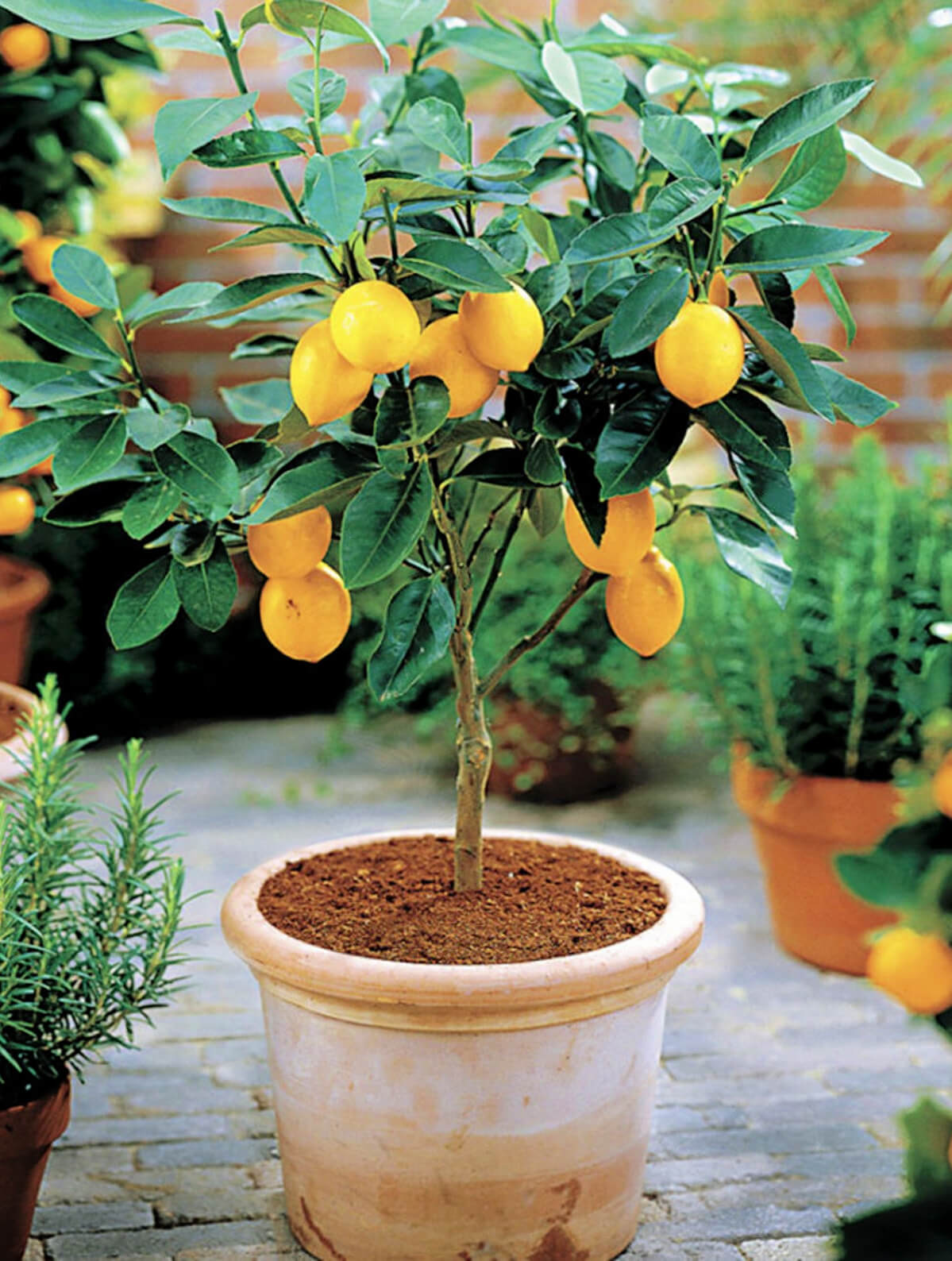
Meyer Lemon Tree

A Meyer Lemon tree would make an excellent addition to any outdoor space.
The Meyer lemon tree is naturally small. It might achieve a dwarf size of 7 feet. So it can grow nicely indoors or on your patio. It should have an abundance of lemons for year-round food production.
While the plants can tolerate some shade, they prefer at least eight hours of direct sunlight per day.
Meyer lemon trees can grow in almost any type of soil with good drainage.
Keep the soil moist but not soggy. Stick your finger into the soil at least up to the second knuckle. If you feel dampness on your fingertip, wait for the water to evaporate. If it feels dry, water your plant until water runs out of the bottom of the pot.
Bring your tree indoors or into a garage when the temperature is below freezing.
USDA Zone: 8 – 11
Japanese Maple Tree
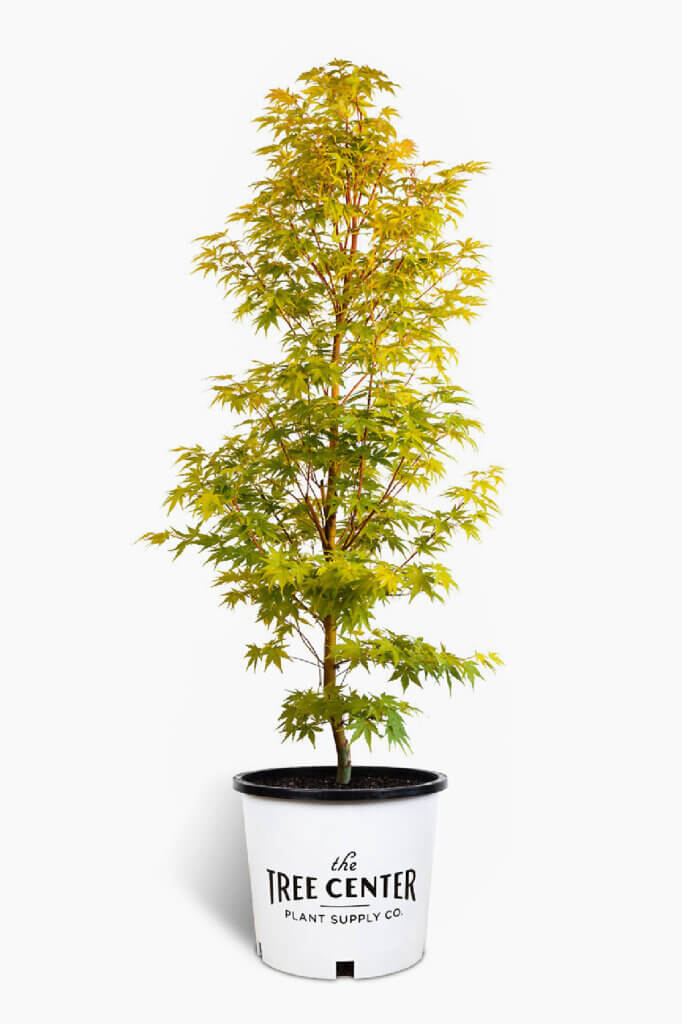
Acer palmatum ‘Sango-kaku’
Japanese Maples have gorgeous leaves and will look quite lovely on your patio.
For a healthy container-grown Japanese maple, you’ll need to plant the tree in a container that is about twice the size of the tree’s root system. The pot must have drainage holes to allow water to drain.
Keep the soil moist but not wet. And use good-quality potting soil to fill the pot.
My Japanese Maple can’t tolerate full sun in the middle of summer, probably because it’s on a cement patio.
USDA Zone: 6-8
Celeste Fig Tree
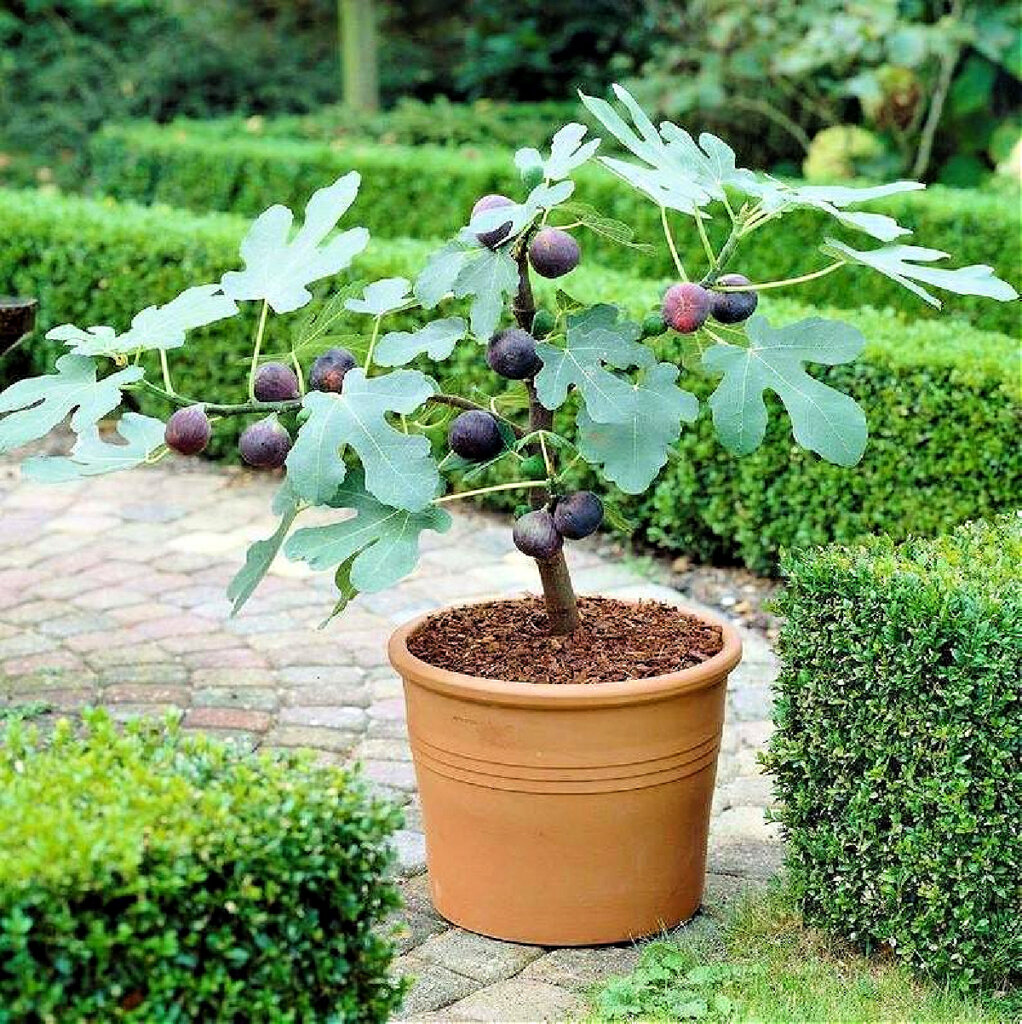
Another tree that will provide food is the Celeste Fig Tree. This fig tree is among the most widely planted in the US.
This fig tree produces sweet fruit and is sometimes called the “Sugar Fig.”
A container suitable for planting fig trees in pots should be large. Half whiskey barrels are ideal. However, any container large enough to accommodate the root ball and provide some growing space is fine.
You can use regular organic potting soil or make your mix as long as it is loamy, well-drained, and contains plenty of compost or well-rotted manure.
Water deeply at least once a month in the summer to rinse away salt deposits and to reach deep roots. Fig trees grown in containers typically require more frequent watering, especially when outdoor temperatures exceed 85°F.
You can always transplant the tree in later years as it outgrows the container.
Placing the pot on casters makes it easy to move the tree to a protected area during cool months.
Figs thrive in full sun, so choose a site with as much exposure as possible, preferably next to a south-facing wall. Plant new fig trees in the spring after all danger of frost for your area has passed.
USDA Zone: 7a – 10
Dwarf Peach Tree
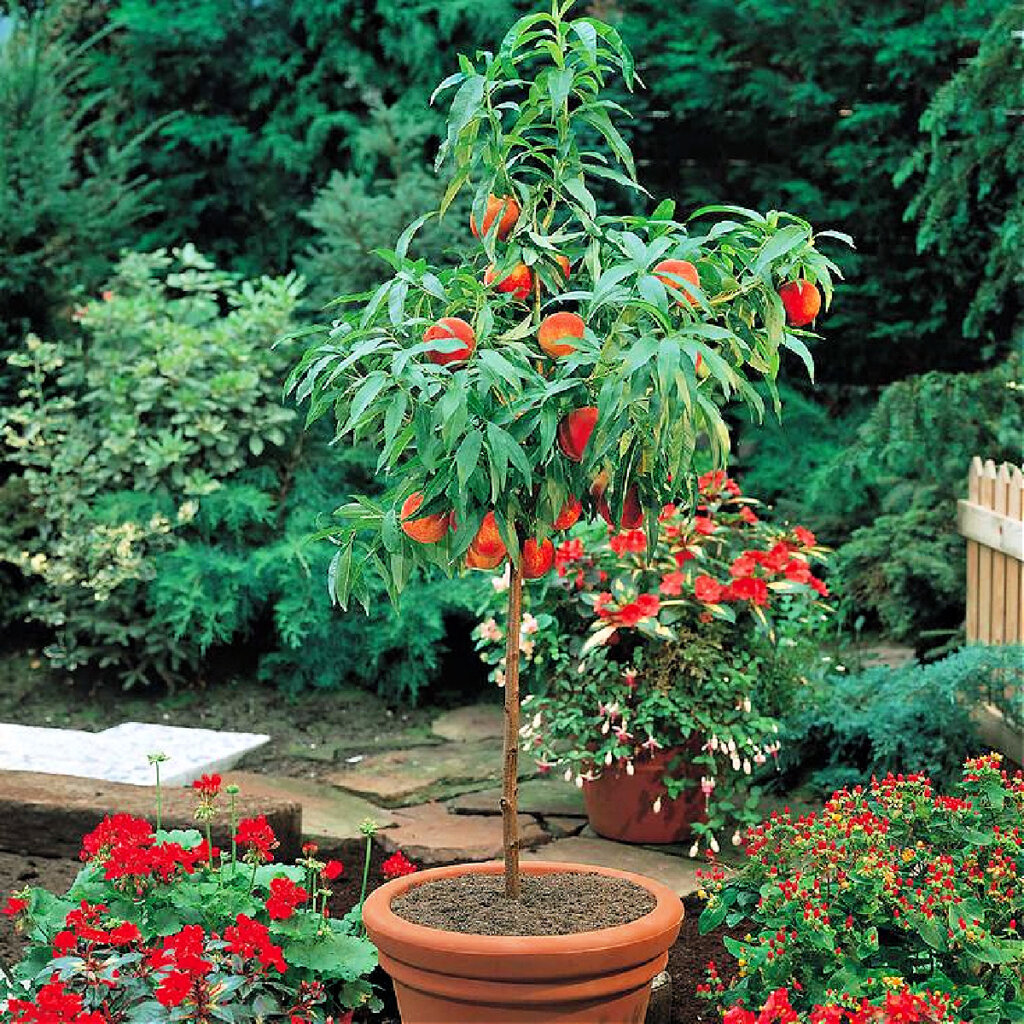
Another patio tree to consider is the Dwarf Peach Tree.
Ensure your container has sufficient drainage holes before you plant the tree. When planting, fill the pot halfway with a loamy compost soil. Place the sapling into the container and fill the surrounding area with soil. Fill the soil to within a couple of inches of the top of the container.
Be sure to plant the tree so that the graft line (where the dwarf was grafted to its parent) is not under the soil.
A peach tree will benefit from container growing, as it flowers as early as March. It also bears fruit earlier than many fruit trees.
The container makes it easy to protect your peach tree by moving it indoors when frost or wind threatens.
USDA Zone: 5 – 9
Ginkgo Biloba Jade Butterfly Tree
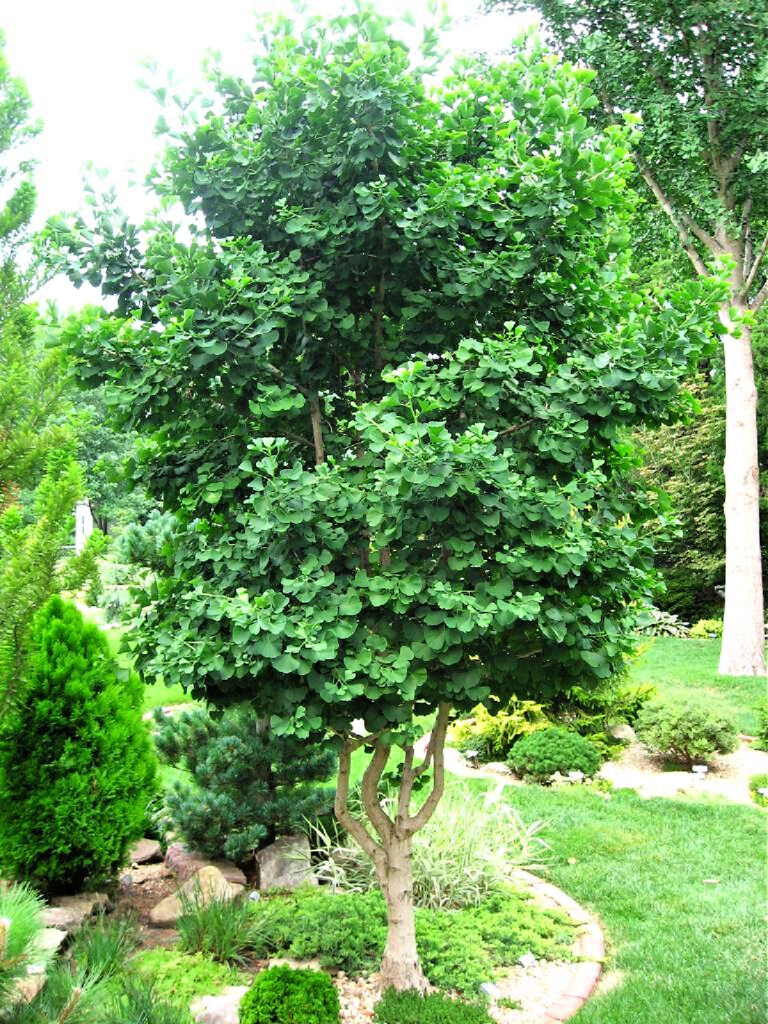
Above is a mature specimen of the Ginkgo Biloba Jade Butterfly tree. Mine isn’t as mature and well-defined.
It is a deciduous conifer with a canopy of fan-shaped, beautifully variegated green, cream, and butter-yellow leaves. In the fall, the leaves turn bright yellow.
It is the only surviving member of a group of ancient plants believed to have inhabited the earth up to 150 million years ago.
Nurseries typically sell only male trees because female trees produce seeds encased in fleshy, fruit-like cones, which, at maturity in autumn, are messy. They also emit a noxious, foul odor when they fall to the ground and split open.
Ginkgo biloba trees thrive best in partial to full sun and are a splendid addition to the urban landscape. It is highly tolerant of various soil types, pH levels, salinity, and pollution. However, make sure it is well-drained.
USDA Zone: 4 – 9
If you are undecided about growing a tree in a container, I suggest visiting a reputable nursery and consulting with a knowledgeable tree expert.



regarding japanese mapels wen to prune the roots early spring is the best time before leavse apear tease the roots with afork and cut the roots so it fits the pot you than cut the top one third of the branches to balens the tree if you cut the roots only some of the tree may die
I have a small Meyer Lemon tree I got last spring from Home Depot. I have to look up how to best prune
It as the branches seem to be growing out horizontally. I live in zone 7 and so I kept it the garage with a grow light for the winter. Last year it formed small, green lemons following it’s bloom. This spring has brought blossoms again and the scent is heavenly. Even if I never get useable lemons from it, it is worth growing for the floral scent!