The Allure of Purple Flowers in the Garden
This post may contain affiliate links. If you purchase through links on my site, I may earn a commission at no cost to you. For more information, please see my disclosure policy.
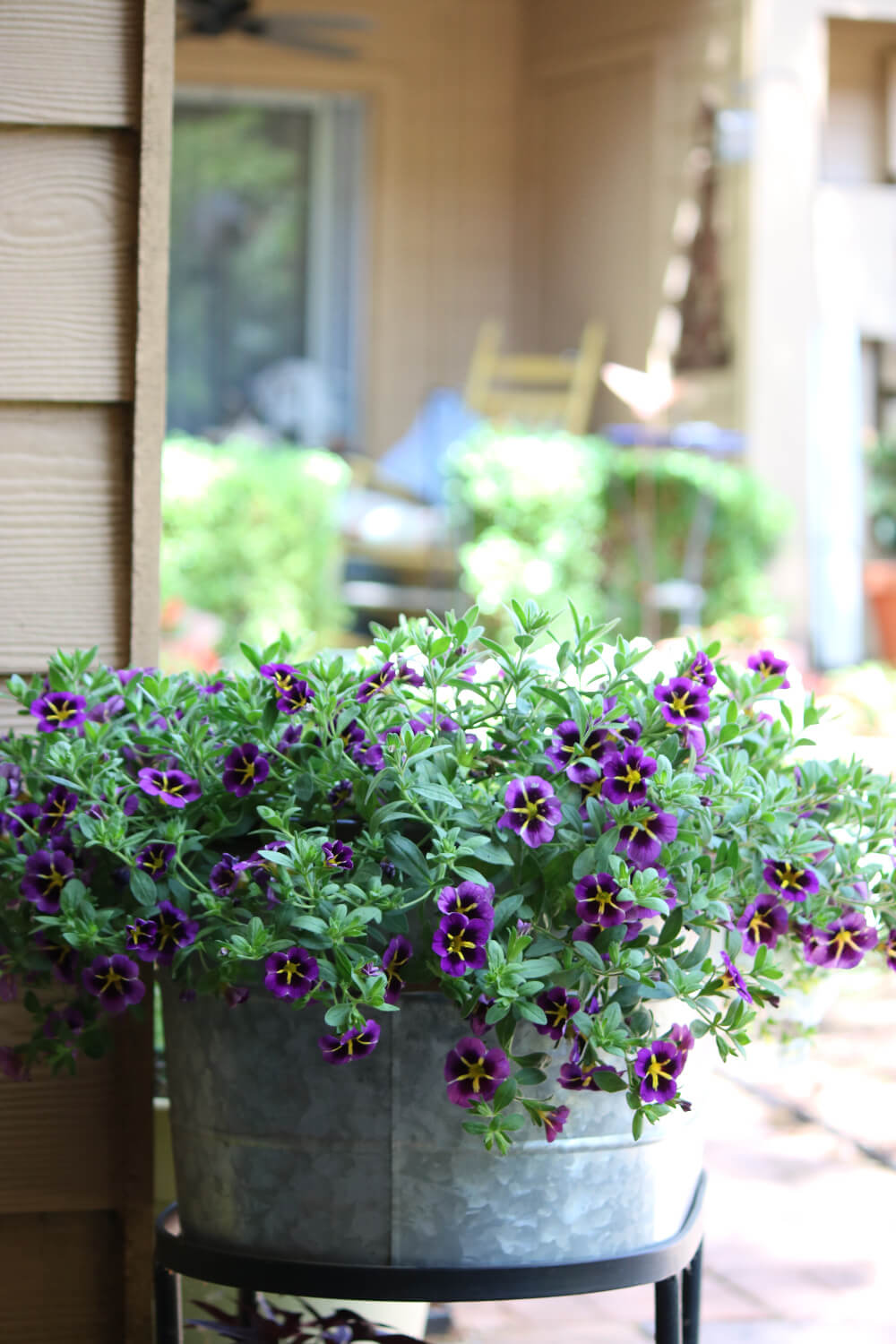
There is an allure to having purple flowers in the garden. They liven up the landscape of my patio garden.

Purple flowers have a timeless appeal that few other colors can match. From soft lavender to deep violet, these blooms bring elegance, tranquility, and a touch of magic to gardens of every size.
Whether you’re creating a charming cottage garden, a pollinator paradise, or a relaxing backyard retreat, purple flowers deserve a place in your landscape.
Purple garden flowers bring a dreamy, calming beauty to any outdoor space. Their hues can range from soft lavender and lilac to deep violet and rich plum.
These blooms often evoke a sense of romance and mystery, especially when contrasted with lush green foliage or lighter-colored flowers.
Here are some common purple garden flowers and their unique appeal:
- Lavender – With its silvery foliage and fragrant spires, lavender is a classic. It’s elegant and rustic at once, drawing bees and butterflies while adding a gentle perfume to the air.
- Iris – Often dramatic and sculptural, irises bloom in a variety of purples, from pale mauve to velvety indigo. Their tall, sword-like leaves add structure to garden beds.
- Salvia – These tall spikes of vibrant purple flowers bloom for a long time and are loved by pollinators. Their slightly wild look brings a meadow-like charm.
- Clematis – A climbing vine with large, star-shaped blossoms, clematis adds vertical interest. Its soft purple blooms often feel like something from a fairytale.
- Allium – With globe-like blooms perched on long stems, allium looks architectural and whimsical. Their shade of purple ranges from pale violet to bold amethyst.
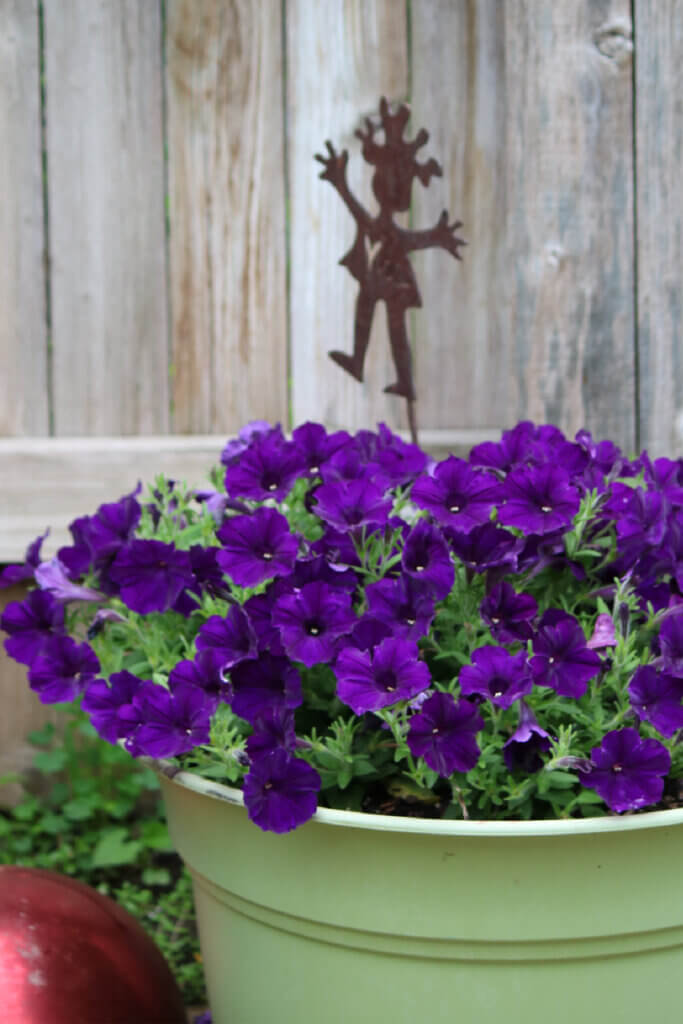
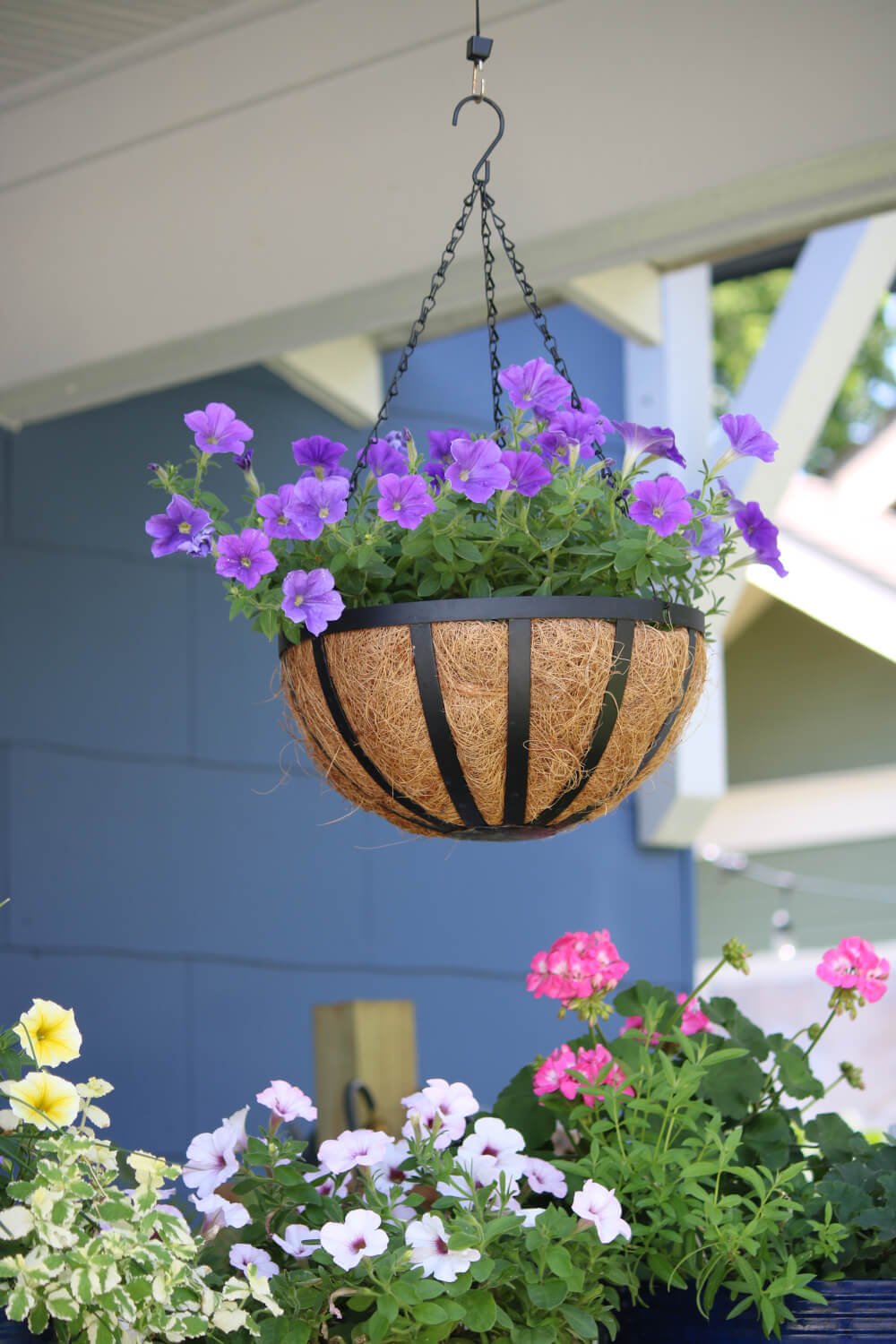
- Petunias – In containers or borders, purple petunias add a velvety richness. Their ruffled edges and sometimes variegated coloring give a lush, full appearance.
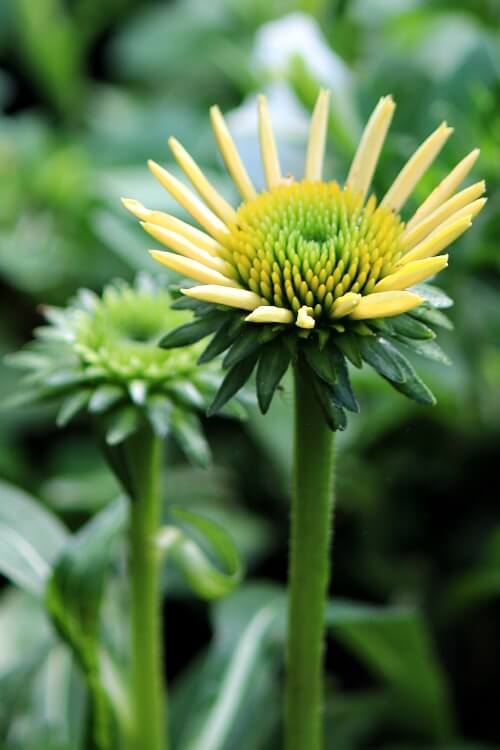
- Coneflower (Echinacea) – Purple coneflowers are sturdy and cheerful, with daisy-like petals around a spiky central cone. They bring prairie warmth and charm.
- Pansies and Violas – These little faces in shades of purple are perfect for cool-weather gardens. They offer a nostalgic, cottage-like feeling.
Purple Flowers In The Garden:

Every spring, I visit the nursery to seek out purple flowers, such as petunias, pansies, and other lighter shades. Some of the lighter purple blooms are on verbena and allium plants, to name a few.
Since the cold last winter killed my white clematis, I purchased a purple clematis this past spring. It’s beautiful when it blooms, but now it’s too hot for it to bloom.
Purple flowers in a garden evoke a soothing feeling against the green leaves.
Color Combinations with Purple Flowers:
Purple’s ideal partner is yellow, and you often see me pair these two colors. Yellow lightens the landscape, while purple subdues yellow. Red-dominated shades of purple add a bit of drama to the garden.
The relationship of contrasts is even more critical in shade-dappled gardens. Purple can sometimes get lost in the shade, so pair it with a light-colored companion to highlight it and make it more noticeable.
Chartreuse plants, such as those in the potato vine, pair well with purple flowers. There is just something deeply gratifying about seeing these colors used together.
Looking out across a garden, dark blue-purple flowers seem to recede into the shadows.
Purple flowers bring a quiet sense of enchantment to the garden, creating spaces that feel peaceful, timeless, and effortlessly elegant.
Whether you prefer soft lavender hues or rich violet blooms, shades of purple have a way of calming the landscape while adding depth and character. They evoke memories of cottage gardens, rolling fields of lavender, and the gentle beauty of wildflowers swaying in a summer breeze.
Purple Flowers are Versatile:
One of the greatest allures of purple flowers is their versatility. Pale lilacs and lavenders create a soft, romantic atmosphere that pairs beautifully with white roses, silvery foliage, and pastel blooms.
Deeper shades of plum, indigo, and violet add drama and sophistication, providing striking contrast against bright greens or warm-colored flowers like yellow coreopsis, orange marigolds, and pink coneflowers.
Purple flowers also have a magical quality at dawn and dusk. As the sunlight softens, their colors seem to glow, adding richness and mystery to garden borders and pathways. This makes them especially appealing in evening gardens, where their cool tones create a tranquil retreat after a busy day.
Beyond their beauty, many purple-flowering plants are favorites of pollinators. Lavender, salvia, catmint, bee balm, and alliums attract bees, butterflies, and hummingbirds. This fills the garden with gentle movement and the soothing hum of nature.
A garden filled with purple blossoms often feels more alive, becoming a welcoming haven for both wildlife and those who simply enjoy spending time outdoors.
Purple flowers also blend effortlessly with a variety of garden styles. They are equally at home in an English cottage garden overflowing with blooms, a formal landscape with carefully planned borders, or a relaxed wildflower meadow.
Their adaptability allows gardeners to create spaces that feel both refined and natural.
Perhaps most of all, purple flowers encourage us to slow down. Their cool, soothing tones invite quiet reflection, making a garden feel like a sanctuary rather than simply a collection of plants.
Whether you’re sipping tea on the porch, tending flower beds, or enjoying an evening stroll through your yard, purple blossoms add a touch of serenity that never seems to fade.
Purple Flowers Create a Peaceful Garden
Cool colors naturally evoke feelings of calm, and purple is no exception. Shades of lavender, lilac, and violet soften the landscape, creating a relaxing atmosphere that encourages you to slow down and enjoy your surroundings.
A border filled with purple blooms can transform an ordinary yard into a peaceful escape where you can unwind after a busy day.
They Add Depth and Contrast
Purple flowers are incredibly versatile and pair beautifully with nearly every color in the garden. They look stunning alongside:
- White flowers for a classic, elegant look
- Yellow blooms for bold contrast
- Pink flowers for a romantic cottage garden
- Blue flowers for a cool, soothing color palette
- Silver foliage for a sophisticated display
Because purple bridges warm and cool color schemes, it blends effortlessly into almost any garden design.
A Favorite of Pollinators
Many of the most popular purple flowers are magnets for beneficial pollinators. Bees, butterflies, and hummingbirds are naturally drawn to these nectar-rich blooms, helping your garden thrive while supporting local wildlife.
Some of the best purple flowers for pollinators include:
- Lavender
- Salvia
- Catmint
- Bee balm
- Verbena
- Alliums
- Agastache
Adding these plants creates a vibrant garden filled with color and movement throughout the growing season.
Purple Flowers Fit Every Garden Style
Whether your gardening style is formal or relaxed, purple flowers blend beautifully into the landscape.
They are perfect for:
- Cottage gardens
- English gardens
- Wildflower gardens
- Pollinator gardens
- Container gardens
- Modern landscapes
- Rustic farmhouse gardens
Their versatility makes them one of the easiest flower colors to incorporate into existing flower beds.
Beautiful Purple Flowers to Grow:
If you’re looking to add more purple to your garden, consider planting some of these favorites:
- Lavender
- Russian sage
- Salvia
- Delphinium
- Iris
- Clematis
- Verbena
- Coneflower
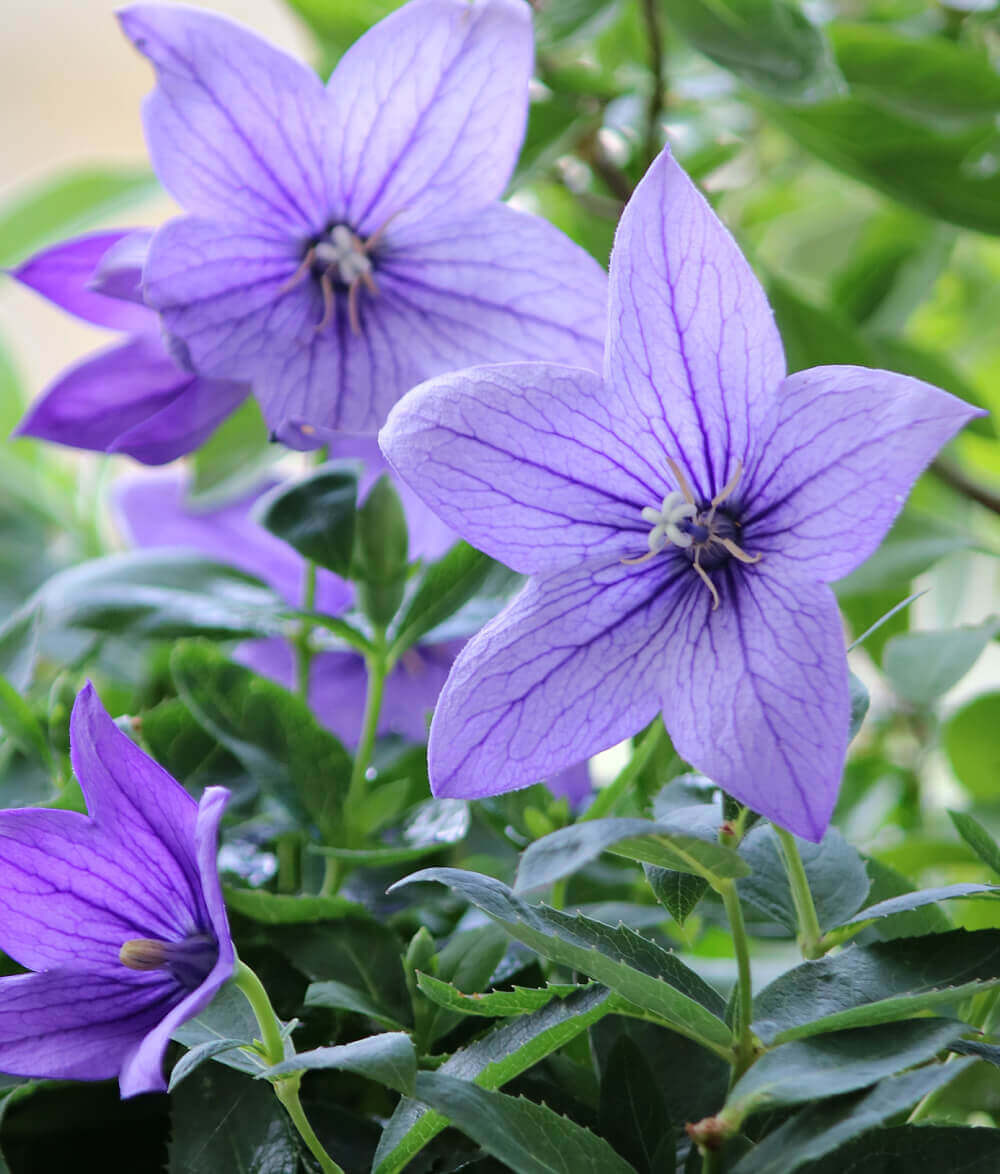
- Balloon flower
- Catmint
- Allium
- Aster
By choosing varieties with different bloom times, you can enjoy purple flowers from spring through fall.
Purple Blooms Shine in Every Season:
Purple flowers seem to glow in the gentle light of morning and evening. During spring, they symbolize renewal, while summer gardens overflow with vibrant shades of violet and lavender. In autumn, asters provide one last burst of rich purple before the season changes.
This year-round beauty makes purple flowers an excellent investment for gardeners seeking continuous interest.
Easy Ways to Design with Purple Flowers
For the most eye-catching display:
- Plant purple flowers in groups rather than individually.
- Combine different heights and bloom shapes for added texture.
- Mix light and dark shades of purple to create depth.
- Add ornamental grasses or silver foliage for contrast.
- Include evergreen shrubs nearby to provide year-round structure.
Layering these elements creates a garden that feels lush, balanced, and naturally inviting.
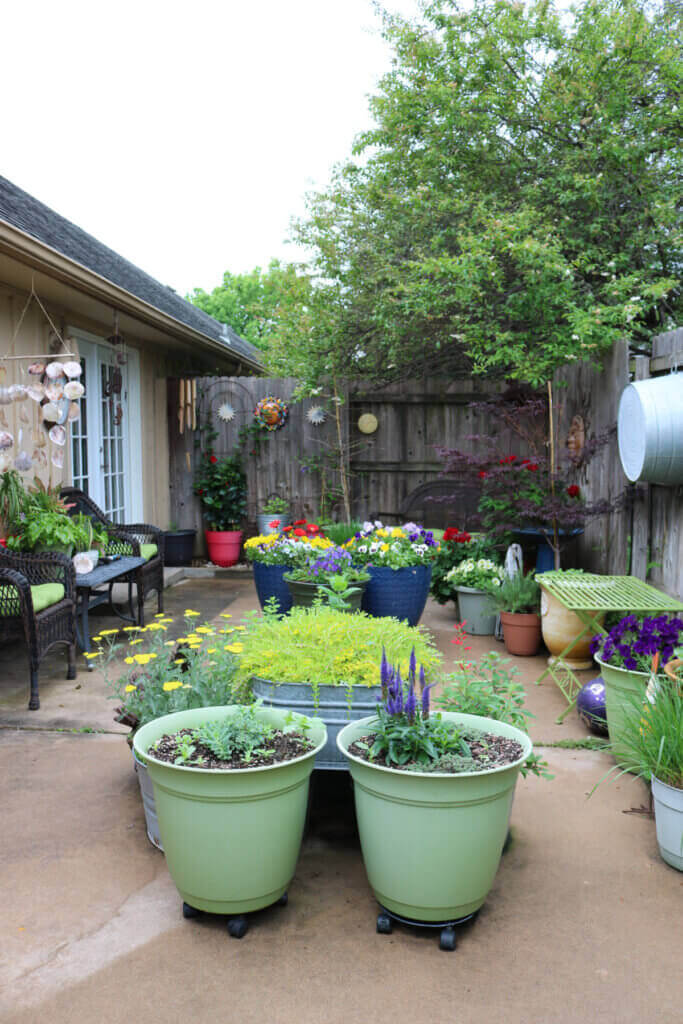
I love bold purple flowers in my pots, too, mixed with red and yellow. In my beds, I was told that deer don’t like purple flowers, so that’s what we’ve planted. Not sure if it’s true, but they do avoid most of them.
I love purple flowers too! What I especially like about morning glories is how, in pictures, it looks like the inside is glowing. That always amazes me!
I love morning glories you should be proud of yours. They are so pretty. Have a great rest of the week.
Your morning glories are the exact color of mine! I got Burpee seeds at least 5 years ago and they have reseeded themselves every year. And, as you know, they plant themselves elsewhere! Some went to the opposite fence and some went around the house to the back fence. lol With our South Dakota wind, that’s not surprising!
And our Oklahoma wind! It’s blowing rain like crazy right now.
Brenda, could you tell us where to purchase blue morning glory seeds? I have gotten little packets from Wal-Mart but have never had luck with them. As a child, I remember my grandmother running string on one end of the front porch making a handmade arbor of sorts. Blue morning glories were running the length, height and width of it, shading the wooden swing in front. I can still see that image in my mind and I thought it was just about the prettiest thing I’d ever seen.
I haven’t had much luck with the blue ones. I did plant them but they either didn’t come up or the horrid heat killed them. So I don’t know where to tell you to order them from. I’d try Renee’s Heirloom Seeds. I’ve had my best luck with her seeds. https://www.reneesgarden.com/
My garden beds flank both sides of my driveway and frame the backyard on 3 sides. They are all a real mismash of color, except at the front of the house, where I try to confine myself to red and white, usually geraniums and petunias, to coordinate with my bright red front door and large white planters on my small front “porch” (more like a front stoop). Along one side of the driveway, I have a lavender clematis, a hybrid large purple Iris that is deep, dark and beautiful, and another hybrid that gives me a sort of reddish/purplish slightly smaller blossom. They’re both stunning when they bloom. I only wish they lasted longer! Because of the high acidity in the soil of the garden where I planted a hydrangea on the other side of the driveway near two towering pine trees, the flowers will start out in all different shades from bright light purple to pale lavender; as the flowers age they turn pinkish with green undertones. This season I gave the shrub a good hard pruning and I’ve never had more flowers, and they’re still “pickable” since first blooming more than three months ago, it’s just amazing. I made sure to give it a good dose of daily water during our horrific hot and humid summer with little to no rain for more than 2 months. The hydrangea blossoms have all “faded” to the pinkish with green undertones now, but are still full and vibrant. I planted some purple cone flowers maybe 4 years ago and they give me reliable long lasting flowers. The butterflies go ga-ga over them and the local black/yellow finches and red house finches just love the seed heads. Wondering if there is a correlation between Ivy’s appearance (even though she doesn’t go outside she can be seen through the patio doors) and the disappearance of occupants in your bird house? But they still come to your bird bath and the tree overhanging your fence. Your own little bit of peaceful paradise!
Ivy’s been here since 2018, and birds have been scarce around that birdhouse for quite some time. So I don’t know.
I love purple flowers outside and aside from the aesthetics, hummingbirds are attracted to my purple petunias. Each year is getting hotter and thus it’s difficult to keep them going this time of year.
With songbirds dying mysteriously at an alarming rate this year, in our area we were asked to take down bird feeders, the thinking being the feed was a possible source. I have a large 3 tier bird bath fountain that this year, even with the constant movement of water, grows thick algae in less than 24 hrs after cleaning with a 10/1 water-bleach solution. In the 11 yrs we have had the fountain, this has never happened before! The heat is just to extreme and I imagine it was also making bird feed go rancid quicker. My goal is to plant a little flower garden just for the birds, bees and butterflies going forward with natural food sources. Of course It will have to be cleverly fenced off from the deer with wire that the flowers will still be able to be seen by the humans. My purples will include purple coneflower, aster, iris and of course purple petunias again in hanging baskets on the porch. I think any color flower bloom goes with purple as well. Usually I mix 3 different colors in my containers and will probably do the same with what I put in the ground. This darn extreme heat makes life difficult for sure. I can’t live without flowers in my life!
This year I mixed red with my two usual colors of flowers, yellow and purple. And then I planted zinnia seeds and have all different colors of zinnias. I read about the problem with the bird feeders. Hope that gets solved quickly. I love the idea of a garden for nature’s creatures!
I love morning glories, I actually planted some seeds this year and were delighted that they were all blue/purple. I am drawn to purple flowers too but when you plant them in the garden they do not show up much against the soil. I have some old indoor wall plaques that I want to hang on the fence for next year for the morning glories to grow on.
Sounds like a good plan! Since I garden mostly in containers, I don’t have the problem of purple not showing up well against brown soil.
Do the wild morning glories re-seed?
Seems to, yes. I have them every year and they keep spreading. I get rid of the ones that come up in containers where I have something I don’t want them mixed with. It’s hard for me to toss the little morning glory plants that come up though.