
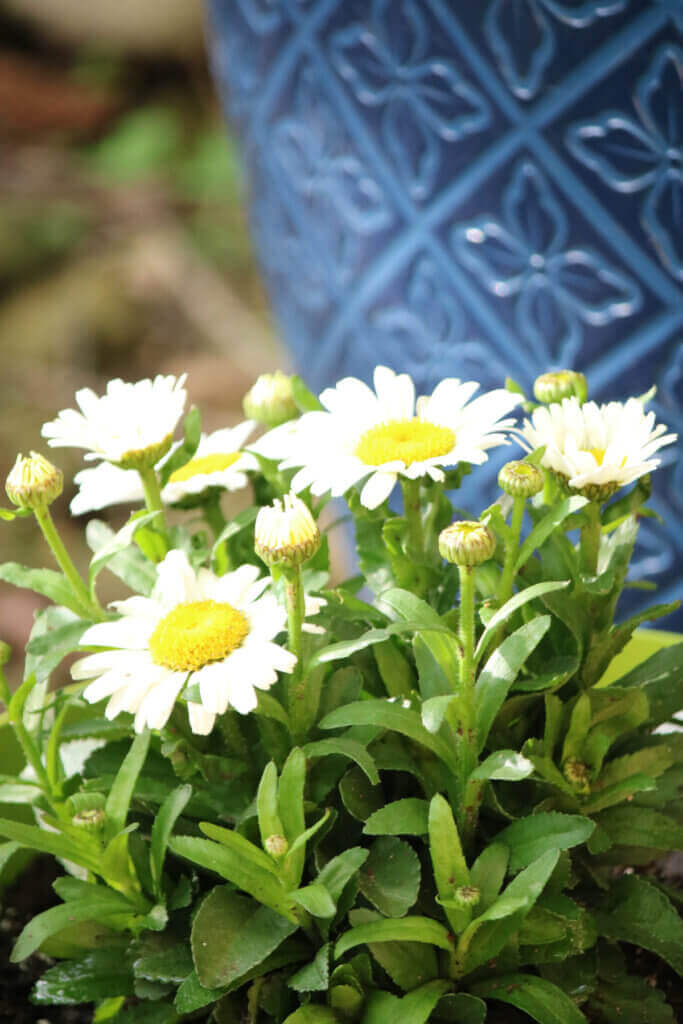
Planting & Caring For Shasta Daisies
This post may contain affiliate links. If you purchase through links on my site, I may earn a commission at no cost to you. For more information, please see my disclosure policy.
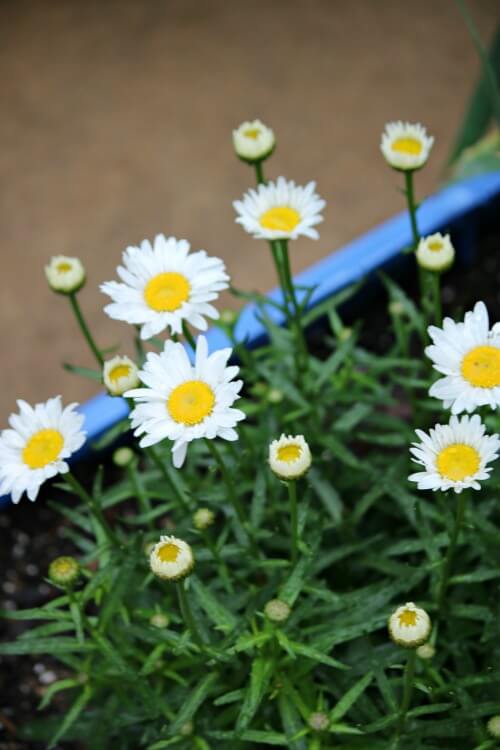
Planting and caring for Shasta daisies is one of my favorite garden chores.
Shasta daisies are relatively low-maintenance perennials that thrive in full sun with well-drained soil. To ensure healthy growth, plant them in a sunny spot, water regularly until they are established, and amend the soil with compost or other organic matter.
Deadheading faded flowers encourages more blooms, and dividing the plants every few years helps prevent overcrowding.

Plant Category:
Shasta daisies were once considered members of the Chrysanthemum family.
But because they are not aromatic and their leaves lack grayish-white hairs, they were separated from the Chrysanthemum family. They are now considered members of the Aster family.
Common relatives of daisies are chrysanthemum, aster, sunflower, strawflower, lettuce, endive, zinnia, and ageratum.
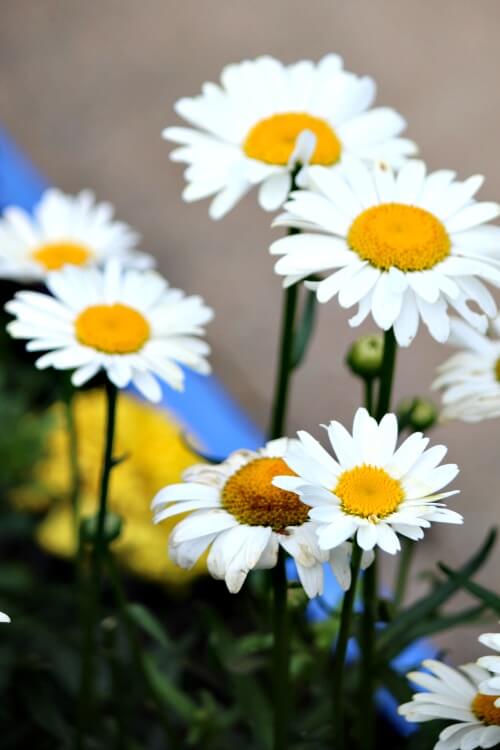
Daisies are a common feature in cottage gardens. They are often seen in English and wildflower gardens with their white petals and sunshine-yellow flowers.
Are Shasta Daisies Easy To Grow From Seed?
If you’re looking for an easy-to-grow perennial, consider the Shasta Daisy. This classic flower was named after the Shasta Mountains in California.
The American horticulturist Luther Burbank named the flower in 1901 to honor the mountain’s glistening, snow-covered peak, according to the Luther Burbank Home & Gardens.
Burbank developed the Shasta daisy as a hybrid, crossing various daisy species to create the plant we know today.
A perennial, this flower blooms the first year from seed. Soaking your seeds overnight after nicking is said to increase the germination rate.
Its stems are sturdy enough to grow 3 to 4 feet tall without staking. Its clumping behavior means it’ll spread to fill your flower garden beds over time.
How To Plant Shasta Daisies:
To plant, select a sunny site with well-drained, richly organic soil. If you keep the soil moist, the seeds should germinate in 10 to 20 days.
Daisies like to spread, so space your plants 2-3 feet apart. Dig a hole twice the diameter of the container in which you purchased it.
When placing your daisy in the hole, make sure the top of the root ball is level with the soil surface. Fill in the dirt around the root ball and firm the soil. Then water thoroughly.
Planting Shasta Daisies In Containers:
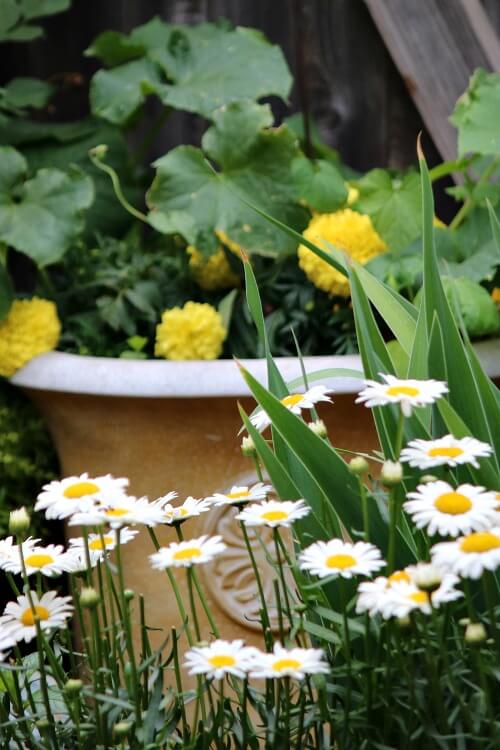
If you prefer planting Shasta daisies in containers, use an all-purpose potting soil. Container-grown Shasta daisies prefer full sun, but they also tolerate partial shade.
Caring for Shasta daisy plants in pots is easy as long as you keep them moist and prune them regularly. Water regularly whenever the topsoil feels dry to the touch.
Repot Shasta daisies every 4-5 years if planted in a container.
Shasta Daisy Care:
Shasta daisies are hardy plants that require little attention once established. They are both deer- and drought-resistant, rarely succumbing to pests or diseases.
The way to extend the flowering season is to deadhead daisies regularly. I usually go out every day or so and deadhead the spent daisies.
Deadheading promotes new growth and encourages the development of new blooms.
When & How To Deadhead Daisies:
The time to deadhead daisies is just before the blooms die back completely. As soon as the flowers begin to fade or turn brown, it’s time to deadhead.
You can use either a sharp knife or pruning shears.
Shasta daisies benefit from a hard prune in the fall, once frosts have damaged the leaves and blooms.
Cutting back and clearing away dead leaves reduces the risk of disease and pest overwintering and spread.
However, if you forget, you can cut them back once winter is over. The seed heads will provide food for the birds over the winter season.
More Information about Shasta Daisies:
You might want to add a 1-2 inch layer of mulch to protect them from cold winter weather.
The blooms of Shasta daisies attract butterflies and pollinators. Once established, they are vigorous growers and easily spread through rhizomes.
According to the ASPCA, daisies are toxic to dogs and cats.
Shasta daisies are hardy perennials that should return even after freezing winters in hardiness zones 5-8.
Some of the most common pest problems that affect Shasta daisies include aphids, slugs, and earwigs. Leaf spots and Chrysanthemum nematode also impact Shasta daisies.
In terms of companion planting, Shasta daisies grow well with other tall blooming perennials. Good choices are coneflowers, rudbeckia, bee balm, and Joe-Pye weed.

I am interested in any more information on the planting and care of Daisies.
I love Shasta Daisies! Are they hardy in zone 7? Do you leave those planters outside in the winter? I’m new to gardening. Thanks!
Well I’m in zone 8, so yes. Yes, I leave them out. They are plastic
My daisy’s have been planted in the same spot about 5 years. Blooms seemed to shrink. why?
Have you divided them if they’re in the ground. Might be the roots are too smushed together. If they’re in a container, repot.
Thank you for explaining how to deadhead them. I’m not much of a gardener and need all the help I can get. Lol.
I have a red. Daisy .
I love daisies, mine are not quite ready to pop here in Canada.
I prefer simple and wild flowers, I think they are the most beautiful.
I have Shasta daisies growing in a galvanized tub. I planted them about four yrs ago and they are so hardy. They come up every year and are so pretty!
I love your garden photos. I’ve never planted daisy’s, they look beautiful! I think I will try some next year. I hope that you, Charlie and Ivy are staying cool.
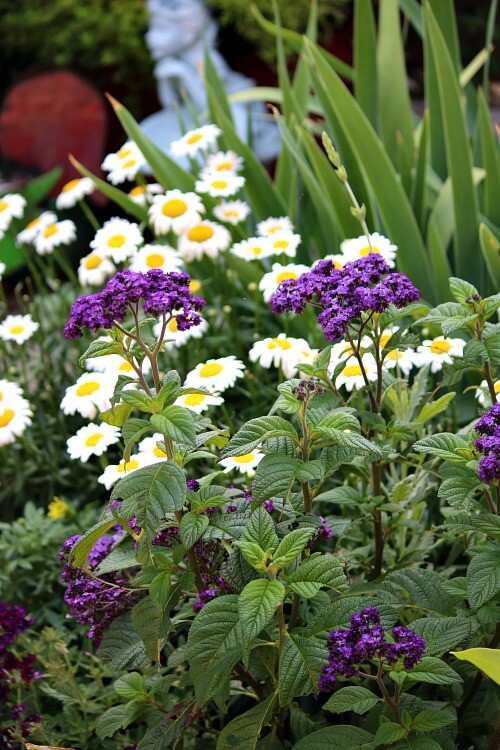
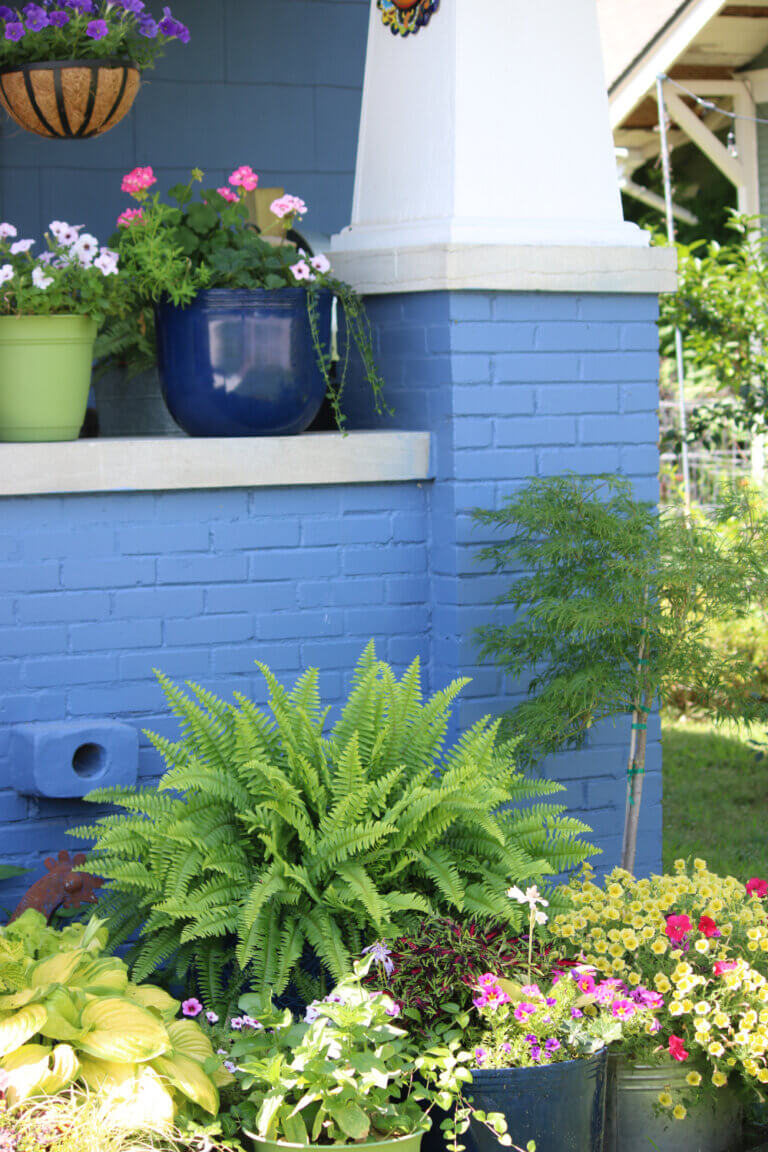
Daisy are beautiful flowers what is the purple ones in with them it makes a beautiful picture.Have a great day Brenda.
It is heliotrope.
thank-you
Your garden is beautiful. I planted Shasta daisy seeds which have not bloomed yet. I have a mystery 5’ tall perennial left over from last year that hasn’t bloomed and I can’t remember what it is. I keep waiting to see a bud but nothing yet. I enjoy watching Blossom on YouTube. They are short helpful hint videos. I have banana peels soaking in water for plant fertilizer. Can’t hurt! Enjoy your day!