
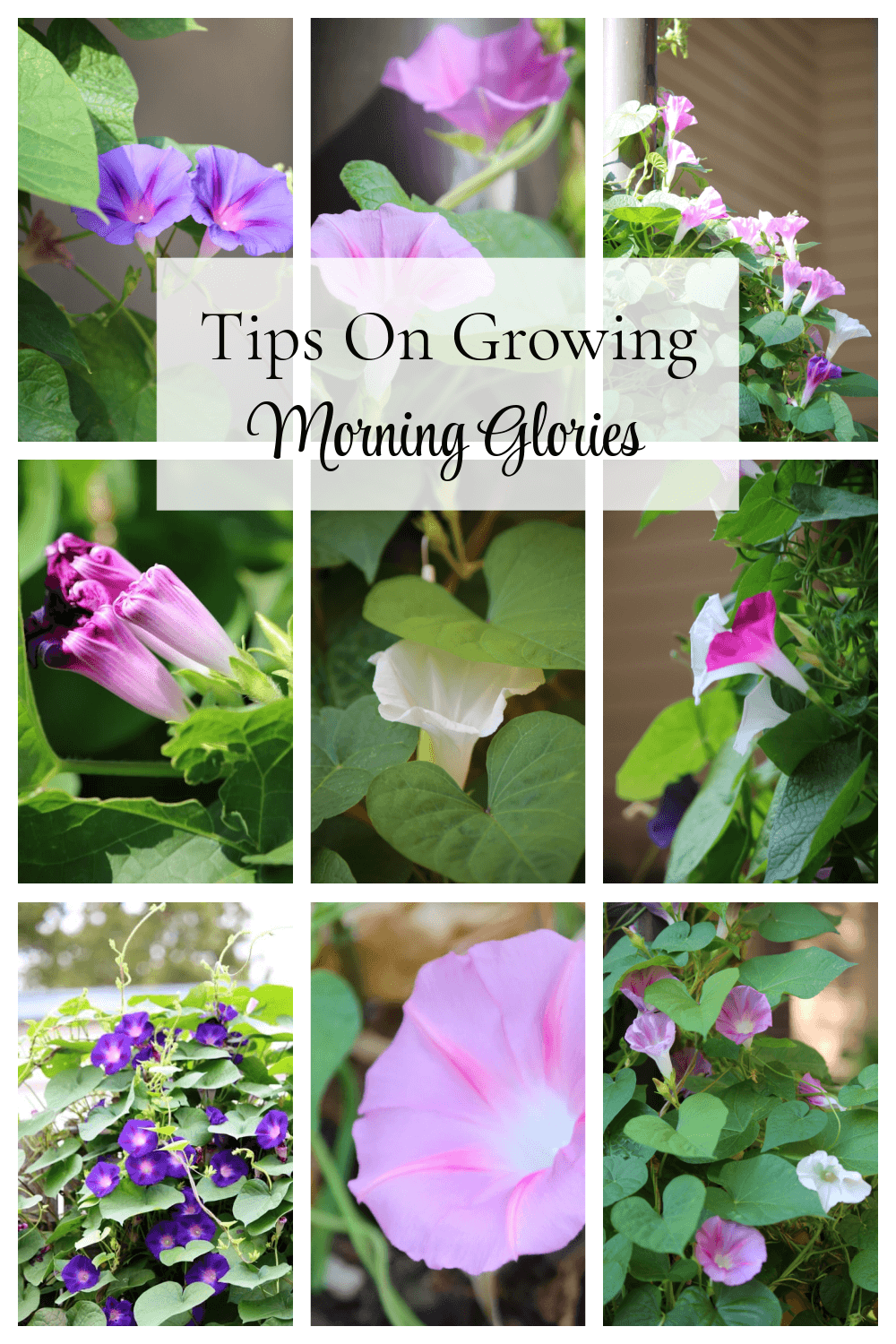
How to Grow Morning Glories for a Charming Cottage Garden
This post may contain affiliate links. If you purchase through links on my site, I may earn a commission at no cost to you. For more information, please see my disclosure policy.
Learn the best way to grow morning glories for beautiful blooms until the first frost.
When I think of morning glories, I think of a charming cottage garden where the blooms climb every vertical surface.

Morning glories are my favorite annual vine to plant.
I’ve been growing morning glories and moon flowers for years. And every year, the ones that reseed seem even lovelier than the year before.
“Morning glory is the best name; it always refreshes me to see it.” ~ Henry David Thoreau
Morning glories symbolize affection, love, and the beauty of the dawn. They are also associated with hope and fresh beginnings.
I’ve always had a special place in my heart for morning glories. However, I will always associate them with breaking my ankle all those years ago.
I was in such a hurry to capture the first bloom of the morning glory in my backyard with my camera that day that I stumbled and fell. But that’s an old story.

Today is about new and future stories.
Are They Annuals Or Perennials?
This popular vine can be grown as a perennial or an annual, depending on your zone and planting conditions.
Morning glories are technically perennials. In Zones 9-11, they return year after year unless it dips below 45 degrees. However, morning glories are sensitive to cool temperatures and late frosts.
I have had some morning glories that came back every year. They were a vivid dark purple color. But those are the only ones that were perennial in my garden.
It would be wise to check when the last frost usually occurs in your area. You can go to The Old Farmer’s Almanac and enter your ZIP code. It will give you the estimated first and last frost dates for your area. Then you’ll know the best time to plant.
In Zones 2-8, morning glories are grown as annuals and must be planted each year. In my neck of the woods, morning glories are typically grown as annuals.
Where To Grow Morning Glories:
This beautiful flowering vine will grow around narrow poles or trellises. They will reach and climb on most anything.
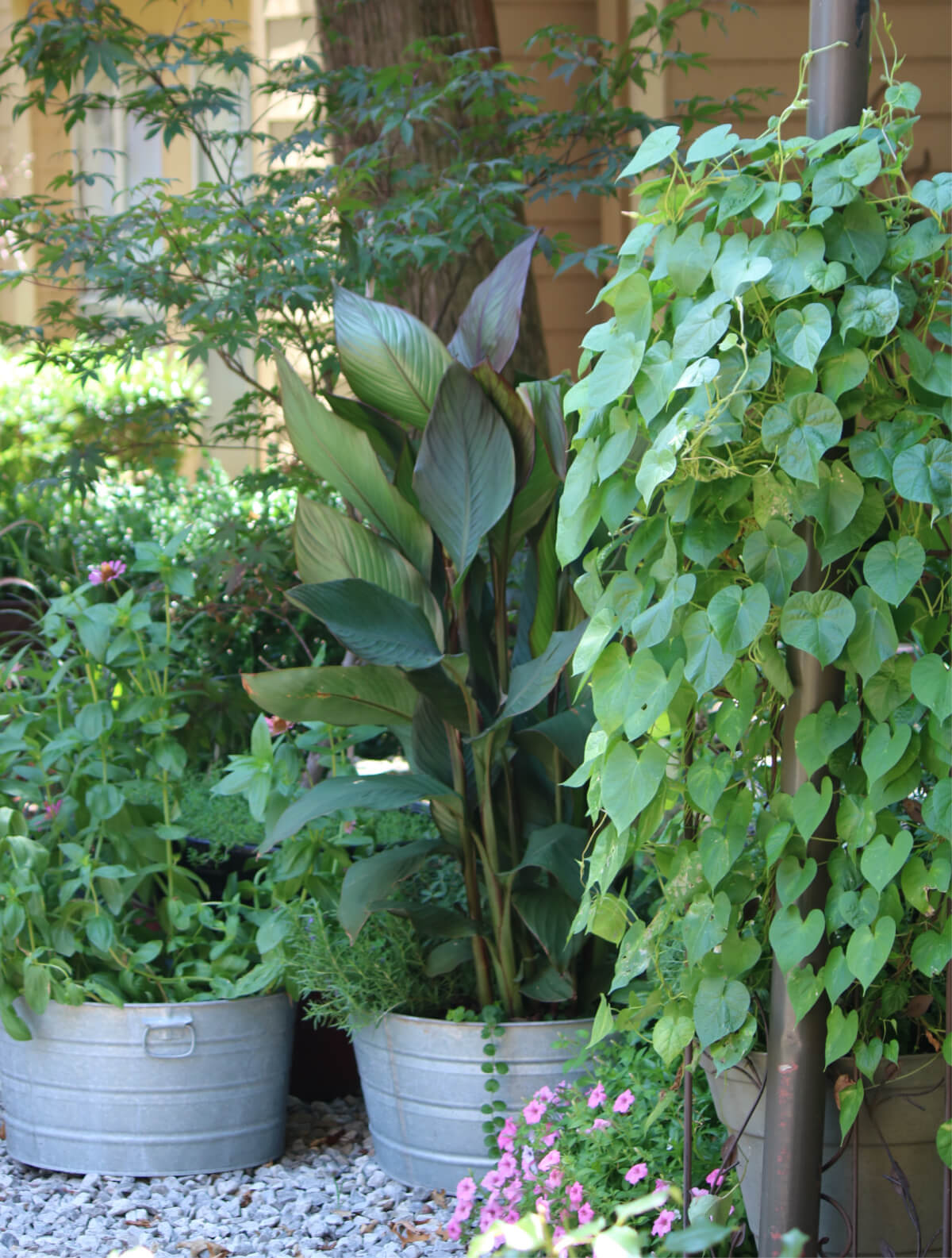
One summer, I planted my seeds in a galvanized container near a light pole, and the vines quickly climbed up around it.
Each day, it looked like they’d twined another foot up the pole. Once morning glories germinate, they grow rapidly.

My Best Tips For Growing Morning Glories:
The morning glory seeds have a hard outer coat. Consequently, I always nick my seeds and soak them in a bowl of water overnight.
Plant them in an area that has at least 6 hours of sun each day. But they do like a bit of afternoon shade here in my area.
Morning glories will grow most anywhere, but they bloom best in soil that is rich in organic matter.

I’ve planted morning glory seeds in a range of pretty colors like pink, purple, blue, and white.
Morning glory seeds are cheap, grow easily from seed, and will bloom until the first frost. The petals will close up tight when darkness falls. However, come morning, they will unfurl and appear again.
This vine is perfect if you want to cover a vertical structure in your garden. Morning glory blooms will grow 15 feet or more and grab onto anything nearby.
Note that morning glories are toxic to dogs, cats, and humans. Watch that your pet does not eat these flowers.
Moon Flowers & Morning Glories:
I also grow moon flowers almost every year. They look beautiful in the moonlight.
Moonflowers and morning glories are closely related climbing vines in the same plant family (Convolvulaceae) and genus (Ipomoea), but they differ primarily in bloom times, flower colors, and fragrance.
They are in the same general family of twining plants with bell-shaped flowers.
The difference between morning glories and moon flowers is that moon flowers open in the evening. Morning glories, just as the name suggests, bloom in the morning.
The moon flower’s flowers are large, and the vines take much longer to reach bloom.
If you plant morning glories, you will be supporting the local ecosystem. You will also have beautiful flowers to enjoy.
Hummingbirds, bees, moths, and butterflies are pollinators that are attracted to morning glories. They enjoy the flowers’ color and nectar from early summer to frost.
Morning glories don’t make good companion plants because their aggressive, fast-growing vines can quickly choke, shade out, or overwhelm neighboring flowers and vegetables.
“The morning glories and the sunflowers turn naturally toward the light, but we have to be taught, it seems.” ~ Richard Rohr
There is something wonderfully old-fashioned about growing morning glories. Their delicate trumpet-shaped blooms unfurl to greet the first rays of sunlight, transforming fences, trellises, arbors, and garden gates into living walls of vibrant color.
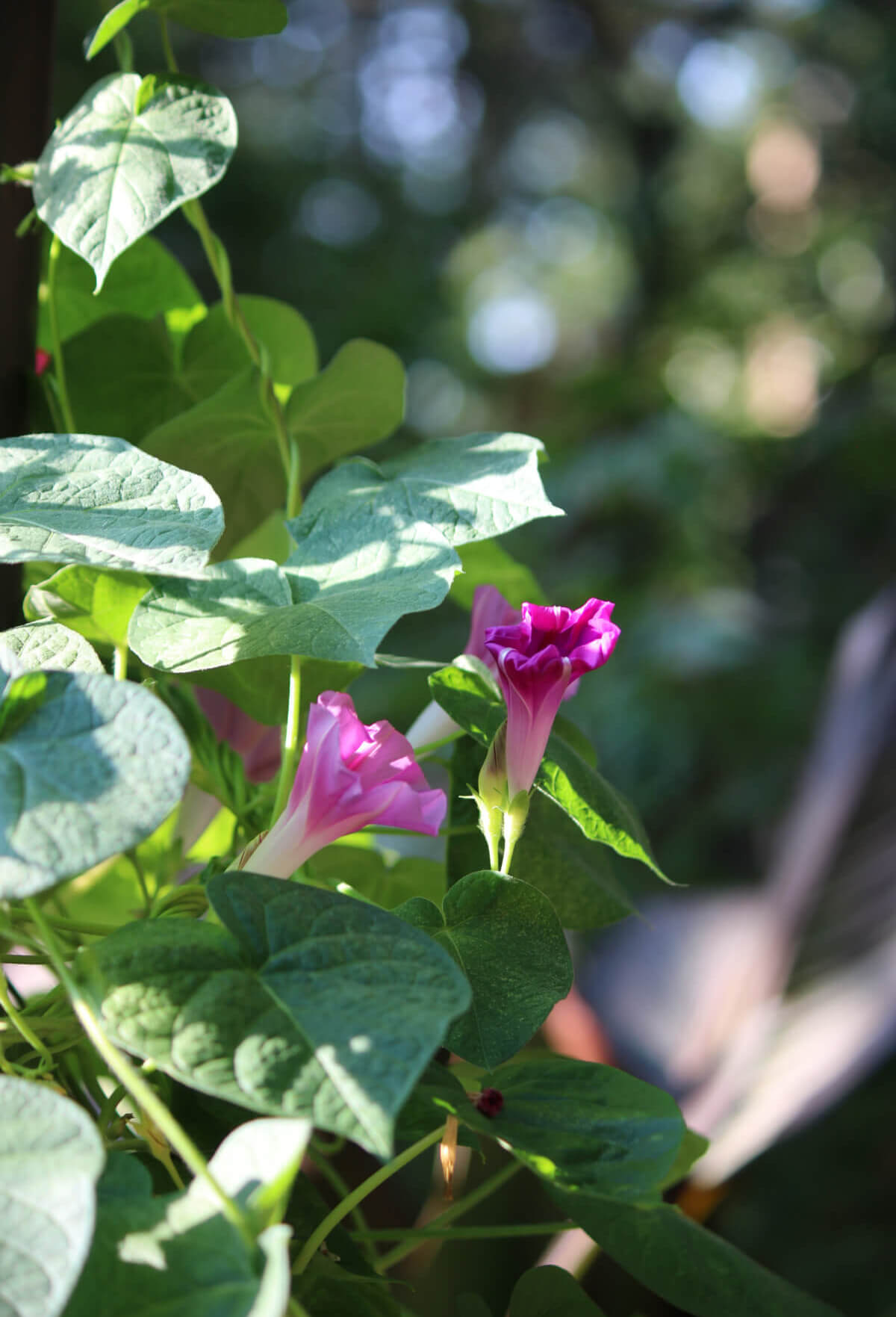
Shades of deep violet, sky blue, rosy pink, and pure white bloom before gently closing again as the afternoon heat arrives.
Old-Fashioned Charm:
Morning glories bring an old-fashioned cottage charm to your garden. Their twining vines eagerly climb upward, softening hard edges and adding a sense of abundance with surprisingly little effort.
By midsummer, what was once a simple support can become a lush curtain of heart-shaped leaves and cheerful blossoms that attracts butterflies, bees, and hummingbirds.
Morning dew sparkles on the petals, and birds sing from nearby branches. The beauty of the morning glory is a reminder to slow down and appreciate life’s simple moments.
Easy to grow from seed, morning glories thrive in sunny locations and often return year after year by self-seeding, creating pleasant surprises throughout the garden.
Whether climbing a rustic picket fence, winding around an antique garden arbor, or spilling over a decorative obelisk, these beloved flowers add vertical interest, vibrant color, and a touch of vintage romance to any landscape.
For gardeners who love cottagecore style and nostalgic blooms, morning glories offer memories of slower mornings, peaceful gardens, and the enduring joy of watching nature greet each new day.

I used to like morning glories but I have come to find them a nuisance. I inherited a garden plot when I bought my house which was a mixed blessing. Nice to have but overrun with mint and morning glories. For some reasons the morning glories in my garden reseed profusely and I cannot get rid of them. They wrap around everything, especially sunflowers. I try to pull them when I see them but I never seem to get them all. So to me they have become a weed! Like the mint!
What does you mean you nick your seeds? I like how morning glories seem to glow in the center!
You nick the hard outer shell with something like the sharp part of a knife.
I love morning glories! My grandmother had a wall of them when we were growing up and they always make me think of her.
Thank you for sharing your tips Brenda.
I love Morning Glories but they can become a little invasive, at least where I live in mid-Michigan. I just pluck the seedlings out where I don’t want them. On the other hand I have tried Moonflowers several times and don’t have any luck. They either die or grow but never flower. I haven’t a clue why. I have previously planted them in a large pot next to my deck railing. Anyway, Happy Spring, Brenda. Looking forward to your “garden posts”!