
Fall Prevention Tips for Older Adults Living Alone
This post may contain affiliate links. If you purchase through links on my site, I may earn a commission at no cost to you. For more information, please see my disclosure policy.
I’ve compiled important fall prevention tips for older adults living alone, since I live alone and have had 3 falls recently.
Falling is common among older adults as they age. Among older adults, about 27% of women ages 65 to 74, and 43% of those age 75 or older, live alone.

I have unfortunately fallen three times in 72 hours. I’m pretty sure it was due to the medication I was taking for a medical issue. The back of my head is still sore. As is my knee, hip, and hands. I don’t even want to get started about trying to sit on a toilet seat.
The first time I fell, I was in the bathroom; the second time, in the living room. I stepped on a cat toy and my ankle went sideways, and down I went.
The third time was in the kitchen. I reached out to the table, lost my balance, and the vinyl tablecloth shifted under my hand, causing me to fall.
Problems with Medication:
Medication affects you differently as you age. Older people are more susceptible to medication effects due to factors like taking multiple medications. And there are also age-related changes in how the body processes drugs.
Another problem can be reduced kidney and liver function.
To mitigate risks, older people should have their medications reviewed regularly and maintain an up-to-date list of all prescriptions and over-the-counter drugs.
How Much Room Do You Need:
Make sure you have clear pathways to walk from room to room.
Go through your home and measure the available walking space in each area. It’s essential to have enough room to navigate safely.
The function of the space is also worth keeping in mind. For instance, you may need more room to walk in your kitchen while doing multiple tasks—cooking, washing dishes, and preparing food.
For a hallway in a home, 3-4 feet is a pretty good width. That’s enough space for two people to walk past each other without bumping or having to turn sideways.
If you have indoor pets, keep an eye on them when you’re walking so you don’t trip over them and fall.
Where Older Adults Fall Most Often:
A study using data from emergency department visits found the following breakdown of where falls occurred for older adults:
- Bedroom: 25.0%
- Stairs: 22.9%
- Bathroom: 22.7%
- Kitchen: 7.2%
Bedroom: Falls in the bedroom are often associated with getting in and out of bed, especially at night when the lighting is dim.
Stairs: Falls on stairs are more common among the younger population (ages 65-74) and often result in more severe injuries.
Bathroom: Although fewer falls occur here overall than in the bedroom, bathroom falls are more than twice as likely to result in an injury requiring an emergency room visit.
The combination of hard, slippery surfaces and tasks requiring balance (such as getting in/out of the shower or using the toilet) makes this a high-risk area.
Tips for Preventing Falls:
Here are some tips to prevent falls in your home.
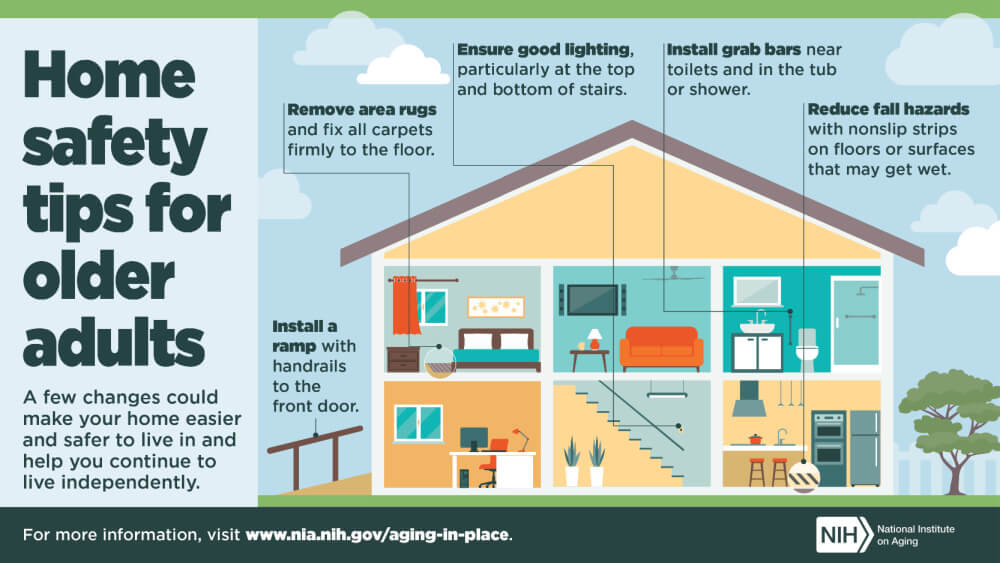
Remove Tripping Hazards
- Clear clutter from hallways and walkways.
- Secure loose rugs with non-slip backing. Or perhaps, remove them altogether.
- Keep electrical cords along the walls and out of pathways.
Improve Lighting
- Install bright and energy-efficient bulbs in every lamp in the home.
- Add nightlights in bathrooms, bedrooms, and hallways.
- Use motion-sensor lights, so you’re never walking in the dark.
Install Grab Bars & Railings
- Add grab bars near toilets and showers.
- Staircases should have sturdy handrails on both sides.
- Consider a rail near the bed for easier transfers.
Install Non-Slip Flooring
- Place non-slip mats in the bathroom and kitchen.
- Avoid waxed or highly polished floors, as they can become slippery.
Wear Proper Footwear
- Choose shoes with non-slip soles that fit well.
- Avoid slippers without grip.
- Don’t walk barefoot on smooth floors.
Keep Items Within Easy Reach
- Store everyday items at waist height to avoid bending or climbing.
- Use a reacher tool instead of stretching or using step stools.
Stay Active with Strength and Balance Exercises
- Gentle exercises like tai chi, yoga, or physiotherapy programs improve balance and coordination.
- Even simple seated leg raises and standing marches build strength.
Review Medications Often
- Ask your doctor or pharmacist to review your medications for side effects such as dizziness or drowsiness.
- Never stop taking prescribed medicine without medical advice.
- Be careful about mixing medications without the proper advice of a physician or pharmacist.
Have Regular Vision & Hearing Checks
- Update glasses prescriptions as needed.
- Good hearing can also improve balance and awareness of surroundings.
Consider an Alarm System
- Wearable emergency alarms can alert family or services if you fall.
- Some alarms detect falls automatically and send for help.
Older Adults Living Alone Statistics:
The number of American adults living alone is increasing rapidly as boomers age. More older folks are living alone due to longer life expectancies, increased rates of divorce and widowhood, and smaller family sizes.
- In 2020, approximately 27% of people aged 60 and older were living alone, according to the Pew Research Center.
- Nearly 50% of women aged 75 or older live alone.
- About 14.7 million older adults live independently.
- About one in four older adults (more than 14 million people) falls each year.
- Injuries cause 3 million emergency room visits each year.
An older person living alone who falls experiences a sudden, frightening break in the rhythm of daily life. One moment you might be reaching for something on a shelf or walking through a familiar room, and the next, your balance slips.
The world seems to tilt, and you’re on the floor before you can catch yourself. The shock is often followed by pain, confusion, and the heavy realization that you might not be able to get up right away.
The Risks:
Aging in place comes with potential safety concerns, including an increased risk of isolation and loneliness, accidental overdose or poisoning, and falls.
Memory decline and cognitive impairment can make everyday tasks more difficult. 42% of older adults with memory decline need help with household tasks, according to the Centers for Disease Control and Prevention (CDC).
Living at home offers many benefits for those who want to remain independent for as long as possible, including comfort, affordability, and empowerment. But you need to be aware of the dangers so you can deal with them before they occur.
Regularly check in with family, friends, or neighbors, and have an emergency plan in place. This could include a medical alert system and a list of emergency contacts.
Tips for Older Adults Living Alone:
The seven physical needs of older adults typically include proper nutrition, hydration, regular exercise, adequate rest, safe mobility, personal hygiene, and access to healthcare. These needs are essential for maintaining good health and preventing common age-related issues.
Fall prevention tips for older adults living alone can help prevent serious injuries that could land them in the hospital. Or worse, no longer having their independence.
1. Schedule a Home Safety Assessment
A simple home assessment can identify trip, slip, and fall hazards. These evaluations will also help you identify opportunities to make subtle, safety-enhancing tweaks, like installing handholds and bars in the shower or beside the toilet.
How to get a home safety assessment:
- Home health agencies: If the older person is already receiving home health care, they may be eligible for an assessment as part of their care plan.
- Nonprofit and community programs: Organizations like the National Council on Aging offer assessments that may be free or reduced-cost.
- Private companies: Many home care agencies, like Caring Senior Service, offer free safety assessments to determine needs. You can also find independent Certified Aging in Place Specialists (CAPS) or other certified home safety specialists.
2. Practice Kitchen Safety
Like the bathroom, the kitchen is responsible for many preventable injuries, including burns and fires. Regularly test your home’s smoke detectors and install automatic shut-off devices on kitchen heating appliances if you’re prone to leaving them on.
4. Be Prepared for Medical Emergencies
Emergency preparedness is crucial if you live alone — no matter your age. Always keep a first-aid kit on hand and know who to call in emergencies. Having a medical alert device is especially helpful in emergencies.
Often, accessing a phone to call 911 during the event is challenging. However, a medical alert system can connect you with help during an emergency. Whether you choose a mobile or home-based medical alert system, these systems offer peace of mind for older adults living alone.
A monitored medical alert system will connect you with a live, highly-trained life safety consultant who can assess the situation and alert the appropriate help. Nonetheless, you should also keep the following numbers nearby in case you need assistance quickly:
- Emergency services
- Poison control
5. Consider Modifications for the Bathroom
The bathroom is one of the most dangerous rooms in the home for older adults living alone. Fixture leaks, slick floors, poor lighting, and loose rugs are responsible for many preventable trips and falls.
- Walk-in shower: Install a walk-in shower for easier entry and exit.
- Comfort-height toilet: A comfort-height toilet or a raised toilet seat can be a significant improvement for those with mobility issues.
- Emergency button: For those living alone, consider installing a medical alert or emergency call button.
6. Install Safety Equipment in the Bathroom
- Grab bars: Mount securely in the shower, next to the toilet, and near the tub for support.
- Non-slip surfaces: Place non-slip mats or strips on the bottom of the tub/shower and on the bathroom floor outside the shower.
- Shower chair or bench: Use a shower chair or bench to make washing easier and safer while seated.
- Handheld showerhead: Install a handheld showerhead to allow for easier rinsing while seated.
- Raised toilet seat: Use a raised toilet seat or a commode with built-in handles to make getting on and off the toilet easier.
Fall prevention tips for older adults living alone are of the utmost importance. In the quiet of their home, time feels slower. If they fall, they may call out for help, but no one answers.
Fear sets in — not just of injury, but of being alone. The room that once felt safe and comforting suddenly feels distant and cold.
For many older adults, a fall isn’t only a physical setback; it’s an emotional one too. It can shake their confidence, making them wary of moving about as freely as before. Recovery might take time, both for the body and for the spirit.
It’s a moment that reminds us how fragile independence can feel — and how vital care, connection, and preparedness are for those aging alone.
Pin For Later:





So, Brenda … I’m a realist and pragmatic. You do these blog posts to “educate” us, thus it applies to your income.
Having said that – Have you scheduled your “Home Safety Assessment”? I would think it would indicate that having a tablecloth is not a good idea. You grab your table, get the cloth which slides and “whoops!” you’re on the floor! Ditch the tablecloth. It may look pretty, but it is not safe. Just sayin’~
Cathy mentioned the Grow Young Fitness videos available on YouTube. They are very good! Give them a try, Brenda.
Brenda,
I’m so sorry to hear about your falls! An old classmate didn’t turn on the light in the bathroom during the night and fell against the bathtub and had a skull fracture. She’s been in a neck brace since June! I’m finding by balance is changing. Have you tried Grow Young Fitness videos on YouTube? Really great exercise series for seniors to improve strength and balance.
I took a senior fall class from the University of Cincinnati. The following two tips were not mentioned in your post today.
Always make sure your cell phone is in the bathroom with you when you shower.
Purchase a cabinet door handle and install it on the side of the door that you use going in and out of your garage so you have something sturdy to hold onto if you need it going up and down that little step into your house.
I’m so sorry you’ve fallen! I hope you are ok!! It’s so frustrating when you fall and get hurt. It seems like it takes so much longer to heal as you get older. Thank you for all your tips on how to keep us seniors safe. I liked the comment about calling out to Alexa. That’s good for anyone who doesn’t want to wear the alert necklaces.
Sorry to hear of your falls.
When I have fallen it happens so fast. I have been recovering from breaking my femur at the end April. I had been doing exercises with my arms and legs before I fell. I could tell the difference in my strength because I had spent more time on my legs. Exercising on my bed has made them easier. I did them before I got out of the bed. Now when I am resting in bed I do exercises. That discourages me from doing nothing. I have a large wall clock and repeat each in the order the physical therapist shows me. I do each one for at least five minutes.
It takes an hour for all of them. Be safe.
Sounds like you’re on the right track. When Greg next comes, I’m going to ask him for some like this.
Sorry to hear you fell and are sore. My dad lived alone until he passed at 93 and my aunt is 87 and lives alone. We bought them both the life alert and cell phones. Neither one of them use either one of the phones or life alert. Like you well know things happen in the blink of an eye and cause years of discomfort. Be careful and have a good weekend everyone!
Yes, it happens so quickly you hardly know what’s happened.
I had a dear friend in her 80’s who refused to wear her life alert. She fell down and broke her hip and lay there in pain for hours until her daughter showed up. She had to be taken to the hospital by ambulance and she never came home again.
A life alert type system only works if you use it as intended! That is what cost my mom being able to live at home alone. She refused to wear the pendant, fell during the night, and laid on the bathroom floor for several hours until a brother found her the next morning.
Oh, that’s awful. I’ll do whatever it takes to stay living independently. I can’t afford any assisted living and don’t want it. I’d hate to live around other people.
I have Alexa Guard through Prime. It’s $5.99 a month and well worth it because I am one of those people that can trip on air. You just tell Alexa you need help and she connects you to a call center that dispatches help and notifies your emergency contacts.
I can trip on air too. Thanks! I’ll look into it.
My apologies, it’s called Alexa Emergency Assist now. It used to be called Alexa Guard and they changed it. I’ve had it since Alexa Guard and still slip and call it that, sorry.
Great info thanks
I have a goal
to slow down. That is harder than the exercises.
I know!!! That’s what Greg keeps telling me. He says I move too fast. If I can move, it is the only way I know. Hard to train yourself that way.