
Learning to Say No
This post may contain affiliate links. If you purchase through links on my site, I may earn a commission at no cost to you. For more information, please see my disclosure policy.
Learning to say no without feeling guilty is an important part of protecting your peace, preserving your energy, and caring for yourself.
I had to figure it out too. And I am happier for having done so.

I believe women are more prone to feel guilty than men, as women are considered “the nurturer.” Women fix things; they quiet the upset. They wrap their arms around others and whisper, “It will be all right.”
When someone asks them to do something, they feel better about saying yes.
How many times have you said yes to doing something when you truly wanted to say no? But you felt so guilty about acknowledging this that you went ahead, smiled, and said, “Sure, I’ll do it.”
For many women, saying no can feel uncomfortable. We may worry about disappointing someone, hurting their feelings, or appearing selfish.
Sometimes women become so accustomed to putting other people’s needs first that they forget their own needs matter, too. They agree to things they don’t really want to do simply because saying no feels harder than saying yes.
But saying no doesn’t make you a bad person. It means you recognize that your time, energy, and emotional well-being are valuable.
Here are some ways to learn to say no without carrying unnecessary guilt.
1. Remember that you don’t have to explain everything
You can decline an invitation, request, or obligation without a lengthy explanation. A simple, “Thank you for thinking of me, but I won’t be able to,” is perfectly acceptable.
You don’t have to defend every decision you make.
2. Stop feeling responsible for everyone’s happiness
You cannot make everyone happy, and you shouldn’t feel obligated to try. Other people may be disappointed when you decline. But their disappointment doesn’t mean you’ve done something wrong.
Let others manage their own expectations while you take responsibility for your own well-being.
3. Give yourself permission to put yourself first
There is nothing selfish about recognizing when you need rest, quiet time, or a little breathing room. Your needs deserve as much consideration as everyone else’s.
Sometimes the kindest thing you can do for yourself is decline an invitation and spend an evening enjoying the comfort of your own home.
4. Don’t automatically say yes
When someone asks you for a favor or invites you somewhere, resist the urge to answer immediately.
Give yourself time to consider whether you genuinely want to participate or whether you are agreeing out of obligation. You can always say, “Let me think about it, and I’ll get back to you.”
5. Understand that boundaries are healthy
Setting boundaries helps establish what you are comfortable with and what you are not willing to accept. Healthy relationships should allow room for individual needs, personal space, and differing opinions.
People who genuinely care about you may not always agree with your decisions, but they should respect your right to make them.
6. Accept that guilt may take time to disappear
If you’ve spent years pleasing others, saying no may feel unnatural at first. You might second-guess yourself or wonder whether you will regret your decision.
Don’t mistake that uncomfortable feeling for wrongdoing. Sometimes guilt is simply a sign that you are changing an old habit.
7. Practice saying no with kindness
You don’t have to be harsh or dismissive to establish a boundary. You can be considerate while remaining firm.
Try these simple responses:
Learning to protect your peace
- “I appreciate the invitation, but I’ll have to pass.”
- “I’m not able to take that on right now.”
- “I need some time for myself.”
- “That doesn’t work for me, but thank you for asking.”
- “I’m going to have to say no this time.”
The guilt women feel is often strongest when they say they need to do something for themselves. They think it sounds selfish.
It is not.
As women grow older and experience more of life’s demands, they may begin to recognize just how precious their time and personal peace really are.
There comes a time when you no longer want to fill every hour with obligations or make yourself available to everyone who asks.
You begin to understand that a simpler life without obligations can be fulfilling. You don’t have to attend every gathering, accept every invitation, solve everyone’s problems, or explain why you prefer a little solitude.
Sometimes, saying no is an act of self-respect. It lets you make room for the things that bring you happiness instead of constantly giving your time away to someone else.
You can be a kind, caring, thoughtful woman and still say no. You can love people without being available to them every minute. And you can choose yourself without feeling that you’ve let everyone else down.
Your time belongs to you. Your peace matters. And you don’t need anyone’s permission to protect either one.
Writer Lori Deschene maintains that a kind heart can still coexist with the ability to decline requests.
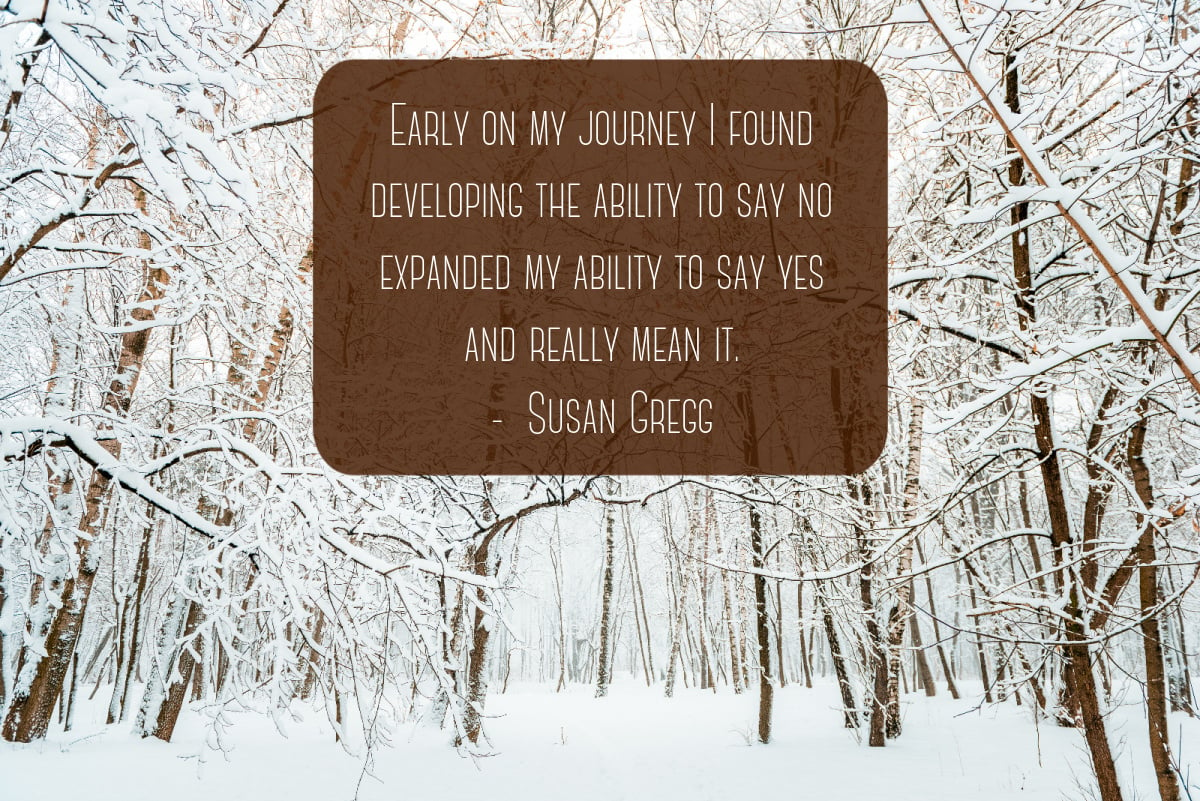
Susan Gregg noted that learning to say no ultimately protected her capacity to feel good about when she says yes.
Quick Tips for Saying No Without Guilt:
- Keep it short: Avoid over-explaining or offering elaborate excuses, as that often invites negotiation.
- Remember the core rule: Treat “no” as a complete, standalone sentence rather than the opening of a discussion.
- Protect your energy: Be mindful that saying yes solely to dodge temporary discomfort means sacrificing your own well-being.
I’ve always had a problem with saying no. I never wanted to hurt someone’s feelings. For a long time, I didn’t think I had a choice.
How many times did I agree to attend a large extended family dinner when I truly dreaded it? And would have preferred to do almost anything else?
And I always regretted it.
Saying No During the Holidays:
The holidays are right around the corner. There will be get-togethers, gatherings, and parties. Decide what you really want to attend, and what you don’t.
Don’t assume you will appear unkind to others if you decline invitations. If you find it harder to just say no, practice in front of the mirror before being asked. Put strength in your voice.
Some will say, ” Oh, once you get there, you’ll be so happy you went!
But that never seemed to happen. I regretted the time I wasted doing something I hated doing.
Until one day, after my daughters became adults, I just said, “No, I prefer to stay home. You girls have your own families now. Create your own customs, and know that I am happiest being at home.”
And the world didn’t explode. No one was upset.
My girls share holidays with one another and their families. If they want to drop by Mom’s house afterward, that is fine. But they know they’re not obligated to.

They know that I’m an introvert, and I cherish my solitude.
When you don’t want to do something and force yourself to do it anyway, no one will have fun. Tension is in the air, and everyone can feel it no matter how hard you try to hide it.
It’s best to go with what your gut tells you. Your first instinct is usually right because it comes to you right away, without you having to decipher it.
Some people simply don’t like gatherings, and that’s okay. My oldest grandson is more like me. He prefers to study or listen to music rather than be around others.
His mother worries about this, and I keep telling her, “Let him be. Don’t try to change him.”
Not everyone understands that just because someone is alone, they don’t necessarily feel lonely. Someone who is more social has a harder time understanding that concept.
Be kind to yourself, first and foremost. It’s the best thing you can do for yourself and everyone else.


Living in Silicon Valley I am always reading up on how digital companions are evolving behind the scenes. I just found an incredibly detailed breakdown explaining how AI companion tools use the latest in artificial intelligence and blockchain to protect privacy. Checking out https://joi.com/ will show you exactly how this emerging tech is being integrated into American platforms. It is a fantastic read for any US tech enthusiast who wants to understand the complex server architecture running our favorite virtual apps today.