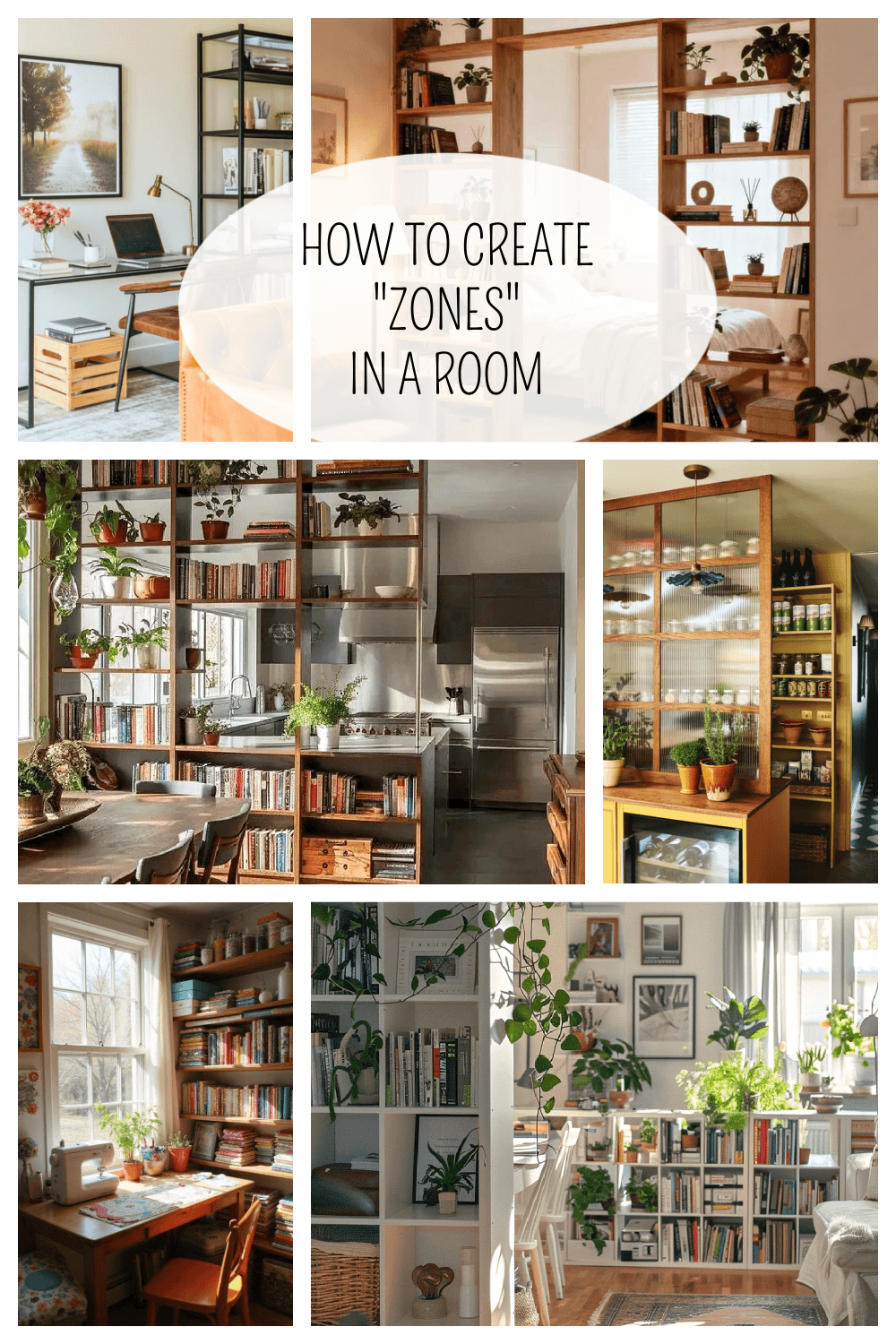
How to Create “Zones” in a Room
This post may contain affiliate links. If you purchase through links on my site, I may earn a commission at no cost to you. For more information, please see my disclosure policy.
Creating zones in a room is all about giving each area a clear purpose. Rooms can even overlap.

In a small home, rooms often have to do double, or even triple, duty. Overlapping rooms mean one area serves multiple purposes. A small change can have a big impact on how you use your home’s rooms.
Separating Kitchen From Dining Room:
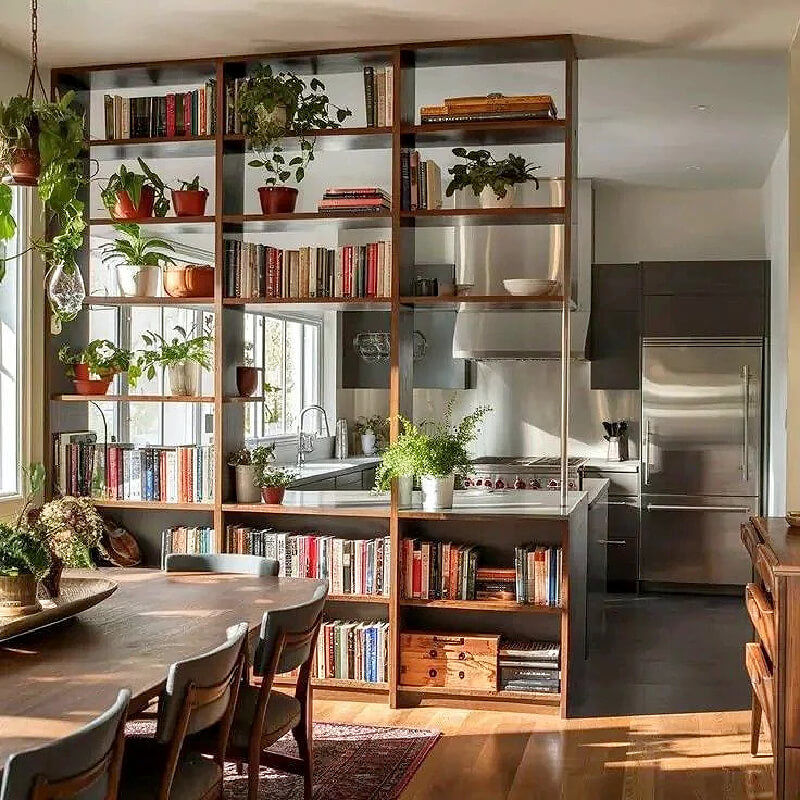
If you don’t like the idea of a completely open area between your kitchen and dining area, just partition it. By adding wooden shelves, you can create a partition without installing a wall.
Mini Office Niche in a Dining Room:
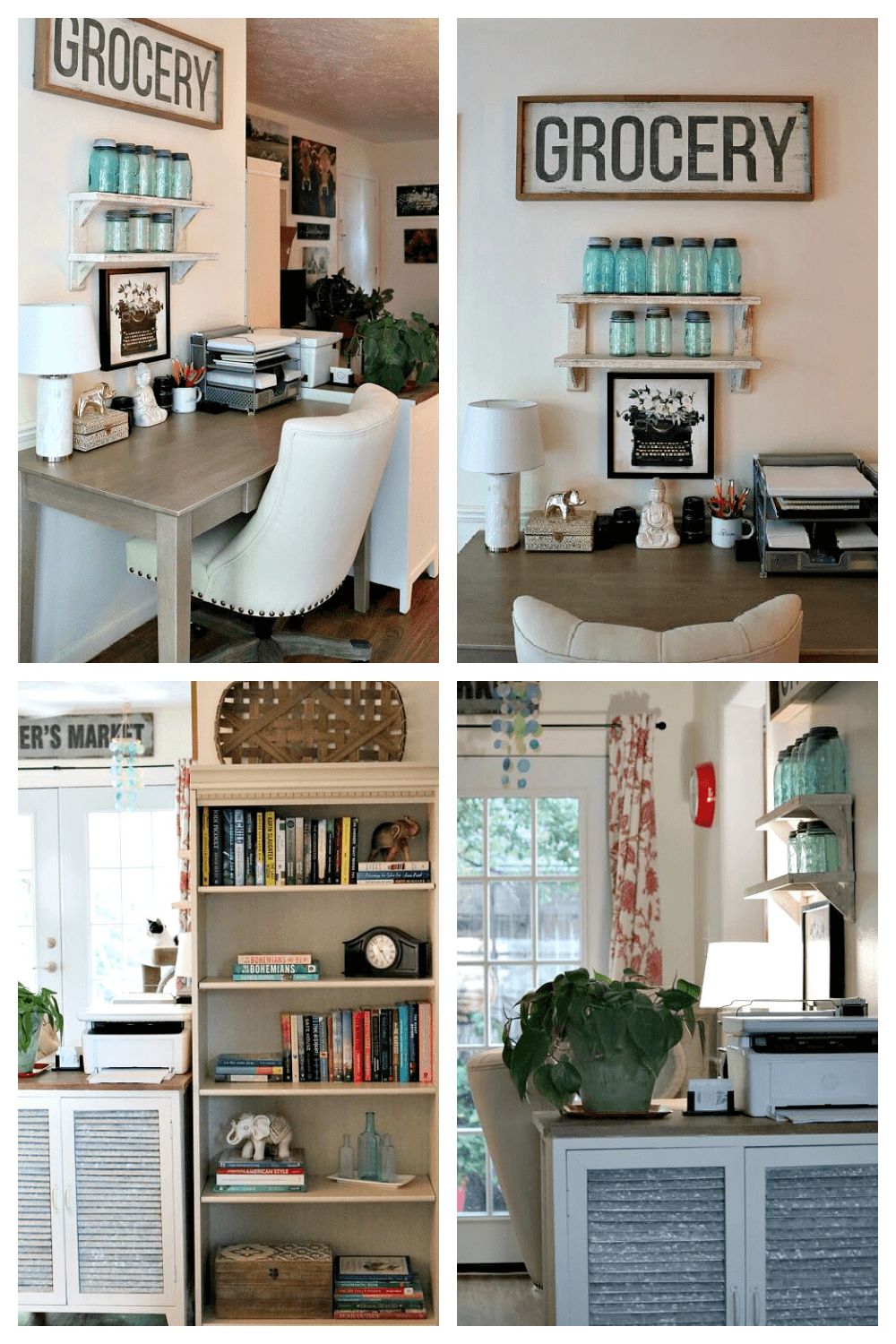
When I lived in a 725-square-foot one-bedroom apartment, I created a home office zone in a section of my dining area. It was actually just an elongated living room. I accomplished this with one tall bookcase and a shorter cupboard.
This was perhaps my favorite niche I’ve ever created in a home. I took a small space, probably no bigger than 6 feet by 3 feet, and created this “room within a room.”
By creating a separate zone between my living room and dining space, I had enough room for a small office area.
Strategically placed rugs, plants, bookshelves, and lighting can visually separate spaces, such as living and working areas.
Examples of Creating Zones:
Creating zones within a single room lets you use the same space for two purposes instead of one.
Office Area Behind Couch
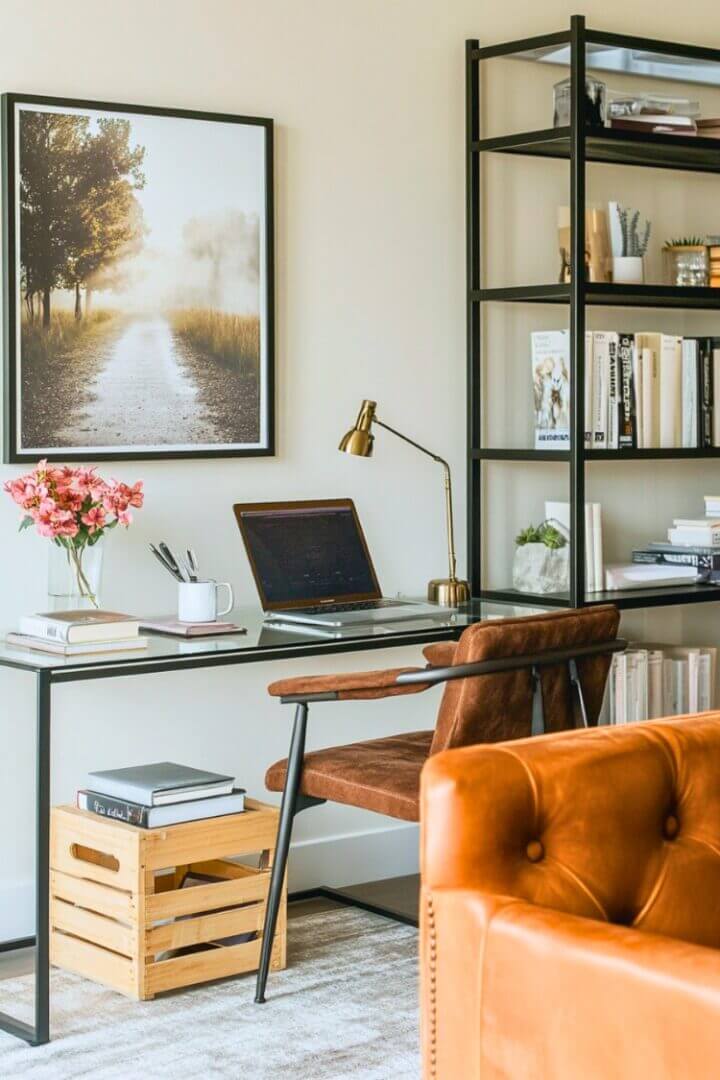
This small area gives the room an office space without needing a separate office. It works especially well with glass-top desks, as they take up less visual space.
A trick of the eye to create the illusion of openness.
Form & Function
A living room can also function as a home office by adding a secretary cabinet that closes when work is done, or by tucking a small desk into an unused corner. During the day, it’s a workspace; after hours, it blends back into the living area.
A dining area can overlap with a kitchen workspace or homework zone. A table can serve meals, meal prep, bill paying, crafts, or laptop work. Keeping attractive trays or baskets nearby makes it easy to switch functions quickly.
Bedrooms often become multifunctional too. A guest room might double as a craft room, library, or office with a sleeper sofa, daybed, or wall bed. Even a primary bedroom can include a reading nook, vanity, or compact workstation.
Entryways can overlap with mudrooms, drop zones, or storage hubs. A bench with baskets underneath, hooks above, and a narrow console can create a transition space in just a few feet.
If you have a dedicated space for something, you’re less likely to misplace it. Create zones in rooms if needed.
Furniture & Styling:
Use furniture and styling to help overlapping spaces feel less chaotic:
- Choose pieces with hidden storage so you can tuck away supplies for different activities separately.
- Use mobile elements like rolling carts, nesting tables, or folding screens.
- Contain each function with baskets, trays, drawers, or cabinets so every activity has a “home.”
The trick is making transitions easy. If converting a room from one purpose to another takes 20 minutes and a minor engineering degree, it won’t last.
But if all it takes is closing a laptop, tucking away materials, or folding out a table, overlapping spaces can work beautifully.
In small homes, overlap isn’t a design flaw—it’s often the smartest use of space.
Stylish Room Divider Ideas:
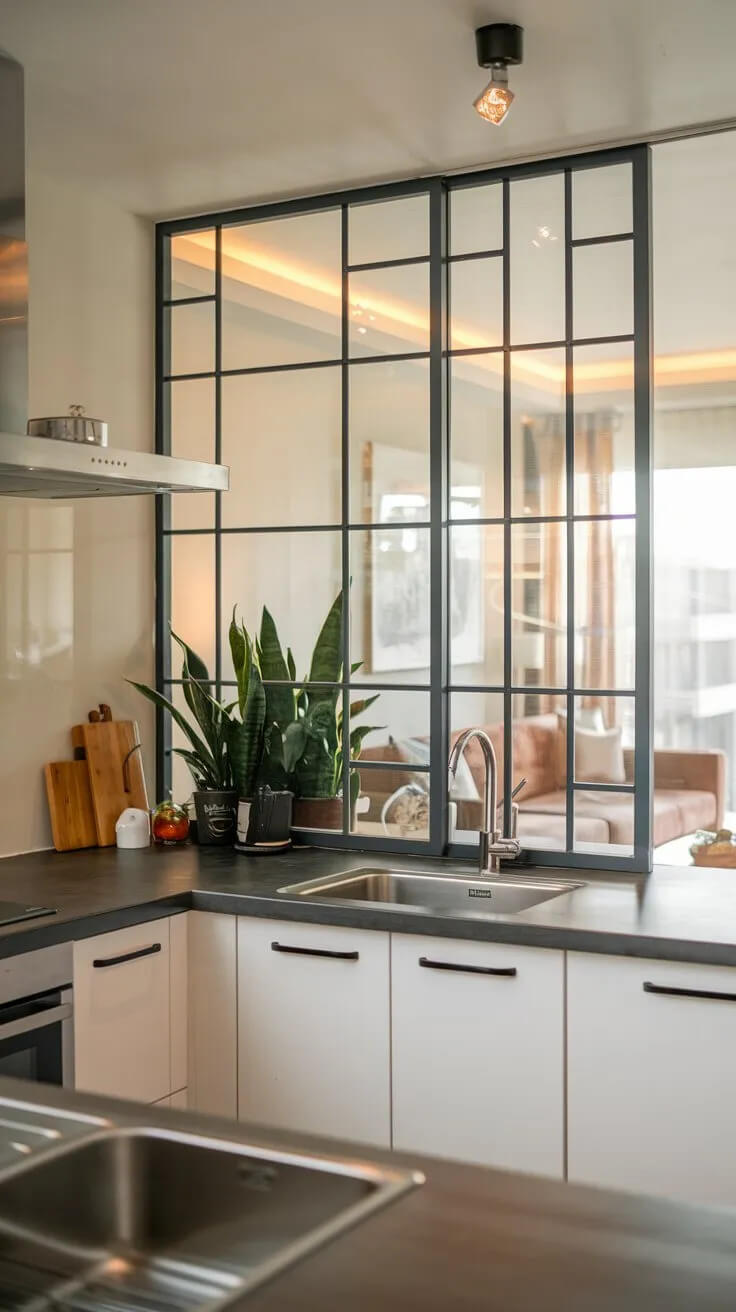
Curtain Partition:
Probably the cheapest and easiest way to partition one space from another is to use curtains.
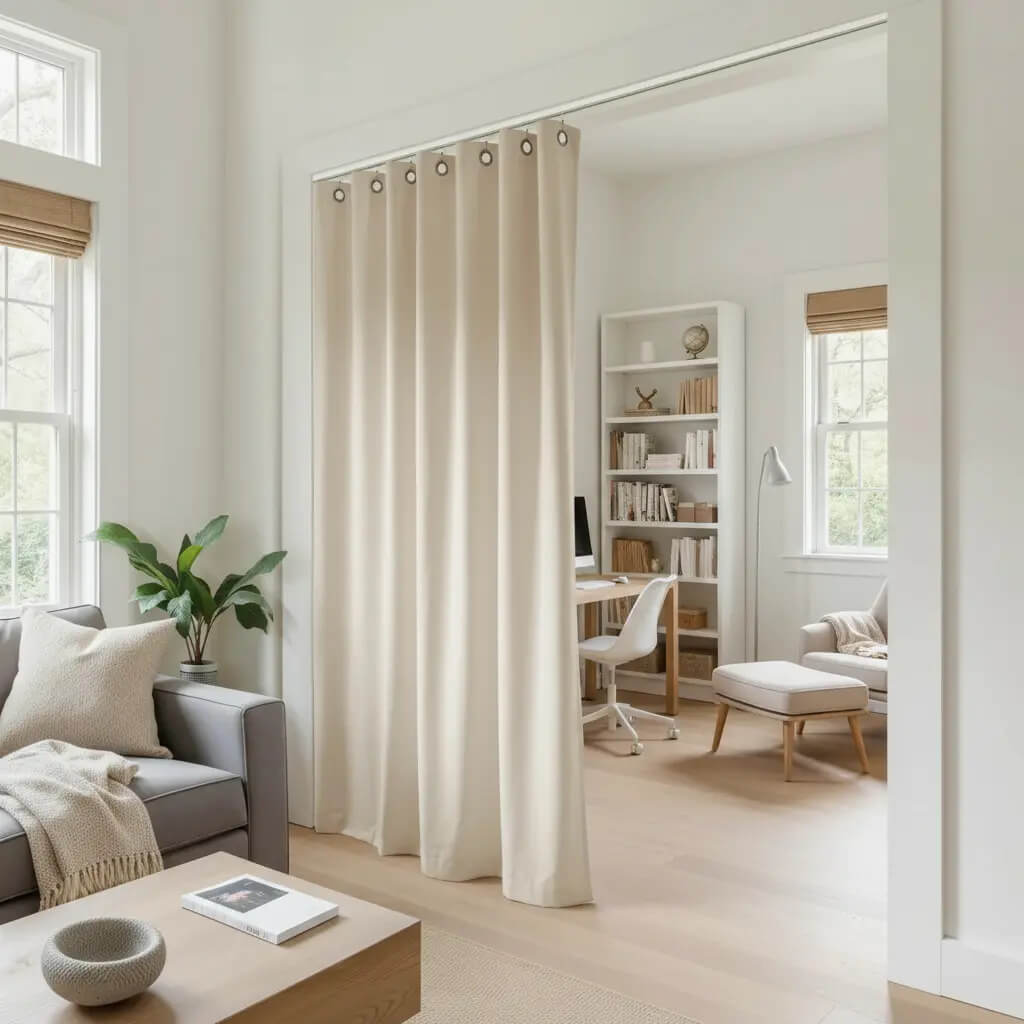
To shift the curtains back and forth, look for grommet curtains that slide smoothly. Other easy-sliding options include ripple-fold curtains on tracks, ring-top curtains, and lightweight rod-pocket panels.
Separate Play Area
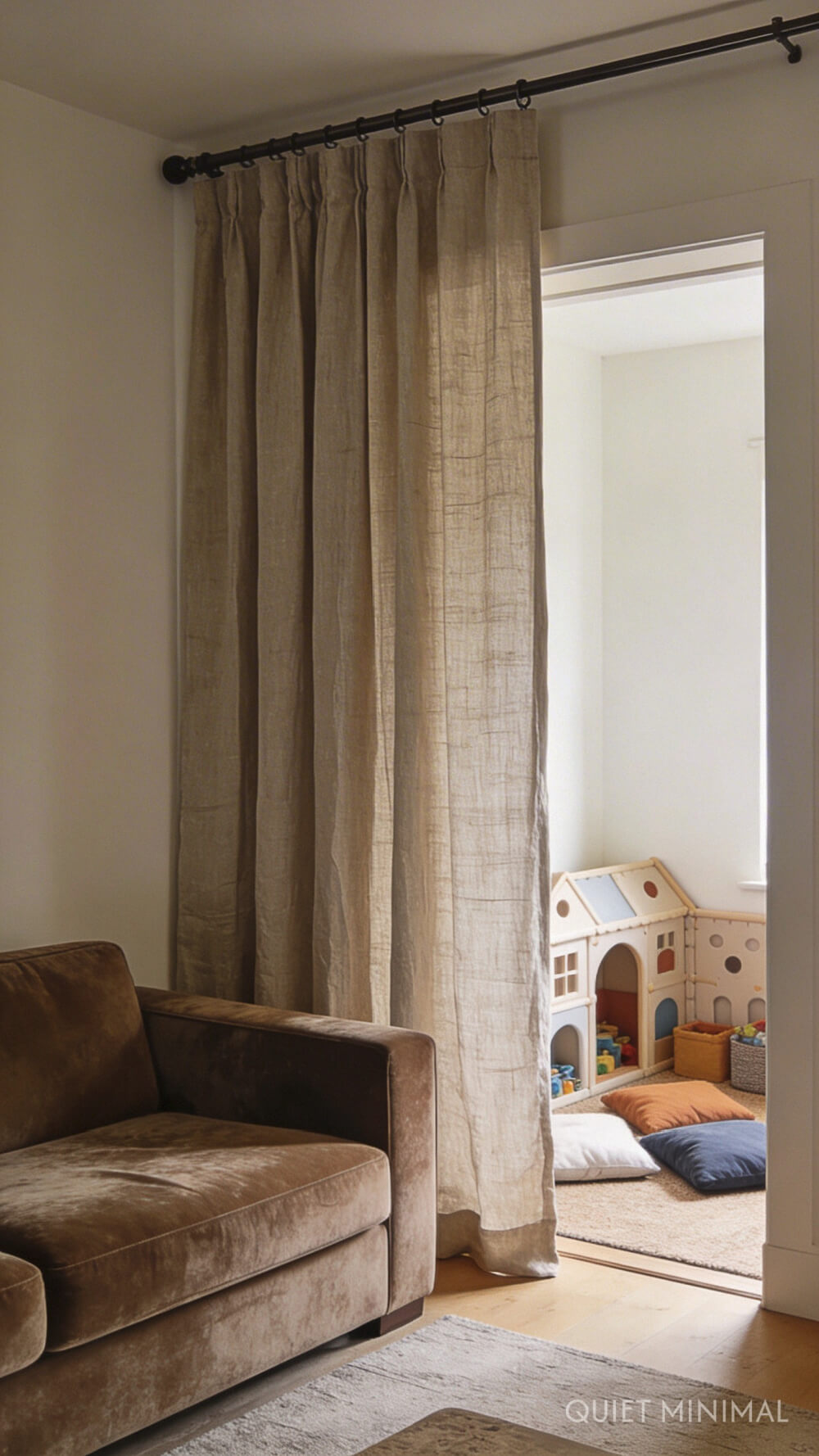
If you’re looking to add a special play area for children, hang a curtain to visually separate it from the rest of the space. You can do this by creating a playtime zone.
Partition to Turn One Bedroom Into Two
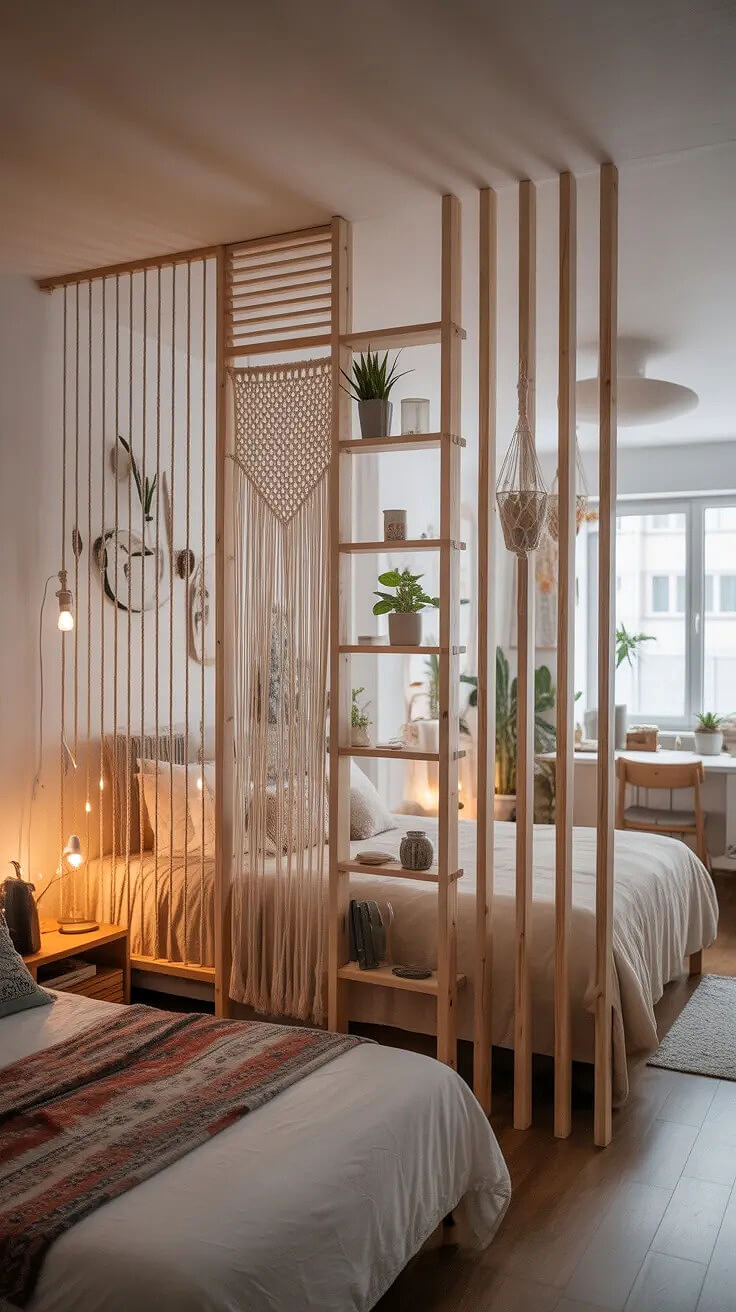
If you have two children but only one bedroom, splitting a single bedroom into two might work. Especially if each child wants their own special area to decorate.
You can place bulletin boards over the wood to create special display areas on either side. It would also help block the view. Consider a DIY bulletin board or a pegboard for organization. This is a way to use your walls wisely.
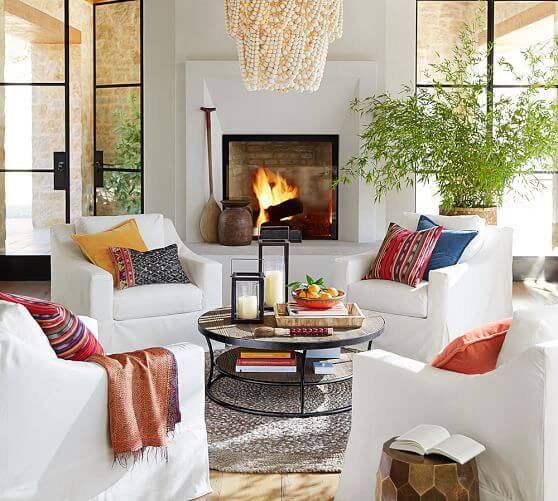
This living space is a good example of creating a conversation area by placing the furniture away from the walls.
Strategies for How to Create Zones:
- Furniture Placement: Position furniture to define spaces rather than pushing everything against walls.
- Use Area Rugs: Place rugs in different areas to define specific zones.
- Vertical Dividers: Use open bookshelves, plants, or screens to create separation.
- Lighting and Ceiling Changes: Delineate areas with hanging pendant lights over specific zones.
- Color and Texture: Paint walls with different colors or use different materials to create distinct zones.
- Multi-functional Furniture: Choose items that offer storage and functionality, such as desks that function as dining tables.
- Create Entry Zones: Use a console table or a small rug to create a dedicated entryway.
Think of a specific space as a collection of mini destinations. A place to relax, work, eat, sleep, and store daily essentials.
Pantry Partition:
Maybe you don’t have a pantry, but you really need one to store non-perishables. Build a zone in a room with partitions to “create” a pantry.
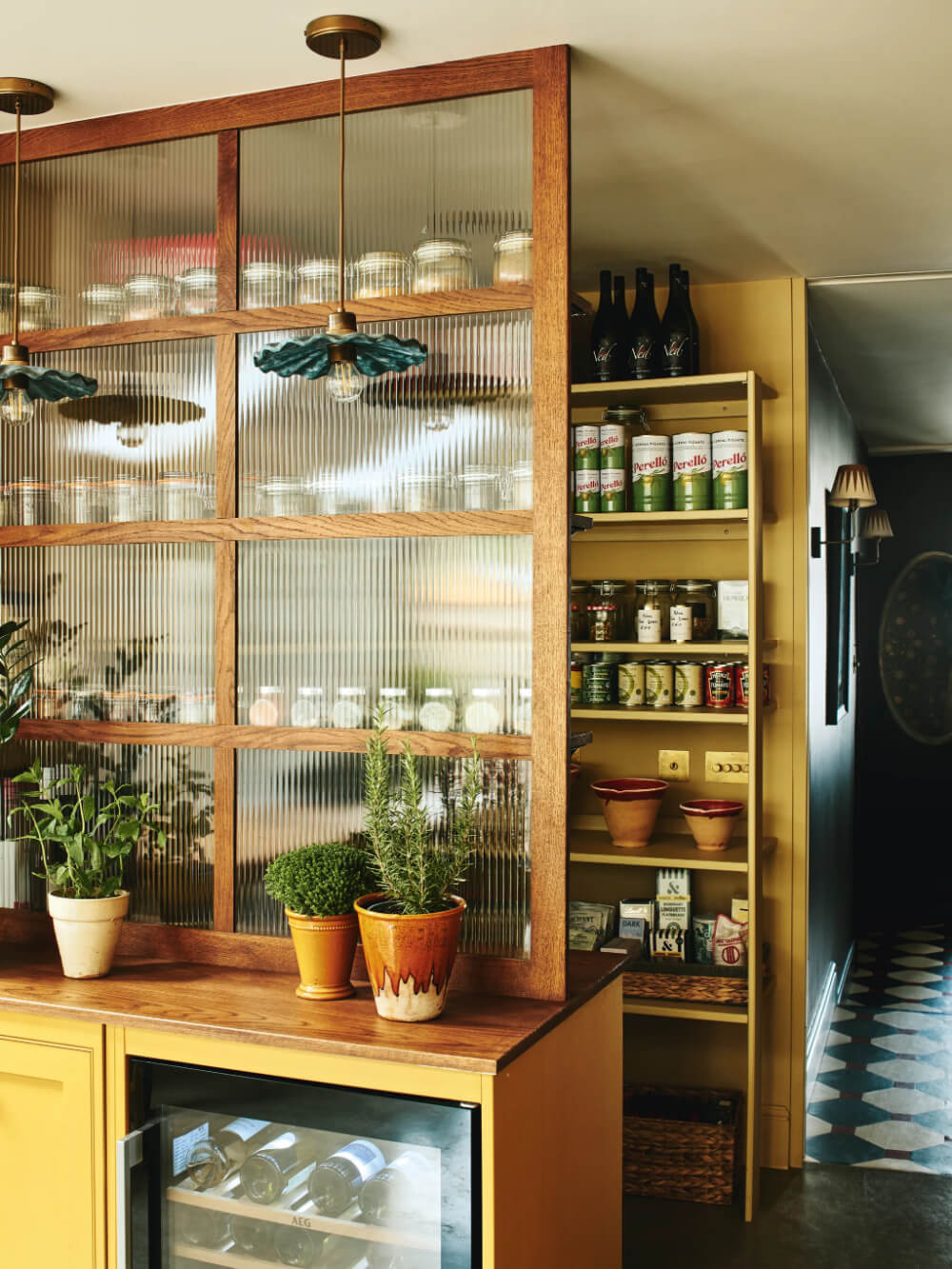
Use these partitions to separate a room, hide the pantry from view, and organize staples.
Strategic planning of your space, in a corner or along a wall, could help you achieve this. With a stand-alone piece of furniture, bookshelves, and a DIY partition, you can do this fairly easily.
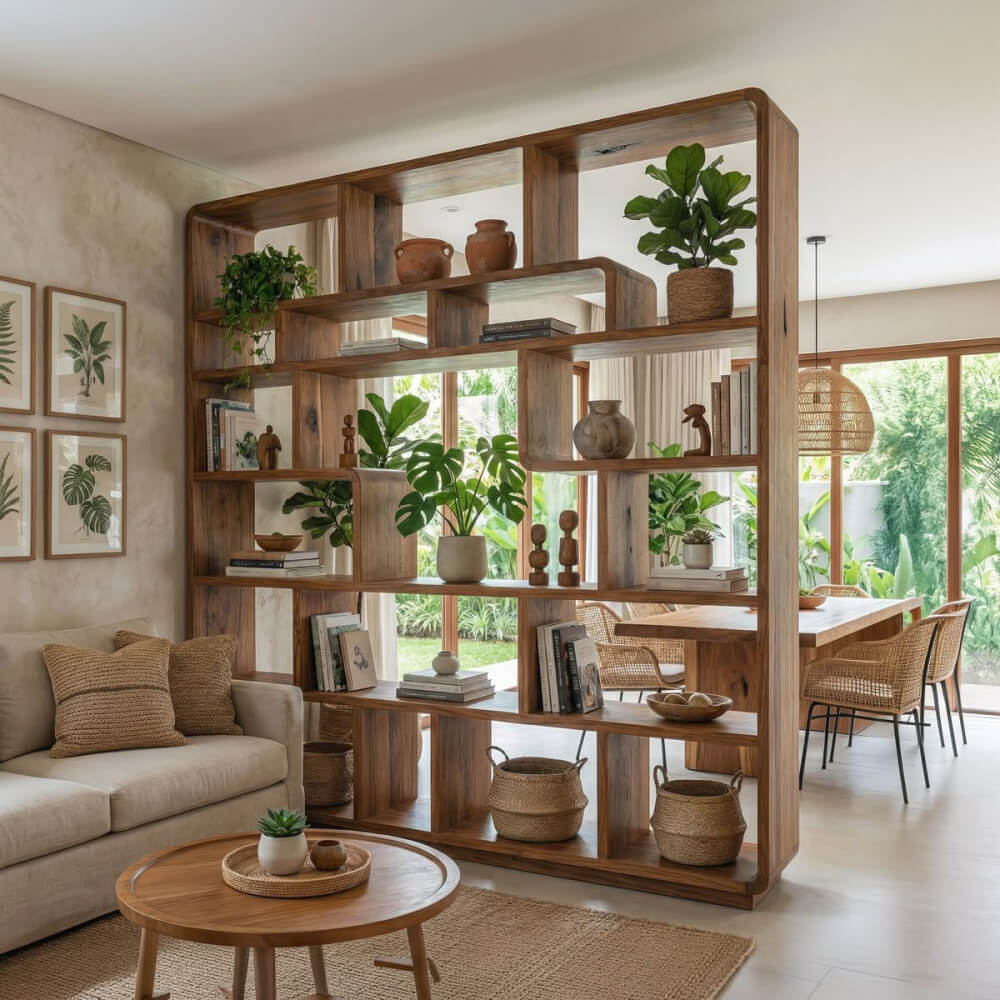
Use rugs to anchor spaces to create zones in a room. In small homes, rugs are like outlines for each function. A soft rug under the sofa and coffee table defines a living room. A smaller runner or flatweave rug under a dining table creates a distinct nearby area.
A sofa can separate a living area from a dining nook, while a bookshelf, console table, or bench can create boundaries without building walls. Even turning a chair or rug at a different angle can signal, “this is a separate zone.”
Create zones vertically when floor space is limited. Wall-mounted shelves, peg rails, floating desks, and hanging baskets keep each zone organized without crowding the room. A small desk tucked beneath shelves instantly becomes a home office corner.
Create a Small Sewing Area:
Expand on the idea below by using a tall bookcase to separate the room. Then, tuck in a desk for a sewing area.
This image shows shelves built against a wall. But with a free-standing bookcase, you can create your own wall or “zone” for the same purpose. Place a cupboard or sideboard on the other side of the bookshelves for stability.
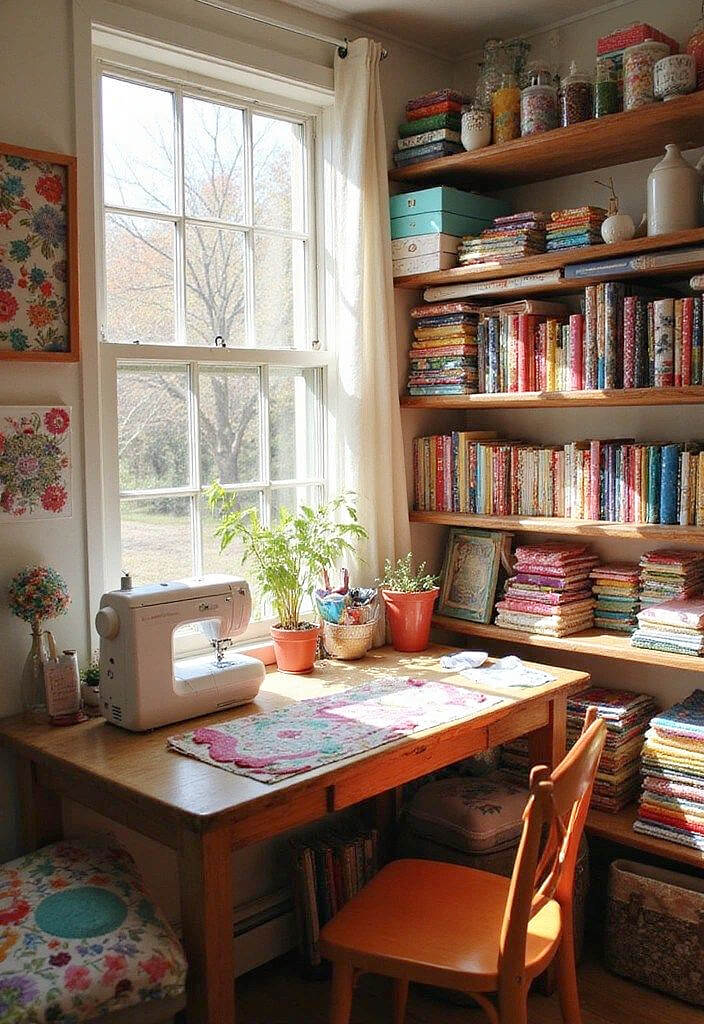
You might create your sewing area by a window to take advantage of natural light and a sense of expansiveness.
Keep the Zone Edited:
Keep each zone edited. In a small home, clutter quickly blurs boundaries. Baskets, trays, drawer organizers, and labeled bins help every area stay functional.
How you create zones in a room depends on the room’s purpose. If a room serves more than two purposes, consider micro-zoning. With micro-zoning, you can specify pockets to create separate areas.
A small home doesn’t need more square footage—it just needs better definition. When every corner has a purpose, the entire space feels larger, calmer, and easier to live in.
What is Micro Zoning?
Micro-zoning techniques define specific functional areas without walls.
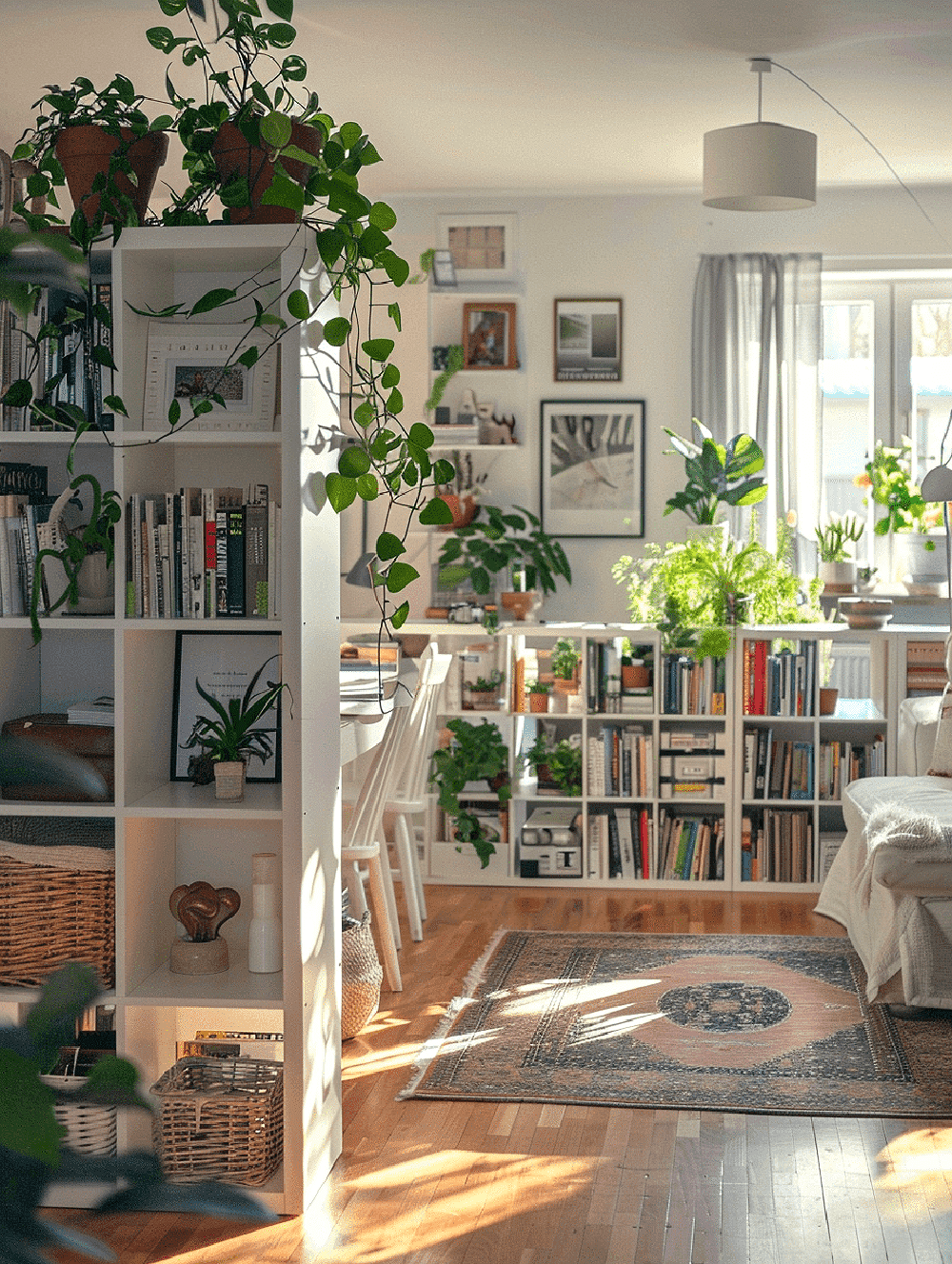
Micro-zoning is an interior design approach that divides large or open-plan rooms into smaller, purposeful “pockets” or “zones.”
You can create a room zone using furniture, rugs, and lighting to define distinct functional areas. Like a reading nook or home office within a single space.
How to Create Zones with Micro-Zoning
- Living Areas: Create a designated coffee-drinking area or a reading nook in a corner.
- Open-Concept Kitchens: Design specific areas for food prep or casual dining to prevent clutter.
- Small Space Organization: Divide a studio or small room into functional areas for sleeping, working, and relaxing.
- Storage Management: Organize a garage or walk-in closet by assigning specific zones to different items.
Micro-zones are popular because they reduce the chaos of large, empty spaces. It makes homes feel calmer and more organized without requiring renovations.
Related Concepts:
- Special Spots/Pockets: Focuses on creating specific functions within a larger space.
- Spatial Zoning/Functional Zoning: The technical act of assigning specific purposes to areas of a room.
- Nook Creation: The specific act of creating a cozy corner, such as a reading nook.
- Open-Plan Partitioning (Non-Permanent): Creating a division using furniture or rugs rather than construction.
- Activity-Based Working (Office): Designing workspace layout based on the tasks needing to be done.


I’ve seen similar ideas used in home renovations Toronto projects, and even small layout adjustments can completely transform how a room is used and feels.
I like the use of the open bookshelves to divide the spaces. They define each space without making either space feel small. And they are pretty!
I like them too. Can’t have too many places for books!
Some of those dividers are so pretty. I remember your little home office. You had it so organized. One part of my great room is my paint studio with my favorite paint table I refinished many moons ago.
I’m glad you have a special place to paint.
My parents made a plywood, wood framed bedroom partition for my brother and I growing up in a two bedroom house. Even though my mom worked in a bank when my parents bought the house in 1957, the mortgage company did not count her earnings and that’s all they could afford. After 32 years my husband and I are downsizing into a much smaller home. I have donated things I’d never thought I’d be getting rid of. Loved looking at these ideas that will help me in the new home! Have a good day all!
It’s very satisfying to create something out of nothing and have the addition take care of your needs.
My family room is set up in zones and my dining room has a zone for my piano! It is still too cool here to plant anything, can’t wait to get some vegetables planted. I am hoping to find some Heirloom tomato plants. Have a nice day Brenda.