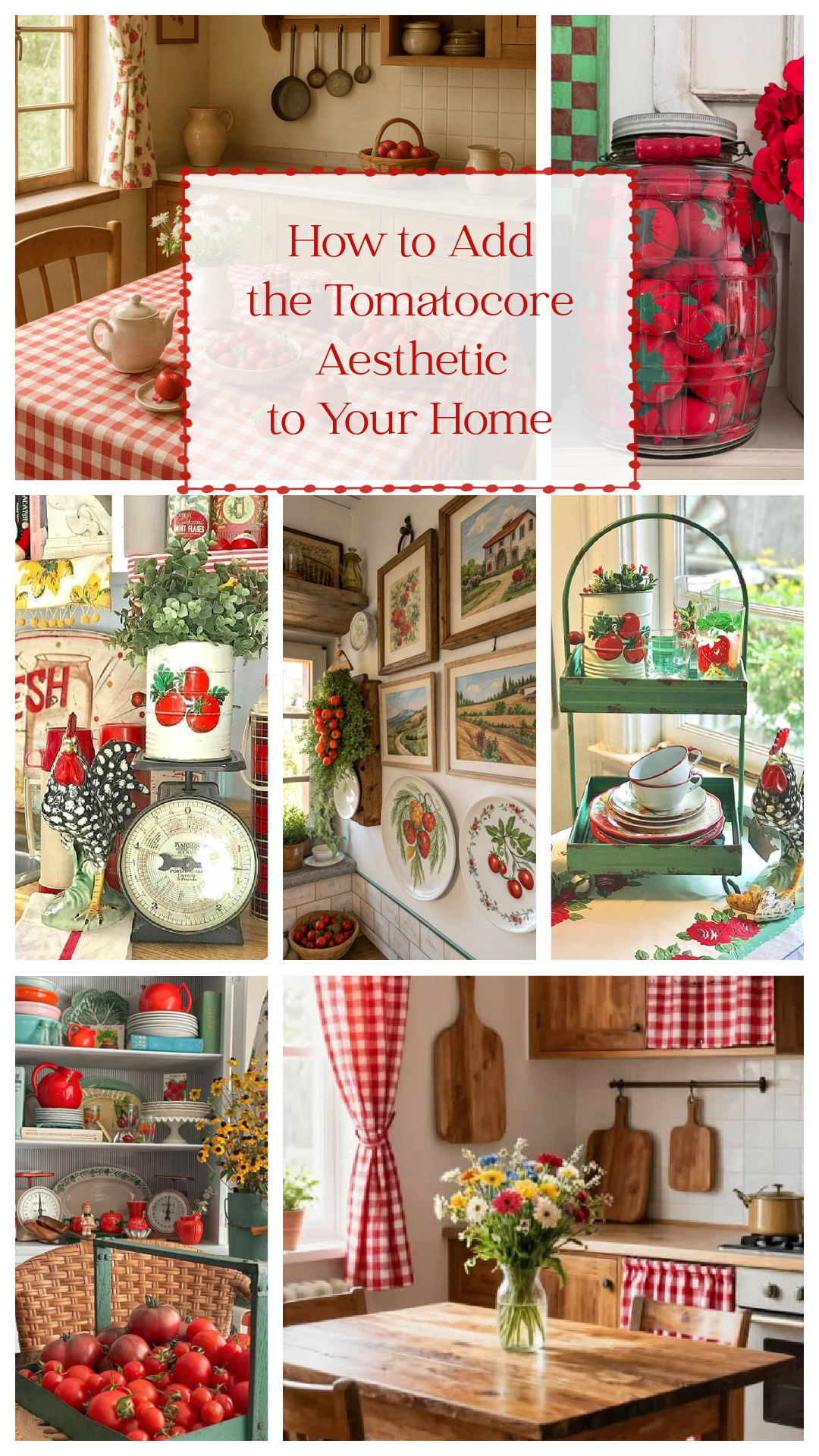
How to Add the Tomatocore Aesthetic to Your Home
This post may contain affiliate links. If you purchase through links on my site, I may earn a commission at no cost to you. For more information, please see my disclosure policy.
When I talk about how to add the tomatocore aesthetic to your home, I don’t mean you need to paint everything red. It’s more of a “nostalgic feeling” than a look. To use the stylish, trendy term, it is an aesthetic.

Tomato-inspired decor is popular right now. A few weeks ago, I purchased four bowls with tomatoes on them at Hobby Lobby. They are perfect for soups and stews. Now I only use them for salads or a bowl of soup because they’re just the right size.
But you’re probably thinking, as I did, that there’s a “core” at the end of many things! And you’d be right.
It began as a fashion aesthetic with breezy, light, and comfy clothing. Then, “tomato girls” started introducing it into other areas of their lives.
Tomatocore is built around the warm, sun-soaked feeling of Mediterranean summer life. Envision ripe tomatoes, rustic kitchens, farmers’ markets, and simple meals.
It overlaps a bit with cottagecore, but feels less like the English countryside and more like an “Italian summer kitchen.”
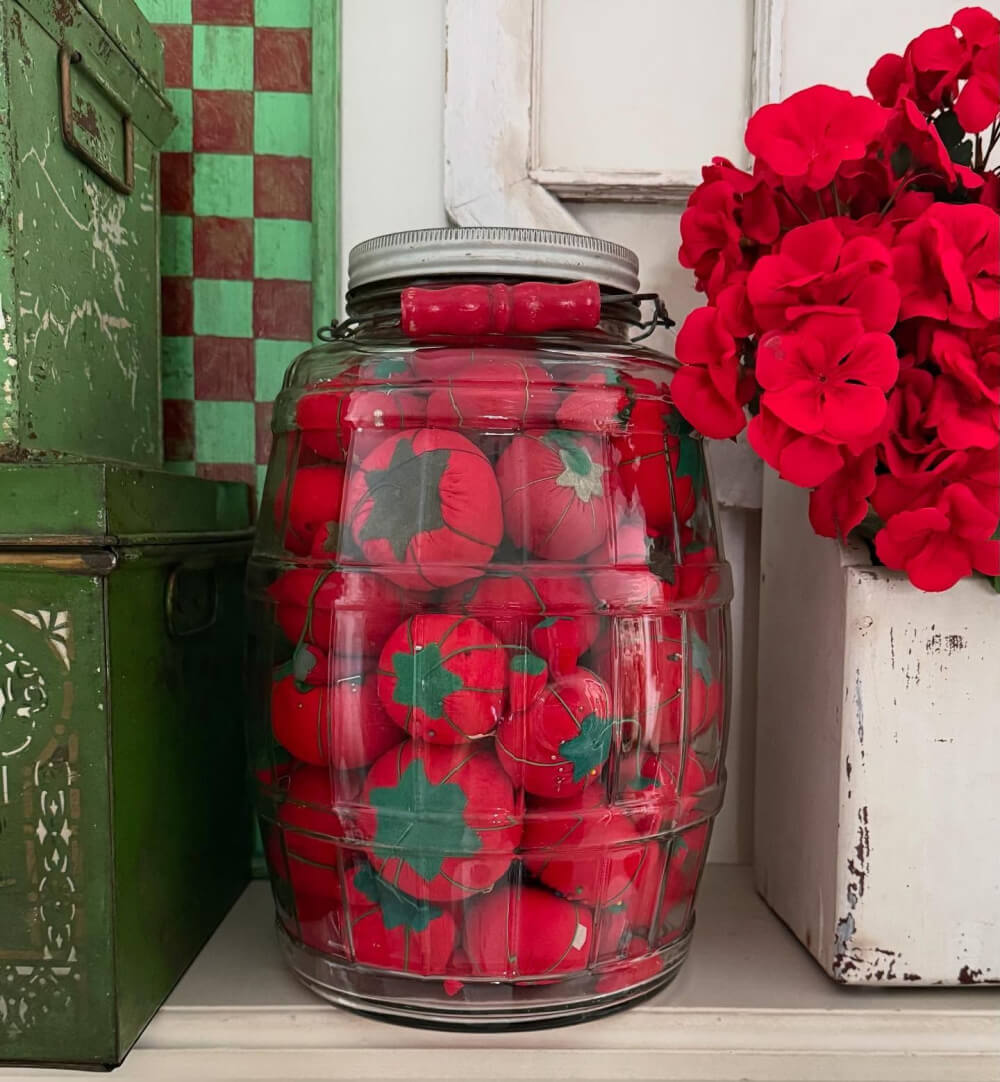
When Domesticity Became Popular:
During COVID, everything was about staying home and enjoying domesticity as the pandemic swept through our lives. Furniture was backordered due to supply chain issues.
I recall trying to get a desk chair and had to shop everywhere online till I found one I liked.
Many people were stuck indoors and craving simplicity, nature, and comfort. Suddenly, there were sourdough starters and YouTube videos titled “How-Tos”.
People started romanticizing everyday rituals like the simple act of slicing tomatoes for toast. Arranging produce in bowls, wearing red gingham, and cooking pasta with fresh ingredients became goals.
So cottagecore didn’t appear out of nowhere. The digital obsession with cores—used as a suffix denoting a style—began in 2013. You began to see the word “cozy” more during that time. I had started writing my “cozy” blog in 2009.
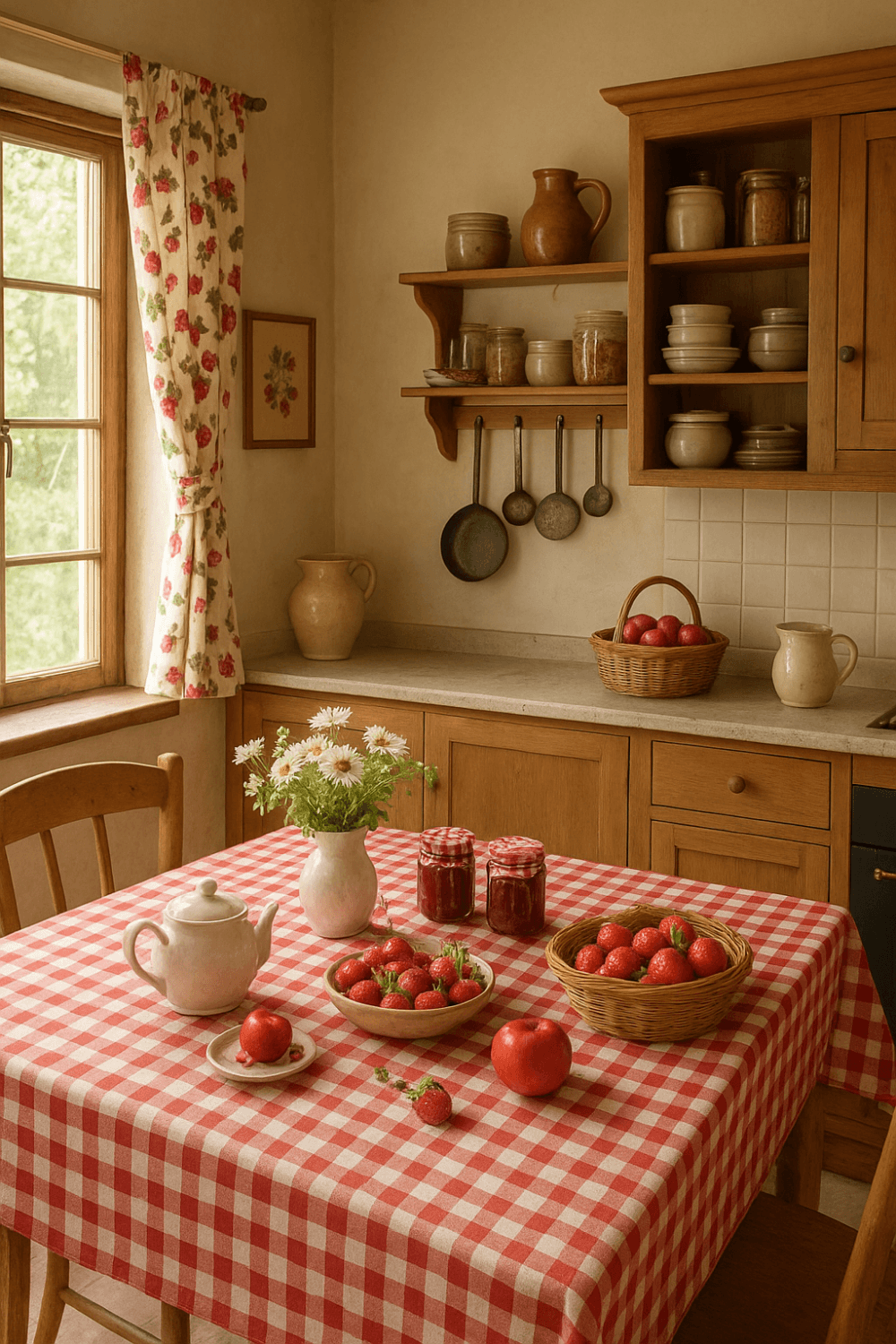
Adding the tomatocore aesthetic to your home usually includes:
- Red-and-white color palettes
- Tomatoes as décor or motif (art prints, ceramics, linens, dish towels)
- Striped tablecloths, wicker baskets, vintage glassware
- Farmers market hauls
- Olive oil, basil, bread, pasta, garden produce
- Relaxed outdoor dining
It connects to a larger trend of turning ordinary domestic life into something visually meaningful. A tomato is practical and humble, but in tomatocore it becomes symbolic. Abundance, summer, freshness, and a slightly playful sentimentality.
“Cottagecore” and the explosion of other “-cores” mostly come from a mix of internet culture, fashion subcultures, and a very old human habit. This is the naming of aesthetics, which allows people to gather around a shared mood or identity.
A Lifestyle Choice:
You’ll often see the tomatocore aesthetic overlap with:
- Cottagecore — gardens, homemaking, cozy domesticity
- Mediterranean aesthetic — terracotta, lemons, stone, sea tones
- Kitchencore — cooking, baking, pantry styling, vintage kitchen charm
Tomatocore is cheerful, slightly nostalgic. It’s full of the kind of abundance that makes an ordinary kitchen feel like summer has moved in and unpacked its baskets.
In short, tomatocore is what happens when someone looks at a tomato and thinks, “This is not just produce. This is a lifestyle.”
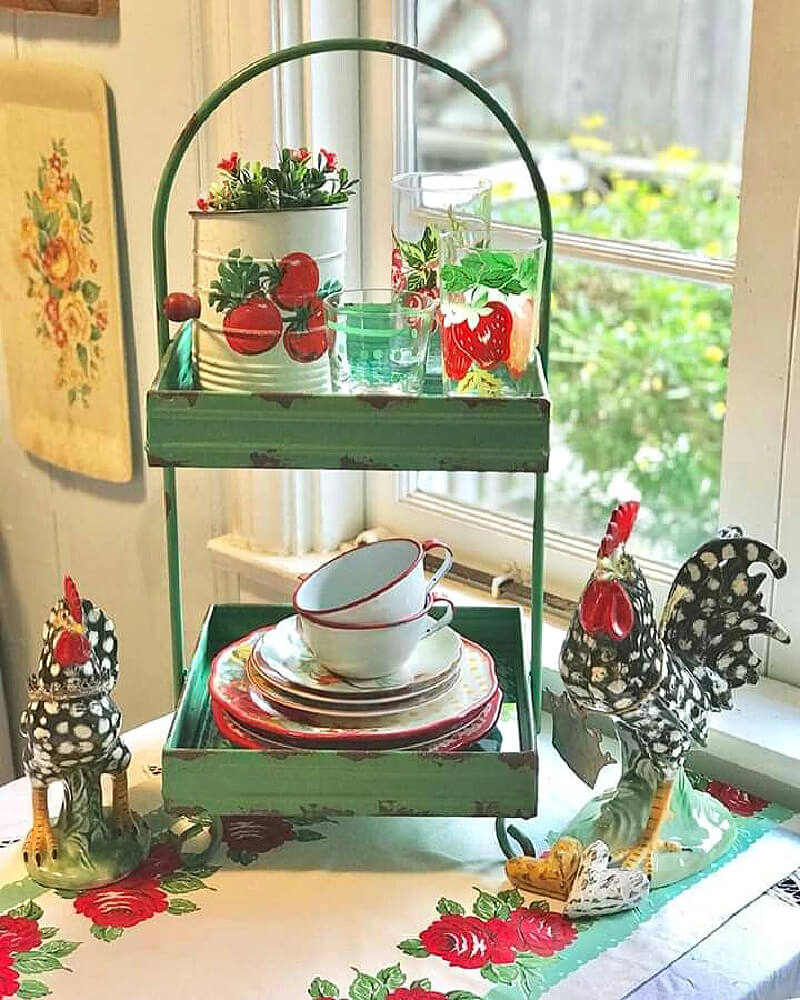
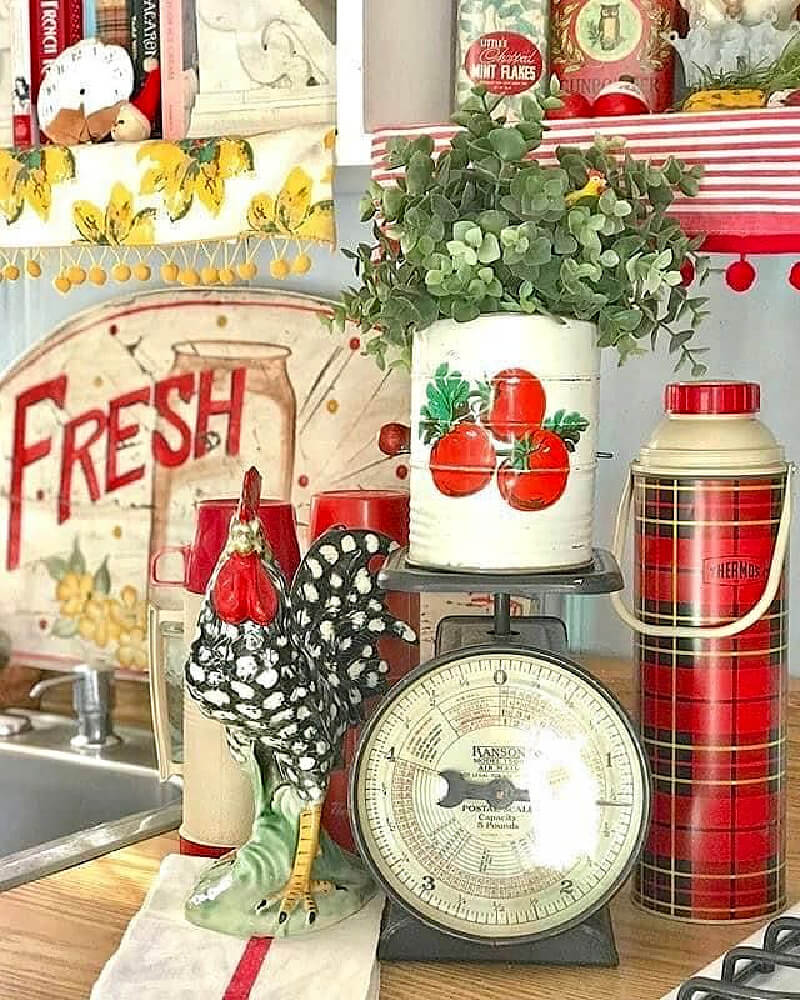
Tomatocore centers on the bright, saturated red of ripe tomatoes. They’re glossy and imperfect, piled high in bowls on a counter or spilling out of market bags.
The aesthetic feels sun-warmed and Mediterranean, as if the windows are open. Linen curtains are moving in a light breeze, and lunch is being assembled slowly rather than rushed.
The Tomatocore Aesthetic:
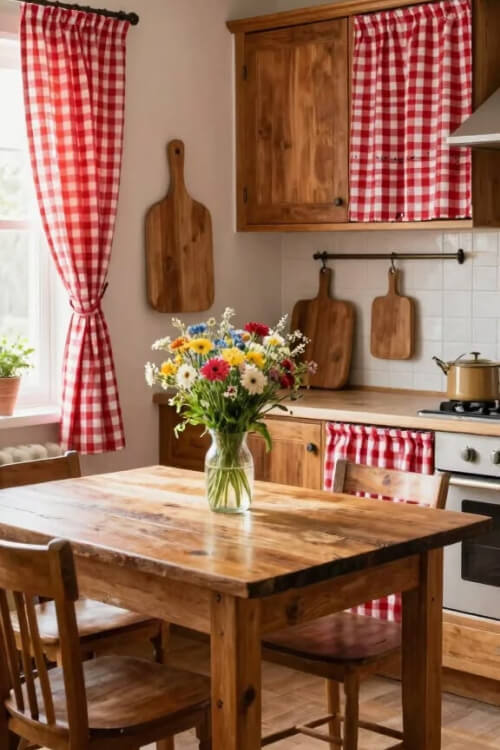
Tomatocore spaces often feature red-and-white gingham, striped dish towels, and vintage ceramic pitchers. Think hand-painted plates, rustic cutting boards, and glass jars filled with pasta or dried herbs.
There’s usually an intentional “lived-in kitchen” quality—nothing too polished or sterile. A loaf of crusty bread, a bottle of olive oil, fresh basil on the windowsill, and a bowl of tomatoes can practically count as décor.
It can feel a little retro, a little European vacation, and a little grandmother’s kitchen in the best possible way.
The mood is less about tomatoes specifically and more about what they represent. Ripeness, simplicity, seasonal living, shared meals, and pleasure in ordinary, everyday rituals.
It glamourizes slicing vegetables for a salad or setting a casual outdoor table. Returning from a farmers’ market with more produce than was strictly necessary.
What Adding Tomatocore to Your Home Feels Like:
Tomatocore feels like:
- Warm tile floors under bare feet
- Sunlight hitting a kitchen table at noon
- Hands smelling faintly of basil and garlic
- Lunch eaten outdoors with sparkling water or iced tea
- A home where food is visible, beautiful, and central to daily life
Adding tomatocore to your home is essentially domestic coziness with a bold red accent and a healthy respect for produce.
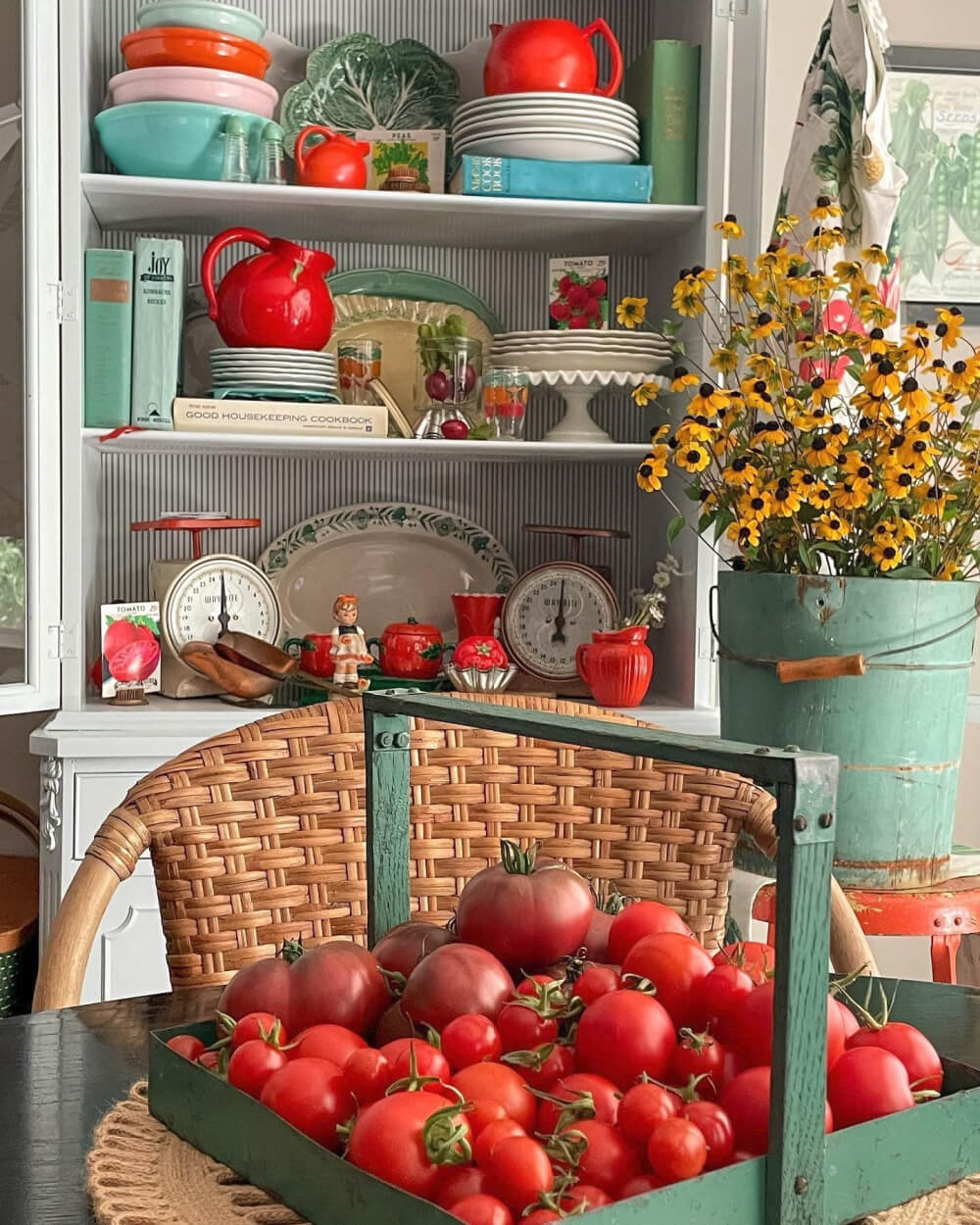
It could be a neutral color palette with bright pops of primary colors. Botanical prints. A blend of minimalism and maximalism.
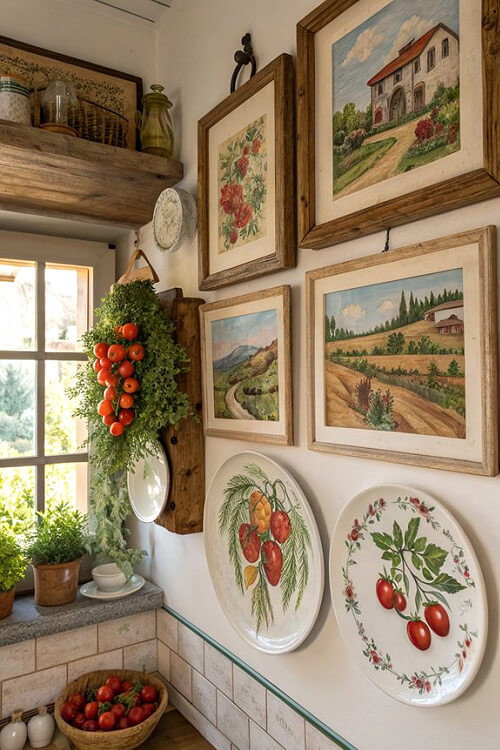
There would be terracotta pots filled with herbs in your kitchen to snip while cooking. Flowing house plants would hang from the ceiling. Framed art with a veggie or fruit motif would be on the walls.
Cottagecore romanticized an idealized rural life. Flower gardens, vintage dresses, handwritten letters, and cozy cottages tucked into the countryside.
The Essence of a Style:
The “core” suffix itself is older than cottagecore. It traces back to subculture labels like hardcore punk in the late 20th century. Over time, “-core” became detached and came to mean “the essence of a style.”
So instead of saying “an aesthetic centered around dark academia,” the internet says “dark academia core” or just “dark academia.”
This naming style exploded because online platforms reward categorization. Hashtags, mood boards, playlists, and recommendation algorithms love neat labels. Once one aesthetic gets a name, people start spinning off endless variations:
- Dark Academia: tweed, books, candlelight, classical studies, moody libraries
- Grandmacore: quilts, baking, knitting, vintage florals
- Goblincore: mushrooms, moss, frogs, shiny trinkets, woodland chaos
- Coastal Grandmother: breezy neutrals, seaside calm, practical elegance
In a broader sense, these aesthetics are partly about personality. Instead of saying “I like old books, rainy weather, and wool sweaters,” someone can say “I’m into dark academia” and instantly communicate a whole vibe.
Cottagecore originated as a named aesthetic on Tumblr around 2017–2018, later booming on TikTok and Instagram during the 2020 COVID-19 lockdowns.
It stems from a desire for slow living and pastoral escapism. A reaction to modern, fast-paced technology, combining “cottage” with the internet suffix “-core”.
Romanticizing Your Life:
It is about romanticizing your life, like sipping on a great cup of coffee and wearing your comfortable linen dress.
What it doesn’t mean is spending money we don’t have. So make do with what you have. There’s probably a plethora of things you can find behind closed doors and up in dusty attics. In garages and basements.
It’s enjoying a jar of fragrant flowers on the counter, and a big bowl of lemons as a centerpiece. It’s relaxed and natural, indulging the senses and living with timeless decor that never really goes out of style.




I desperately wanted to go beyond simple interior decor and transform my empty, sun-drenched patio into an authentic Sicilian terrace filled with fresh herbs. To bring this rustic vision to life, I chose sophisticated Italian collections of Ethimo outdoor furniture , which perfectly complemented my terracotta clay pots with tomatoes and vibrant open-air textile accents. The warm undertone of natural teak wood and the noble lines of the chairs instantly anchored this playful home coziness into a single premium concept
Perfect post for these hot days of summer! I have a collection of tomato and watermelon decor that I haven’t used recently, but now I will gather it together and make a vignette. I have a tomato candle that smells so real it puts me back into my dad’s garden and picking the perfect ones for lunch and dinner. Thank you for the inspiration.
Never heard of this but it sure is cheery and summery!
Not for me, thanks all the same. No red in our house at all.
I had no idea tomatoes were a thing. I’ve seen plenty of lemons or oranges, but never tomatoes. But when you describe it with the basil and a bowl of tomatoes, it does give a really nice feeling. And you love red, so I can see this totally working for you in your kitchen.
Love it! So cute, so homey!
Interesting and informative … peaks my desire to bring some of these ideas into my home. It’s amazing how small touches can create a unique atmosphere that warms the heart and calms the soul. And in this day and age of run, run, run, anything that slows us down and brings us to a peaceful place in our lives is a good thing.
This post is so informative and fun. 50 years ago I took a few Interior Design classes at the University where my husband was pursuing an Accounting degree. Lots of fun and a little bit of new knowledge. Your posts remind me of those classes. You do your research and love home life; if you ever give up blogging, you could definitely write for the high-end decorating magazines.
I have never heard the goblincore one. I’m surprised that it’s not forest or woodland core. Lol. I have seen tablescapes done in this style though. So pretty!
It’s interesting. No telling what style they’ll come up with next!