How To Grow Roses In Containers
This post may contain affiliate links. If you purchase through links on my site, I may earn a commission at no cost to you. For more information, please see my disclosure policy.
I like to grow roses in containers, but not all roses are suitable for container gardening. You’ll want to ask someone at your local nursery which rose plants they would suggest planting in a pot.
Planting your roses in containers allows you to grow a small rose garden where you can appreciate those lovely blooms the most.

Types Of Roses Appropriate For Containers:
Just about any rose can be grown in a container, but the best-suited varieties include miniature roses, polyanthas, minifloras, and small shrub roses. Even groundcover roses perform well in containers, where they can spill over a pot.
Miniature roses are ideal for balconies, roofs, and patios. Typically, these bushes grow to no more than 18 inches tall.
Hybrid tea roses can be grown in pots, but they need adequate space and care to thrive. They are known for their large blooms and upright growth, which require a deep, wide container to support their root system.
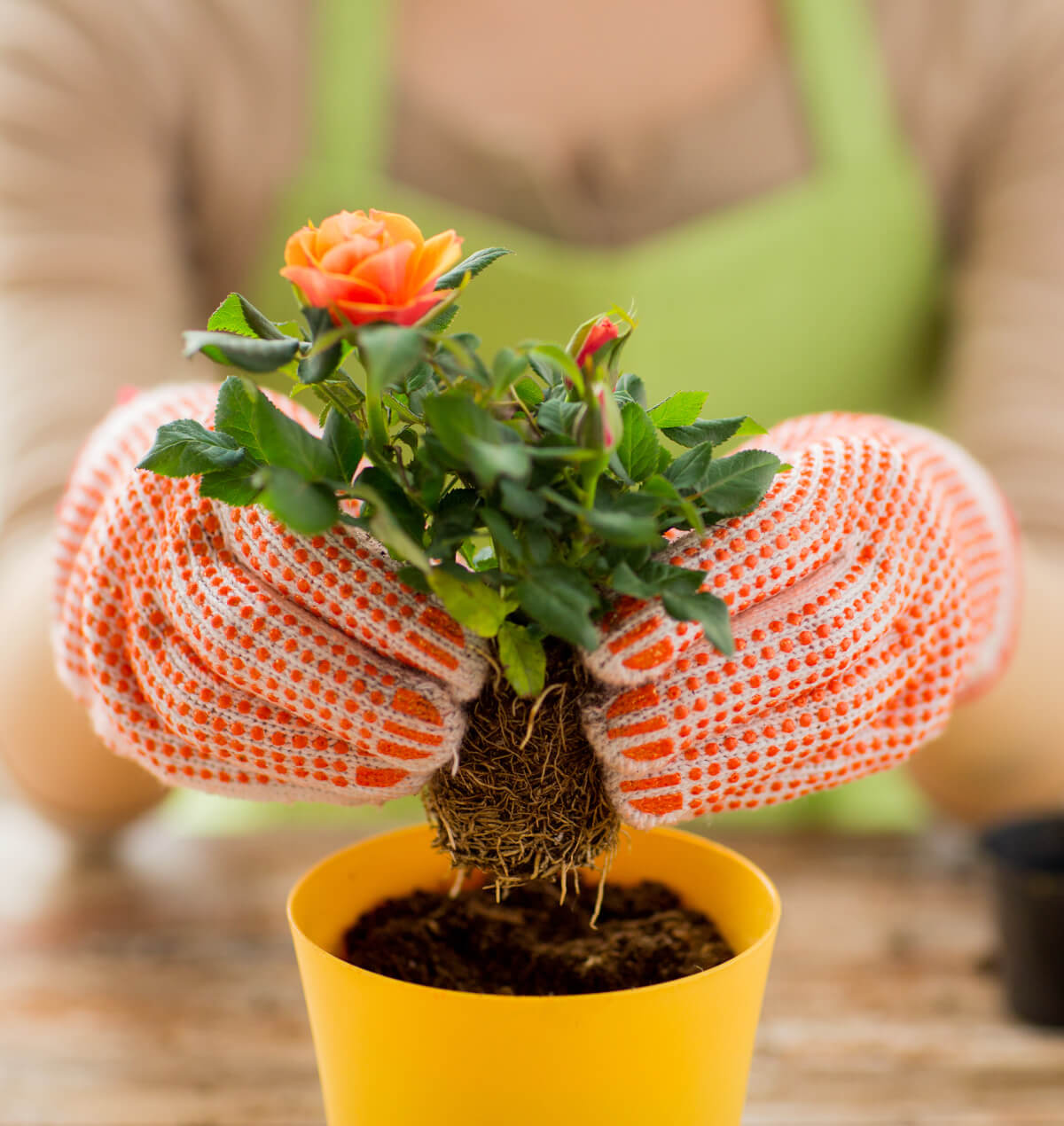
Floribundas produce clusters of flowers on each stem. Their blooms are smaller than tea roses. They can grow up to 3 feet tall.
Ground-cover roses stay low and spill over the sides of your container. Depending on the pot’s size and variety, you can also use it as a border around a larger plant.
Patio roses grow between 18 and 24 inches tall. They are compact and grow well in containers.
When choosing a rose plant, check
Choosing A Pot:
When choosing a container for your rose plant, bigger is better. Roses are deep-rooted, so tall pots are better than short ones. The bigger the pot, the less you’ll have to water.
Ensure your pot has drainage holes at the bottom, as roses require good drainage.
Type Of Soil Container Roses Need:
Roses are heavy feeders, so a good nutrient-rich soil is critical. Fill your container with a high-quality potting soil mixed with compost or well-rotted manure.
Use a container soil that drains well to reduce root rot, but is heavy enough to hold water. If you are uncertain, ask someone at the nursery where you purchase your soil.
How Much Sunlight Does My Container Rose Need?
For the best blooms, place your container roses in a location that receives at least 6 hours of sun daily.
Ensure the rose receives at least 4 hours of sunlight per day. Generally, the more sun, the better. However, in the hottest areas, afternoon shade can be beneficial.
Too much can overheat the container and stress the roots, especially in hot weather or in warmer climates.
How To Plant Roses In Containers:
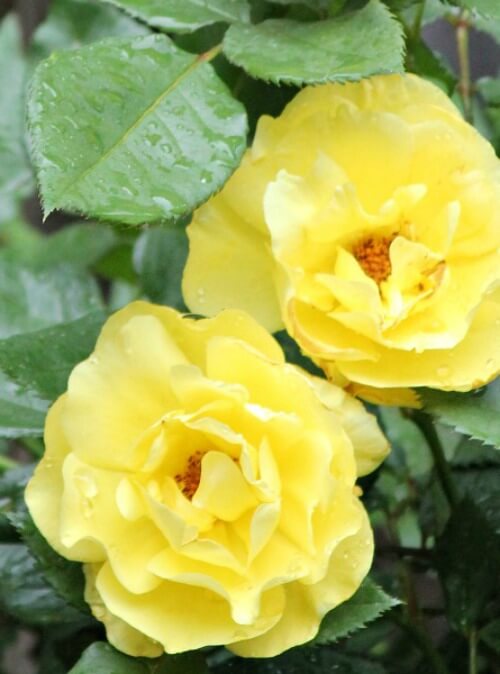
Cover drainage holes with landscape fabric—pre-moisten soil. Loosen roots to encourage spreading with new growth—position in pot.
Set the rose plant about an inch below the top rim of your container. Fill in the remaining space with the pre-moistened soil. Lightly pat down the soil to eliminate air pockets.
Add rose fertilizer. Cover the fertilizer with 1/4 inch of soil and add soil until it is about 1 inch from the top of the pot.
Mulch helps retain moisture and helps your roses withstand summer heat. Mulching around the base of your roses helps retain soil moisture and keeps the roots cool. However, keep the mulch away from the stems to prevent rot and encourage good air circulation.
Watering Needs:
Roses planted in containers will need more water than roses planted in the ground.
A good rule of thumb is to water when the surface is dry to the touch. The soil should have as much moisture as a rung-out sponge.
If you water between 10 a.m. and 6 p.m., you will have better results. That time in between is the hottest part of the day, and water will evaporate quickly.
Avoid watering the leaves, as wet leaves can lead to powdery mildew.

Fertilizing Needs:
Apply plant food to container-grown plants according to the directions provided. I buy fertilizer specifically for roses.
- Feed when the bush first leafs out
- Feed after each heavy flush of bloom
- Stop feeding about 6-8 weeks before the first expected frost to discourage new growth that could be killed in winter.
Maintenance Needs:
As with full-sized roses, deadheading is pretty much all the pruning you need to do during the growing season. You don’t need to cut back minis in the fall. In the spring, prune away any dead parts. Prune just as you would larger varieties.
Every few years, change out the soil. The plant will have depleted some of the soil nutrients by then.
Tips For Growing Roses In Containers:
Yellowing leaves are a sign that your plant is suffering from magnesium deficiency. Epsom salt can boost a soil’s magnesium levels.
Roses of all sizes love bananas. You can add chopped banana peels directly to the soil to help your roses grow better. Banana peels are an inexpensive way to boost fertilization in your roses. Dig a small hole near the rose, insert a piece of banana peel, and cover it.
Every fall, those in cooler zones should plan how to protect their container roses from winter freezes. Plants in pots get much colder than those in the ground.
For your rose to survive the winter, it should be rated at least two USDA hardiness zones colder than the one it will live in. In other words, if you are in zone 6, you will need a rose that is rated for zone 4.
You can also bring your potted rose indoors during the winter months.
“Do not watch the petals fall from the rose with sadness, know that, like life, things sometimes must fade, before they can bloom again.” – Author Unknown

How do you add magnesium to the soil?
If I was gardening strictly on a patio I would absolutely still have to have my flowers and roses – this is a great guide for anyone considering growing roses in pots. I’m still awed by what Marie at 66 square ft was able to do on her teeny tiny patio in Brookly with all those climbing roses – gorgeous!! Now she has a larger area to garden in but I miss seeing photos of her awesome patio!
Hi Brenda, these are super tips. Love all the photos.
Cindy
Brenda, thank you so much for this planting guide. I’m moving from a big house & yard to a small home & patio garden. This had me worrying about moving my roses from the ground to pots. Thank you again, Sandy.